
Catalogue Search | MBRL


Are you sure you want to remove the book from the shelf?

{{itemTitle}}
992
result(s) for
"Buxton, M."
Sort by:
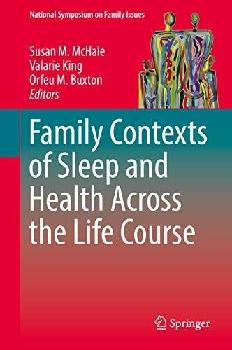
Family contexts of sleep and health across the life course
This unique volume advances the literature on sleep and health by illuminating the impacts of family dynamics on individuals' quality and quantity of sleep. Its lifespan perspective extends across childhood, adolescence, adulthood and older age considering both phenomena of individual development and family system dynamics, particularly parent-child and marital relationships. It extends, as well, to the broader contexts of social disparities in sleep as a significant health behavior. Emerging concepts and practical innovations include ancestral roots of sleep in family contexts, sleep studies as a lens for understanding family health, and methodologies, particularly the use of actigraphy technology, for studying sleep patterns in individuals and families. This rich area of inquiry holds significant keys to understanding a vital human behavior and its critical role in physical, psychological, and relational health and wellbeing. Among the topics covered: ¨ Sleep and development: familial and sociocultural considerations. ¨ Relationship quality: implications for sleep quality and sleep disorders. ¨ Couple dynamics and sleep quality in an international perspective. ¨ Family influences on sleep: comparative and historical-evolutionary perspectives. ¨ Sociodemographic, psychosocial, and contextual factors in children's sleep. ¨ Dynamic interplay between sleep and family life: review and directions for future research. Family Contexts of Sleep and Health Across the Life Course will advance the work of researchers and students in the fields of population health, family demography and sociology, sleep research and medicine, human development, neuroscience, biobehavioral health, and social welfare, as well as that of policymakers and health and human services practitioners.
Book

Reduced coupling between cerebrospinal fluid flow and global brain activity is linked to Alzheimer disease–related pathology
The glymphatic system plays an important role in clearing the amyloid-β (Aβ) and tau proteins that are closely linked to Alzheimer disease (AD) pathology. Glymphatic clearance, as well as Aβ accumulation, is highly dependent on sleep, but the sleep-dependent driving forces behind cerebrospinal fluid (CSF) movements essential to the glymphatic flux remain largely unclear. Recent studies have reported that widespread, high-amplitude spontaneous brain activations in the drowsy state and during sleep, which are shown as large global signal peaks in resting-state functional magnetic resonance imaging (rsfMRI), are coupled with CSF movements, suggesting their potential link to glymphatic flux and metabolite clearance. By analyzing multimodal data from the Alzheimer’s Disease Neuroimaging Initiative (ADNI) project, here we showed that the coupling between the global fMRI signal and CSF influx is correlated with AD-related pathology, including various risk factors for AD, the severity of AD-related diseases, the cortical Aβ level, and cognitive decline over a 2-year follow-up. These results provide critical initial evidence for involvement of sleep-dependent global brain activity, as well as the associated physiological modulations, in the clearance of AD-related brain waste.
Journal Article

Detecting sleep using heart rate and motion data from multisensor consumer-grade wearables, relative to wrist actigraphy and polysomnography
Abstract
Study Objectives
Multisensor wearable consumer devices allowing the collection of multiple data sources, such as heart rate and motion, for the evaluation of sleep in the home environment, are increasingly ubiquitous. However, the validity of such devices for sleep assessment has not been directly compared to alternatives such as wrist actigraphy or polysomnography (PSG).
Methods
Eight participants each completed four nights in a sleep laboratory, equipped with PSG and several wearable devices. Registered polysomnographic technologist-scored PSG served as ground truth for sleep–wake state. Wearable devices providing sleep–wake classification data were compared to PSG at both an epoch-by-epoch and night level. Data from multisensor wearables (Apple Watch and Oura Ring) were compared to data available from electrocardiography and a triaxial wrist actigraph to evaluate the quality and utility of heart rate and motion data. Machine learning methods were used to train and test sleep–wake classifiers, using data from consumer wearables. The quality of classifications derived from devices was compared.
Results
For epoch-by-epoch sleep–wake performance, research devices ranged in d′ between 1.771 and 1.874, with sensitivity between 0.912 and 0.982, and specificity between 0.366 and 0.647. Data from multisensor wearables were strongly correlated at an epoch-by-epoch level with reference data sources. Classifiers developed from the multisensor wearable data ranged in d′ between 1.827 and 2.347, with sensitivity between 0.883 and 0.977, and specificity between 0.407 and 0.821.
Conclusions
Data from multisensor consumer wearables are strongly correlated with reference devices at the epoch level and can be used to develop epoch-by-epoch models of sleep–wake rivaling existing research devices.
Journal Article

An orderly sequence of autonomic and neural events at transient arousal changes
Resting-state functional magnetic resonance imaging (rsfMRI) allows the study of functional brain connectivity based on spatially structured variations in neuronal activity. Proper evaluation of connectivity requires removal of non-neural contributions to the fMRI signal, in particular hemodynamic changes associated with autonomic variability. Regression analysis based on autonomic indicator signals has been used for this purpose, but may be inadequate if neuronal and autonomic activities covary. To investigate this potential co-variation, we performed rsfMRI experiments while concurrently acquiring electroencephalography (EEG) and autonomic indicator signals, including heart rate, respiratory depth, and peripheral vascular tone. We identified a recurrent and systematic spatiotemporal pattern of fMRI (named as fMRI cascade), which features brief signal reductions in salience and default-mode networks and the thalamus, followed by a biphasic global change with a sensory-motor dominance. This fMRI cascade, which was mostly observed during eyes-closed condition, was accompanied by large EEG and autonomic changes indicative of arousal modulations. Importantly, the removal of the fMRI cascade dynamics from rsfMRI diminished its correlations with various signals. These results suggest that the rsfMRI correlations with various physiological and neural signals are not independent but arise, at least partly, from the fMRI cascades and associated neural and physiological changes at arousal modulations.
Journal Article

Does a Flexibility/Support Organizational Initiative Improve High-Tech Employees' Well-Being? Evidence from the Work, Family, and Health Network
This study tests a central theoretical assumption of stress process and job strain models, namely that increases in employees' control and support at work should promote well-being. To do so, we use a group-randomized field trial with longitudinal data from 867 information technology (IT) workers to investigate the well-being effects of STAR, an organizational intervention designed to promote greater employee control over work time and greater supervisor support for workers' personal lives. We also offer a unique analysis of an unexpected field effect— a company merger—among workers surveyed earlier versus later in the study period, before or after the merger announcement. We find few STAR effects for the latter group, but over 12 months, STAR reduced burnout, perceived stress, and psychological distress, and increased job satisfaction, for the early survey group. STAR effects are partially mediated by increases in schedule control and declines in family-to-work conflict and burnout (an outcome and mediator) by six months. Moderating effects show that STAR benefits women in reducing psychological distress and perceived stress, and increases non-supervisory employees' job satisfaction. This study demonstrates, with a rigorous design, that organizational-level initiatives can promote employee well-being.
Journal Article

Bidirectional, Daily Temporal Associations between Sleep and Physical Activity in Adolescents
This study evaluated the daily, temporal associations between sleep and daytime physical activity and sedentary behavior among adolescents from the Fragile Families & Child Wellbeing Study. A sub-sample of the cohort at age 15 (N = 417) wore actigraphy monitors for one week during the school year from which we derived daily minutes in sedentary and moderate-to-vigorous physical activity (MVPA) and nighttime sleep measures. Multilevel models tested temporal associations of nightly sleep onset, offset, duration, and sleep maintenance efficiency, with daily MVPA and sedentary behavior. More MVPA than an individual’s average was associated with earlier sleep onset (p < 0.0001), longer duration (p = 0.03), and higher sleep maintenance efficiency (p < 0.0001). On days with more sedentary behavior than an individual’s average, sleep onset and offset were delayed (p < 0.0001), duration was shorter (p < 0.0001), and sleep maintenance efficiency was higher (p = 0.0005). Conversely, nights with earlier sleep onset predicted more next-day sedentary behavior (p < 0.0001), and nights with later sleep offset and longer sleep duration were associated with less MVPA (p < 0.0001) and less sedentary time (p < 0.0001, p = 0.004) the next day. These bidirectional associations between sleep and physical activity suggest that promoting MVPA may help to elicit earlier bedtimes, lengthen sleep duration, and increase sleep efficiency, critical for healthy adolescent development.
Journal Article

Sleep Restriction for 1 Week Reduces Insulin Sensitivity in Healthy Men
Short sleep duration is associated with impaired glucose tolerance and an increased risk of diabetes. The effects of sleep restriction on insulin sensitivity have not been established. This study tests the hypothesis that decreasing nighttime sleep duration reduces insulin sensitivity and assesses the effects of a drug, modafinil, that increases alertness during wakefulness.
This 12-day inpatient General Clinical Research Center study included 20 healthy men (age 20-35 years and BMI 20-30 kg/m(2)). Subjects spent 10 h/night in bed for >or=8 nights including three inpatient nights (sleep-replete condition), followed by 5 h/night in bed for 7 nights (sleep-restricted condition). Subjects received 300 mg/day modafinil or placebo during sleep restriction. Diet and activity were controlled. On the last 2 days of each condition, we assessed glucose metabolism by intravenous glucose tolerance test (IVGTT) and euglycemic-hyperinsulinemic clamp. Salivary cortisol, 24-h urinary catecholamines, and neurobehavioral performance were measured.
IVGTT-derived insulin sensitivity was reduced by (means +/- SD) 20 +/- 24% after sleep restriction (P = 0.001), without significant alterations in the insulin secretory response. Similarly, insulin sensitivity assessed by clamp was reduced by 11 +/- 5.5% (P < 0.04) after sleep restriction. Glucose tolerance and the disposition index were reduced by sleep restriction. These outcomes were not affected by modafinil treatment. Changes in insulin sensitivity did not correlate with changes in salivary cortisol (increase of 51 +/- 8% with sleep restriction, P < 0.02), urinary catecholamines, or slow wave sleep.
Sleep restriction (5 h/night) for 1 week significantly reduces insulin sensitivity, raising concerns about effects of chronic insufficient sleep on disease processes associated with insulin resistance.
Journal Article

Endogenous circadian system and circadian misalignment impact glucose tolerance via separate mechanisms in humans
Significance It is established that glucose tolerance decreases from the morning to the evening, and that shift work is a risk factor for diabetes. However, the relative importance of the endogenous circadian system, the behavioral cycle (including the sleep/wake and fasting/feeding cycles), and circadian misalignment on glucose tolerance is unclear. We show that the magnitude of the effect of the endogenous circadian system on glucose tolerance and on pancreatic β-cell function was much larger than that of the behavioral cycle in causing the decrease in glucose tolerance from morning to evening. Also, independent from circadian phase and the behavioral cycle, circadian misalignment resulting from simulated night work lowered glucose tolerance—without diminishing effects upon repeated exposure—with direct relevance for shift workers.
Glucose tolerance is lower in the evening and at night than in the morning. However, the relative contribution of the circadian system vs. the behavioral cycle (including the sleep/wake and fasting/feeding cycles) is unclear. Furthermore, although shift work is a diabetes risk factor, the separate impact on glucose tolerance of the behavioral cycle, circadian phase, and circadian disruption (i.e., misalignment between the central circadian pacemaker and the behavioral cycle) has not been systematically studied. Here we show—by using two 8-d laboratory protocols—in healthy adults that the circadian system and circadian misalignment have distinct influences on glucose tolerance, both separate from the behavioral cycle. First, postprandial glucose was 17% higher (i.e., lower glucose tolerance) in the biological evening (8:00 PM) than morning (8:00 AM; i.e., a circadian phase effect), independent of the behavioral cycle effect. Second, circadian misalignment itself (12-h behavioral cycle inversion) increased postprandial glucose by 6%. Third, these variations in glucose tolerance appeared to be explained, at least in part, by different mechanisms: during the biological evening by decreased pancreatic β-cell function (27% lower early-phase insulin) and during circadian misalignment presumably by decreased insulin sensitivity (elevated postprandial glucose despite 14% higher late-phase insulin) without change in early-phase insulin. We explored possible contributing factors, including changes in polysomnographic sleep and 24-h hormonal profiles. We demonstrate that the circadian system importantly contributes to the reduced glucose tolerance observed in the evening compared with the morning. Separately, circadian misalignment reduces glucose tolerance, providing a mechanism to help explain the increased diabetes risk in shift workers.
Journal Article

Cranberry Juice Fails to Prevent Recurrent Urinary Tract Infection: Results From a Randomized Placebo-Controlled Trial
Background. A number of observational studies and a few small or open randomized clinical trials suggest that the American cranberry may decrease incidence of recurring urinary tract infection (UTI). Methods. We conducted a double-blind, placebo-controlled trial of the effects of cranberry on risk of recurring UTI among 319 college women presenting with an acute UTI. Participants were followed up until a second UTI or for 6 months, whichever came first. A UTI was defined on the basis of the combination of symptoms and a urine culture positive for a known uropathogen. The study was designed to detect a 2-fold difference between treated and placebo groups, as was detected in unblinded trials. We assumed 30% of participants would experience a UTI during the follow-up period. Results. Overall, the recurrence rate was 16.9% (95% confidence interval, 12.8%—21.0%), and the distribution of the recurrences was similar between study groups, with the active cranberry group presenting a slightly higher recurrence rate (20.0% vs 14.0%). The presence of urinary symptoms at 3 days, 1—2 weeks, and at ≥ 1 month was similar between study groups, with overall no marked differences. Conclusions. Among otherwise healthy college women with an acute UTI, those drinking 8 oz of 27% cranberry juice twice daily did not experience a decrease in the 6-month incidence of a second UTI, compared with those drinking a placebo.
Journal Article
Sleep health composites are associated with the risk of heart disease across sex and race
We examined whether subjectively and objectively measured sleep health composites have a relationship with heart disease. 6,820 adults (
M
age
= 53.4 years) from the Midlife in the United States study provided self-reported sleep characteristics and heart disease history. A smaller sample (
n
= 663) provided actigraphy sleep data. We tested two sleep health composites, based on self-report only and both self-report and actigraphy, across multiple sleep dimensions. We used a weighted sum approach, where higher scores indicated more sleep health problems. Modified Poisson regressions adjusted for sociodemographics and known risk factors. Having more sleep health problems was associated with a higher risk of heart disease using the self-report sleep health composite (a
RR
= 54%,
P
< .001) and the actigraphy/self-report composite (a
RR
= 141%,
P
< .001). Individual sleep dimensions of satisfaction, alertness, and efficiency (from the self-report composite) and regularity, satisfaction, and timing (from the actigraphy/self-report composite) were associated with the risk of heart disease. The effect size of each sleep health composite was larger than the individual sleep dimensions. Race moderated the association between the actigraphy/self-report sleep health composite and heart disease. There was no significant moderation by sex. Findings suggest poorer sleep health across multiple dimensions may contribute to heart disease risk among middle-aged adults.
Journal Article