
Catalogue Search | MBRL


Are you sure you want to remove the book from the shelf?

{{itemTitle}}
723
result(s) for
"Byman, Daniel"
Sort by:

Road warriors : foreign fighters in the armies of Jihad
\"Road Warriors\" is a history of the modern jihadist movement, detailing the lives and struggles of foreigners who left their homes to wage jihad in another country. Some died there, while others became professional fighters, going from one war to the next. Still others sought to return home or to the United States and Europe, some to peaceful retirement but a deadly few to conduct terrorist attacks. This book shows how governments have tried to fight the group and assesses what worked and what needs to be done.
Book

Deadly Connections
Thousands of people have died at the hands of terrorist groups who rely on state support for their activities. Iran and Syria are well known as sponsors of terrorism, while other countries, some with strong connections to the West, have enabled terrorist activity by turning a blind eye. Daniel Byman's hard-hitting and articulate book analyzes this phenomenon. Focusing primarily on sponsors from the Middle East and South Asia, it examines the different types of support that states provide, their motivations, and the impact of such sponsorship. The book also considers regimes that allow terrorists to raise money and recruit without providing active support. The experiences of Iran, Pakistan, Afghanistan, Syria, Saudi Arabia, and Libya are detailed here, alongside the histories of radical groups such as al-Qaida and Hizballah. The book concludes by assessing why it is often difficult to force sponsors to cut ties to terrorist groups and suggesting ways in which it could be done better in the future.
eBook
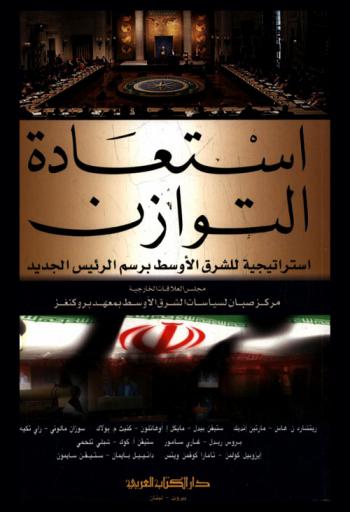
استعادة التوازن : استراتيجية للشرق الأوسط برسم الرئيس الجديد
لا شك في أن الرئيس الرابع والأربعين للولايات المتحدة الأميركية سيجد في انتظاره سلسلة من التحديات الحاسمة، المعقدة والمتشابكة في الشرق الأوسط، التي تتطلب إيلاءها اهتماما عاجلا. ذلك أن النموذج الذي اعتمده جورج بدليو بوش القائم على تغيير أنظمة الحكم ونشر الديمقراطية بالقوة لم يعد يتلاءم والظروف المتغيرة التي ستواجه الإدارة الجديدة على الأرجح الحاجة ماسة إذن لأفكار جديدة، وتحليلات غير حزبية، وتوصيات حصيفة. والكتاب الذي بين أيديكم يفي بتلك الحاجة على أفضل وجه. في اتسعادة التوازن، تتضافر جهود الخبراء والمختصين بشؤون الشرق الأوسط من مجلس العلاقات الخارجية ومركز صبان لسياسة الشرق الأوسط بمعهد بروكنغز، لتطرح استراتيجية أميركية جديدة لمنظمة حيوية لكن متفجرة كالشرق الأوسط فبناء على أبحاث ميدانية معنقة، قام هؤلاء الخبراء ببلورة مجموعة من التوصيات السياسية برسم الرئيس الأميركي الجديد وقد قامت بفحصها وتمحيصها ونقدها هيئة من المختصين من كلا الحزبين يتمتعون بخبرة سياسية واسعة ومعرفة غنية بالمنطقة، هذا التمرين في تخطيط السياسات الذي استغرق سنة كاملة هو الأول من نوعه على الإطلاق، الذي يوحد جهود وقدرات العاملين في هاتين المؤسستين المحترمتين بالسياسة الخارجية لتنصب على درس وتحليل واحدة من أخطر وأهم مناطق العالم. وكل فصل من هذا الكتاب يستضيف اثنين أو أكثر من الباحثين في مجلس العلاقات الخارجية ومعهد بروكنغز لمعاينة واستعراض التحديات التي ستواجه الرئيس المقبل.
Book

Pyongyang's Survival Strategy: Tools of Authoritarian Control in North Korea
Speculation about the future of the North Korean regime has been intense for nearly two decades. In the 1990s, economic crises and famine led to predictions of the Kim regime's imminent downfall. Today analysts highlight impending famine as well as threats to the regime's position brought by eroding information control. Several theories of authoritarian control help to explain how Kim Jong-il and his family have remained in power and how this might change over time. The Kim regime has employed a variety of authoritarian \"tools\" to protect itself both from popular revolt and from internal coups. Its social policies, reliance on certain ideas and nationalism, and use of force prevent the onset of revolution. Through numerous other tools (elite co-optation, manipulation of foreign governments for financial aid, and the \"coupproofing\" of domestic institutions), the regime protects itself from coups d'état and elite unrest. This framework not only helps to explain the past resilience of the regime, but it suggests that the regime is not in danger of being unseated by coups or revolution. Yet it also suggests that the regime has not adequately prepared for succession after Kim's death. This analysis has implications for policy planning about the future of the Korean Peninsula, as well as for negotiations with and coercive strategies toward Pyongyang.
Journal Article
Friends like These: Counterinsurgency and the War on Terrorism
U.S. allies that are fighting al-Qaida-linked insurgencies often suffer illegitimate regimes, civil-military tension manifested by fears of a coup, economic backwardness, and discriminatory societies. These problems, coupled with allies' divergent interests, serve to weaken allied military and security forces tactically, operationally, and strategically. The ability of the United States to change its allies' behavior is limited, despite the tremendous difficulties these problems create, because relying on allied forces is a key component of U.S. strategy in the war on terrorism and the U.S. goal of handing off security to Iraqi military forces. To reduce the effects of allies' weaknesses, the United States should try to increase its intelligence on allied security forces and at times act more like a third party to a conflict. In addition, Washington must have realistic expectations of what training and other efforts can accomplish.
Journal Article
Let Us Now Praise Great Men: Bringing the Statesman Back In
This article analyzes the roles & impact of individual personalities in international relations. The article discusses how a state or region may be affected by the influence of one leader & what conditions present the greatest influence of an individual. The article dismisses the theories of political scientists who argue that one individual does not have the power to influence the history of the nation or world. The article discusses five historical situations that are seen in hindsight as resting on the existence & actions of a single individual. E. Miller
Journal Article

Things Fall Apart: Containing the Spillover from an Iraqi Civil War
\"Iraq is rapidly descending into all-out civil war. Unfortunately, the United States probably will not be able to just walk away from the chaos. Even setting aside the humanitarian nightmare that will ensue, a full-scale civil war would likely consume more than Iraq: historically, such massive conflicts have often had highly deleterious effects on neighboring countries and other outside states. Spillover from an Iraq civil war could be disastrous.\" Thus begins this sobering analysis of what the near future of Iraq could look like, and what America can do to reduce the threat of wider conflict. Preventing spillover of the Iraqi conflict into neighboring states must be a top priority. In explaining how that can be accomplished, Daniel Byman and Kenneth Pollack draw on their own considerable expertise as well as relevant precedents. The authors scrutinize several recent civil wars, including Lebanon, Chechnya, Afghanistan, Kosovo, and Bosnia. After synthesizing those experiences into lessons on how civil wars affect other nations, Byman and Pollack draw from them to produce recommendations for U.S. policy. Even while the Bush Administration attempts to prevent further deterioration of the situation in Iraq, it needs to be planning how to deal with a full-scale civil war if one develops.
eBook

The Social Media War in the Middle East
Several Middle Eastern governments are especially active in information campaigns, notably Egypt, Iran, Qatar, Saudi Arabia, and the United Arab Emirates. They use a range of overt and clandestine disinformation tools to bolster their regimes, silence their critics, and weaken their rivals. Social media are particularly attractive venues for government propaganda. Sustaining social media operations is cheap, allows a degree of deniability, enables regimes to reach a large audience while differentiating their messages, and is easy to exploit. Social media campaigns are important, but judging their success is difficult. However, understanding their methods and motivations is vital in order to anticipate their possible impacts and design the best solutions to improve the quality of information in the region. Here, Byman discusses the social media war in the Middle East.
Journal Article
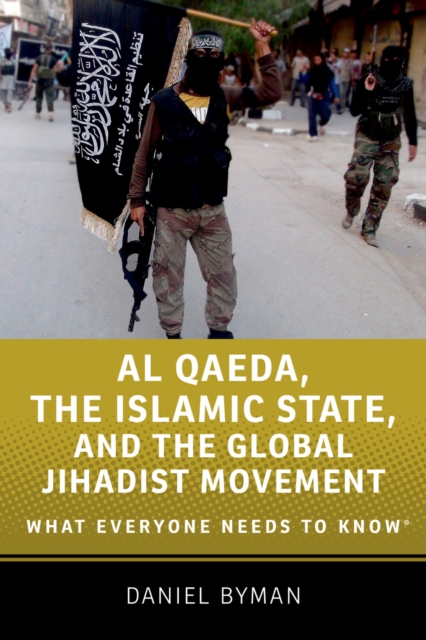
Al Qaeda, the Islamic State, and the Global Jihadist Movement
A sharp and concise overview of Al Qaeda, from its humble origins in the mountains of Afghanistan to the present, explaining its perseverance and adaptation since 9/11 and the limits of U.S. and allied counterterrorism efforts.
eBook