
Catalogue Search | MBRL


Are you sure you want to remove the book from the shelf?

{{itemTitle}}
118
result(s) for
"Byrne, Daniel W"
Sort by:
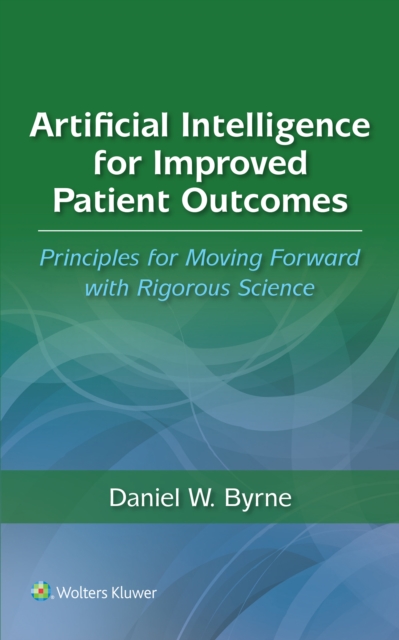
Artificial Intelligence for Improved Patient Outcomes
Artificial Intelligence for Improved Patient Outcomes provides new, relevant, and practical information on what AI can do in healthcare and how to assess whether AI is improving health outcomes. With clear insights and a balanced approach, this innovative book offers a one-stop guide on how to design and lead pragmatic real-world AI studies that yield rigorous scientific evidence-all in a manner that is safe and ethical. Daniel Byrne, Director of Artificial Intelligence Research at AVAIL (the Advanced Vanderbilt Artificial Intelligence Laboratory) and author of landmark pragmatic studies published in leading medical journals, shares four decades of experience as a biostatistician and AI researcher. Building on his first book, Publishing Your Medical Research, the author gives the reader the competitive advantage in creating reproducible AI research that will be accepted in prestigious high-impact medical journals.
eBook

Balanced Crystalloids versus Saline in the Intensive Care Unit. The SALT Randomized Trial
Abstract
Rationale
Saline is the intravenous fluid most commonly administered to critically ill adults, but it may be associated with acute kidney injury and death. Whether use of balanced crystalloids rather than saline affects patient outcomes remains unknown.
Objectives
To pilot a cluster-randomized, multiple-crossover trial using software tools within the electronic health record to compare saline to balanced crystalloids.
Methods
This was a cluster-randomized, multiple-crossover trial among 974 adults admitted to a tertiary medical intensive care unit from February 3, 2015 to May 31, 2015. The intravenous crystalloid used in the unit alternated monthly between saline (0.9% sodium chloride) and balanced crystalloids (lactated Ringer’s solution or Plasma-Lyte A). Enrollment, fluid delivery, and data collection were performed using software tools within the electronic health record. The primary outcome was the difference between study groups in the proportion of isotonic crystalloid administered that was saline. The secondary outcome was major adverse kidney events within 30 days (MAKE30), a composite of death, dialysis, or persistent renal dysfunction.
Measurements and Main Results
Patients assigned to saline (n = 454) and balanced crystalloids (n = 520) were similar at baseline and received similar volumes of crystalloid by 30 days (median [interquartile range]: 1,424 ml [500–3,377] vs. 1,617 ml [500–3,628]; P = 0.40). Saline made up a larger proportion of the isotonic crystalloid given in the saline group than in the balanced crystalloid group (91% vs. 21%; P < 0.001). MAKE30 did not differ between groups (24.7% vs. 24.6%; P = 0.98).
Conclusions
An electronic health record–embedded, cluster-randomized, multiple-crossover trial comparing saline with balanced crystalloids can produce well-balanced study groups and separation in crystalloid receipt.
Clinical trial registered with www.clinicaltrials.gov (NCT 02345486).
Journal Article

Artificial Intelligence for Improved Patient Outcomes—The Pragmatic Randomized Controlled Trial Is the Secret Sauce
KCI Citation Count: 4
Journal Article

Identifying antinuclear antibody positive individuals at risk for developing systemic autoimmune disease: development and validation of a real-time risk model
Positive antinuclear antibodies (ANAs) cause diagnostic dilemmas for clinicians. Currently, no tools exist to help clinicians interpret the significance of a positive ANA in individuals without diagnosed autoimmune diseases. We developed and validated a risk model to predict risk of developing autoimmune disease in positive ANA individuals.
Using a de-identified electronic health record (EHR), we randomly chart reviewed 2,000 positive ANA individuals to determine if a systemic autoimmune disease was diagnosed by a rheumatologist.
, we considered demographics, billing codes for autoimmune disease-related symptoms, and laboratory values as variables for the risk model. We performed logistic regression and machine learning models using training and validation samples.
We assembled training (n = 1030) and validation (n = 449) sets. Positive ANA individuals who were younger, female, had a higher titer ANA, higher platelet count, disease-specific autoantibodies, and more billing codes related to symptoms of autoimmune diseases were all more likely to develop autoimmune diseases. The most important variables included having a disease-specific autoantibody, number of billing codes for autoimmune disease-related symptoms, and platelet count. In the logistic regression model, AUC was 0.83 (95% CI 0.79-0.86) in the training set and 0.75 (95% CI 0.68-0.81) in the validation set.
We developed and validated a risk model that predicts risk for developing systemic autoimmune diseases and can be deployed easily within the EHR. The model can risk stratify positive ANA individuals to ensure high-risk individuals receive urgent rheumatology referrals while reassuring low-risk individuals and reducing unnecessary referrals.
Journal Article

External validation of a predictive model for reintubation after cardiac surgery: A retrospective, observational study
Explore validation of a model to predict patients' risk of failing extubation, to help providers make informed, data-driven decisions regarding the optimal timing of extubation.
We performed temporal, geographic, and domain validations of a model for the risk of reintubation after cardiac surgery by assessing its performance on data sets from three academic medical centers, with temporal validation using data from the institution where the model was developed.
Three academic medical centers in the United States.
Adult patients arriving in the cardiac intensive care unit with an endotracheal tube in place after cardiac surgery.
Receiver operating characteristic (ROC) curves and concordance statistics were used as measures of discriminative ability, and calibration curves and Brier scores were used to assess the model's predictive ability.
Temporal validation was performed in 1642 patients with a reintubation rate of 4.8%, with the model demonstrating strong discrimination (optimism-corrected c-statistic 0.77) and low predictive error (Brier score 0.044) but poor model precision and recall (Optimal F1 score 0.29). Combined domain and geographic validation were performed in 2041 patients with a reintubation rate of 1.5%. The model displayed solid discriminative ability (optimism-corrected c-statistic = 0.73) and low predictive error (Brier score = 0.0149) but low precision and recall (Optimal F1 score = 0.13). Geographic validation was performed in 2489 patients with a reintubation rate of 1.6%, with the model displaying good discrimination (optimism-corrected c-statistic = 0.71) and predictive error (Brier score = 0.0152) but poor precision and recall (Optimal F1 score = 0.13).
The reintubation model displayed strong discriminative ability and low predictive error within each validation cohort.
Future work is needed to explore how to optimize models before local implementation.
•Predictive model validation is frequently proposed but rarely done in anesthesiology.•Multicenter validation has regulatory and logistical barriers.•A federated learning approach, as we demonstrate, helps to overcome these barriers.
Journal Article

The first 1000 symptomatic pediatric SARS-CoV-2 infections in an integrated health care system: a prospective cohort study
Background
The spectrum of illness and predictors of severity among children with SARS-CoV-2 infection are incompletely understood.
Methods
Active surveillance was performed for SARS-CoV-2 by polymerase chain reaction among symptomatic pediatric patients in a quaternary care academic hospital laboratory beginning March 12, 2020. We obtained sociodemographic and clinical data 5 (+/-3) and 30 days after diagnosis via phone follow-up and medical record review. Logistic regression was used to assess predictors of hospitalization.
Results
The first 1000 symptomatic pediatric patients were diagnosed in our institution between March 13, 2020 and September 28, 2020. Cough (52 %), headache (43 %), and sore throat (36 %) were the most common symptoms. Forty-one (4 %) were hospitalized; 8 required ICU admission, and 2 required mechanical ventilation (< 1 %). One patient developed multisystem inflammatory syndrome in children; one death was possibly associated with SARS-CoV-2 infection. Symptom resolution occurred by follow-up day 5 in 398/892 (45 %) patients and by day 30 in 443/471 (94 %) patients. Pre-existing medical condition (OR 7.7; 95 % CI 3.9–16.0), dyspnea (OR 6.8; 95 % CI 3.2–14.1), Black race or Hispanic ethnicity (OR 2.7; 95 % CI 1.3–5.5), and vomiting (OR 5.4; 95 % CI 1.2–20.6) were the strongest predictors of hospitalization. The model displayed excellent discriminative ability (AUC = 0.82, 95 % CI 0.76–0.88, Brier score = 0.03).
Conclusions
In 1000 pediatric patients with systematic follow-up, most SARS-CoV-2 infections were mild, brief, and rarely required hospitalization. Pediatric predictors of hospitalization included comorbid conditions, Black race, Hispanic ethnicity, dyspnea and vomiting and were distinct from those reported among adults.
Journal Article

Use of a real-time risk-prediction model to identify pediatric patients at risk for thromboembolic events: study protocol for the Children’s Likelihood Of Thrombosis (CLOT) trial
Background
Pediatric patients have increasing rates of hospital-associated venous thromboembolism (HA-VTE), and while several risk-prediction models have been developed, few are designed to assess all general pediatric patients, and none has been shown to improve patient outcomes when implemented in routine clinical care.
Methods
The Children’s Likelihood Of Thrombosis (CLOT) trial is an ongoing pragmatic randomized trial being conducted starting November 2, 2020, in the inpatient units at Monroe Carell Jr. Children’s Hospital at Vanderbilt in Nashville, TN, USA. All admitted patients who are 21 years of age and younger are automatically enrolled in the trial and randomly assigned to receive either the current standard-of-care anticoagulation practice or the study intervention. Patients randomized to the intervention arm are assigned an HA-VTE risk probability that is calculated from a validated VTE risk-prediction model; the model is updated daily with the most recent clinical information. Patients in the intervention arm with elevated risk (predicted probability of HA-VTE ≥ 0.025) have an additional review of their clinical course by a team of dedicated hematologists, who make recommendations including pharmacologic prophylaxis with anticoagulation, if appropriate. The anticipated enrollment is approximately 15,000 patients. The primary outcome is the occurrence of HA-VTE. Secondary outcomes include initiation of anticoagulation, reasons for not initiating anticoagulation among patients for whom it was recommended, and adverse bleeding events. Subgroup analyses will be conducted among patients with elevated HA-VTE risk.
Discussion
This ongoing pragmatic randomized trial will provide a prospective assessment of a pediatric risk-prediction tool used to identify hospitalized patients at elevated risk of developing HA-VTE.
Trial registration
ClinicalTrials.gov NCT04574895. Registered on September 28, 2020. Date of first patient enrollment: November 2, 2020.
Journal Article

Balanced Crystalloids versus Saline in Critically Ill Adults
In this cluster-randomized, multiple-crossover trial conducted in 5 ICUs, intravenous administration of balanced crystalloids resulted in a lower rate of the composite outcome — death from any cause, new renal-replacement therapy, or persistent renal dysfunction — than saline.
Journal Article
Balanced Crystalloids versus Saline in Noncritically Ill Adults
This single-center, pragmatic, multiple-crossover trial showed no difference in hospital-free days, the primary outcome, among adults treated with intravenous saline or balanced crystalloids in the ED and subsequently hospitalized outside an ICU.
Journal Article

Protocol for a randomised controlled trial: reducing reintubation among high-risk cardiac surgery patients with high-flow nasal cannula (I-CAN)
IntroductionHeated, humidified, high-flow nasal cannula oxygen therapy has been used as a therapy for hypoxic respiratory failure in numerous clinical settings. To date, limited data exist to guide appropriate use following cardiac surgery, particularly among patients at risk for experiencing reintubation. We hypothesised that postextubation treatment with high-flow nasal cannula would decrease the all-cause reintubation rate within the 48 hours following initial extubation, compared with usual care.Methods and analysisAdult patients undergoing cardiac surgery (open surgery on the heart or thoracic aorta) will be automatically enrolled, randomised and allocated to one of two treatment arms in a pragmatic randomised controlled trial at the time of initial extubation. The two treatment arms are administration of heated, humidified, high-flow nasal cannula oxygen postextubation and usual care (treatment at the discretion of the treating provider). The primary outcome will be all-cause reintubation within 48 hours of initial extubation. Secondary outcomes include all-cause 30-day mortality, hospital length of stay, intensive care unit length of stay and ventilator-free days. Interaction analyses will be conducted to assess the differential impact of the intervention within strata of predicted risk of reintubation, calculated according to our previously published and validated prognostic model.Ethics and disseminationVanderbilt University Medical Center IRB approval, 15 March 2021 with waiver of written informed consent. Plan for publication of study protocol prior to study completion, as well as publication of results.Trial registration numberclinicaltrials.gov, NCT04782817 submitted 25 February 2021.Date of protocol29 August 2022. Version 2.0.
Journal Article