Catalogue Search | MBRL


Are you sure you want to remove the book from the shelf?

{{itemTitle}}
240
result(s) for
"C. Lee Harrington"
Sort by:


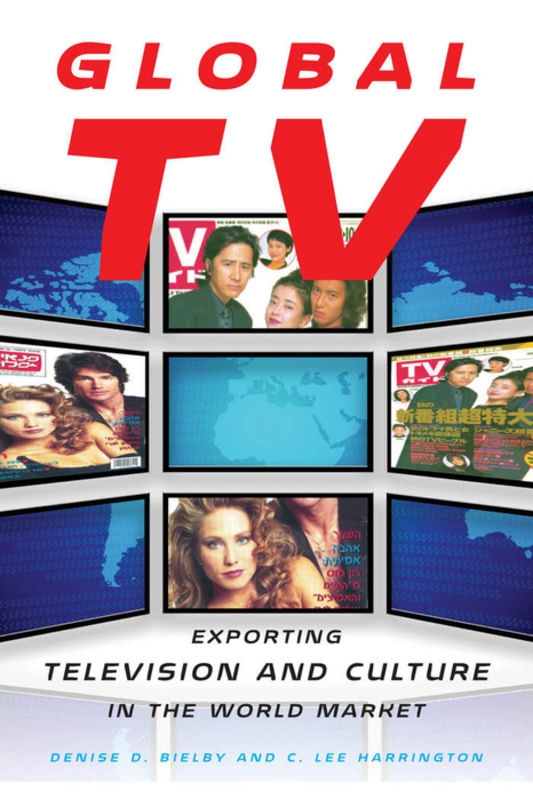
Global TV
pA reporter for the emLos Angeles Times/em once noted that “ emI Love Lucy/em is said to be on the air somewhere in the world 24 hours a day.” That Lucy’s madcap antics can be watched anywhere at any time is thanks to television syndication, a booming global marketplace that imports and exports TV shows. Programs from different countries are packaged, bought, and sold all over the world, under the watch of an industry that is extraordinarily lucrative for major studios and production companies. In strongGlobal TV/strong, Denise D. Bielb and C. Lee Harrington seek to understand the machinery of this marketplace, its origins and history, its inner workings, and its product management. In so doing, they are led to explore the cultural significance of this global trade, and to ask how it is so remarkably successful despite the inherent cultural differences between shows and local audiences. How do culture-specific genres like American soap operas and Latin emtelenovelas/em so easily cross borders and adapt to new cultural surroundings? Why is emThe Nanny/em, whose gum-chewing star is from Queens, New York, a smash in Italy? Importantly, Bielby and Harrington also ask which kinds of shows fail. What is lost in translation? Considering such factors as censorship and other such state-specific policies, what are the inevitable constraints of crossing over? Highly experienced in the field, Bielby and Harrington provide a unique and richly textured look at global television through a cultural lens, one that has an undeniable and complex effect on what shows succeed and which do not on an international scale./p
eBook

Fandom : identities and communities in a mediated world
We are all fans. Whether we log on to Web sites to scrutinize the latest plot turns in Lost , “stalk” our favorite celebrities on Gawker , attend gaming conventions, or simply wait with bated breath for the newest Harry Potter novel—each of us is a fan. Fandom extends beyond television and film to literature, opera, sports, and pop music, and encompasses both high and low culture.
Fandom brings together leading scholars to examine fans, their practices, and their favorite texts. This unparalleled selection of original essays examines instances across the spectrum of modern cultural consumption from Karl Marx to Paris Hilton, Buffy the Vampire Slayer to backyard wrestling, Bach fugues to Bollywood cinema¸ and nineteenth-century concert halls to computer gaming. Contributors examine fans of high cultural texts and genres, the spaces of fandom, fandom around the globe, the impact of new technologies on fandom, and the legal and historical contexts of fan activity. Fandom is key to understanding modern life in our increasingly mediated and globalized world.
eBook

Aging, media, and culture
The intersections of aging, media, and culture are under-explored given trends in population aging, rapid increases in the mediation of everyday life, and the growing cultural significance of media consumption at the global level. This book brings together an international collection of critical scholars, both well-established and up-and-coming, from the various academic disciplines that share a common interest in the future study of aging and media. This anthology of original articles integrates aging theory and media studies through a study of core issues including the media’s influence on the construction of “old age,” the reciprocal influence of aging on media industries, age-based identities in a mediated world, issues of gender and sexuality in an aging society, and the practical implications of a more integrated approach between the two fields. The chapters explore the intersections between aging and media in the realms of advertising/marketing, television, film, music, celebrity and social media, among others.
eBook

Global Television Distribution
This article focuses on the sale and purchase of TV programs and formats at international trade fairs and its implications for our understanding of global television audiences, fans, and texts. Through analytic engagement with the core concept of flow, the authors explore three related issues: (a) how viewers and fans are positioned in distribution practices, (b) the ease through which various televisual elements travel through the distribution process, and (c) the limitations of a conceptual reliance on“traveling”discourses to our understanding of global TV trade.
Journal Article


Flow, Home, and Media Pleasures
Harrington and Bielby explore the examinations of flow and home in the context of a third concept taken for granted in television studies but implied by both Mimi White and David Morley. The literature on television flows and dispersed audiences, or \"home\" TV consumed in a foreign context is also examined.
Journal Article

Fandom, Second Edition
A completely updated edition of a seminal work on fans and communities
We are all fans. Whether we follow our favorite celebrities on Twitter, attend fan conventions such as Comic Con, or simply wait with bated breath for the next episode of our favorite television drama-each of us is a fan.
Recognizing that fandom is not unusual, but rather a universal subculture, the contributions in this book demonstrate that understanding fans--whether of toys, TV shows, celebrities, comics, music, film, or politicians--is vital to an understanding of media audiences, use, engagement, and participatory culture in a digital age.
Including eighteen new, original essays covering topics such as activism directed at racism in sports fandom, fan/producer interactions at Comic Con, the impact of new technologies on fandom, and the politics and legality of fanfic, this wide-ranging collection provides diverse approaches to fandom for anyone seeking to understand modern life in our increasingly mediated, globalized and binge-watching world.
eBook

The Survival of Soap Opera
The soap opera, one of U.S. television's longest-running and most influential formats, is on the brink. Declining ratings have been attributed to an increasing number of women working outside the home and to an intensifying competition for viewers' attention from cable and the Internet. Yet, soaps' influence has expanded, with serial narratives becoming commonplace on most prime time TV programs. The Survival of Soap Opera investigates the causes of their dwindling popularity, describes their impact on TV and new media culture, and gleans lessons from their complex history for twenty-first-century media industries.The book contains contributions from established soap scholars such as Robert C. Allen, Louise Spence, Nancy Baym, and Horace Newcomb, along with essays and interviews by emerging scholars, fans and Web site moderators, and soap opera producers, writers, and actors from ABC's General Hospital, CBS's The Young and the Restless and The Bold and the Beautiful, and other shows. This diverse group of voices seeks to intervene in the discussion about the fate of soap operas at a critical juncture, and speaks to longtime soap viewers, television studies scholars, and media professionals alike.
eBook