
Catalogue Search | MBRL


Are you sure you want to remove the book from the shelf?

{{itemTitle}}
403
result(s) for
"CRACRAFT, JAMES"
Sort by:
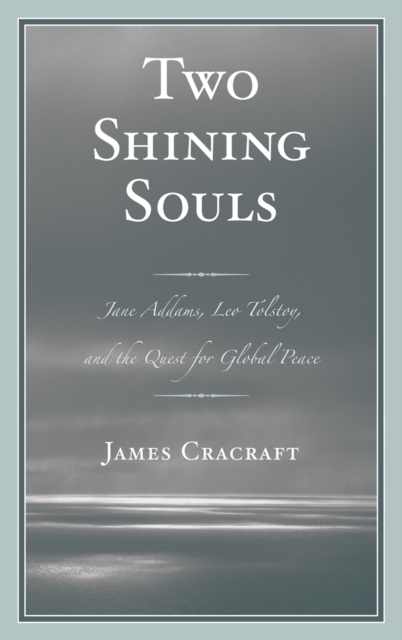
Two shining souls
In his new book, Two Shining Souls, James Cracraft explores the decades-long encounter of Jane Addams, the famous American social reformer and peace activist, with Leo Tolstoy, the acclaimed Russian writer and sage. He documents Tolstoy’s influence in Progressive-era America and particularly on Addams’s career, citing previously unknown or neglected sources. In addition to her study of Tolstoy’s writings—his now largely forgotten religious tracts more than his celebrated fiction—Addams traveled to Russia to see him personally, a meeting that is recounted in detail. Late in her life, Addams described Tolstoy as a rare “shining soul,” a term, Cracraft suggests, that applies equally well to her. His book adds an enduring religious dimension to Addams’s rich legacy while newly delimiting, by contrast, the legacy of Tolstoy. The story of Addams and Tolstoy brings into focus issues of continuing public concern, including the often conflicting demands on the individual—particularly women—of family and society; the legitimacy of violence in pursuit of political aims; the problem of poverty; the role of government in social reform; and the place of religion in both public and private life. The distinctive ways in which these emblematic figures dealt with such controversial issues offer insights that may be valuable even today. Yet the single most important link between Addams and Tolstoy was their preoccupation with the question of peace, which they understood as a value subsuming all other values or goods. So Two Shining Souls is also about the invention and spread of “pacifism” in 19th-century Europe and America and the great crisis in its history precipitated by World War I.
eBook

The Petrine Revolution in Russian Culture
The reforms initiated by Peter the Great transformed Russia not
only into a European power, but into a European culture--a shift,
argues James Cracraft, that was nothing less than revolutionary.
The author of seminal works on visual culture in the Petrine era,
Cracraft now turns his attention to the changes that occurred in
Russian verbal culture.
The forceful institutionalization of the tsar's reforms--the
establishment of a navy, modernization of the army, restructuring
of the government, introduction of new arts and sciences--had an
enormous impact on language. Cracraft details the transmission to
Russia of contemporary European naval, military, bureaucratic,
legal, scientific, and literary norms and their corresponding
lexical and other linguistic effects. This crucial first stage in
the development of a \"modern\" verbal culture in Russia saw the
translation and publication of a wholly unprecedented number of
textbooks and treatises; the establishment of new printing presses
and the introduction of a new alphabet; the compilation, for the
first time, of grammars and dictionaries of Russian; and the
initial standardization, in consequence, of the modern Russian
literary language. Peter's creation of the St. Petersburg Academy
of Sciences, the chief agency advancing these reforms, is also
highlighted.
In the conclusion to his masterwork, Cracraft deftly pulls
together the Petrine reforms in verbal and visual culture to
portray a revolution that would have dramatic consequences for
Russia, and for the world.
Table of Contents:
Figures Preface Note on Dates and Transliteration
1. Introduction Historiography Language,
Culture, Modernity Russian before Peter
2. The Nautical Turn Russia in Maritime Europe
The Naval Statute of 1720 Other Nautical Texts
Institutionalization
3. Military Modernization Military Revolutions:
Europe to Russia The Military Statute of 1716 Textbooks and
Schools
4. Bureaucratic Revolution Advent of the Modern
European State The Petrine State The General Regulation of 1720
Regulations and Justifications
5. Science and Literature Geometry, Geography,
History Eloquence, Theology, Philosophy The Academy
6. The Language Question The Print Revolution
in Russia Lexical Proliferation Dictionaries and Grammars Russian
after Peter
7. Conclusion The Petrine Revolution in Russia
The Persistence of Muscovy
Abbreviations Appendix I: Texts Appendix II: Words Notes
Bibliography Index
No previous author has attempted to document the changes in the
Russian language during Peter the Great's reign by setting such a
wide range of texts in historical context -- with full reference to
the European background -- in a discussion accessible to
non-specialists. James Cracraft extends the definition of
literature beyond belles lettres and private writings, in which the
Petrine era is relatively poor, to 'verbal culture,' in which it is
rich, thereby offering a much wider range of material from a
crucial age of reform and allowing exploration of such phenomena as
the vocabulary of political power. In no other work in print in
English can one find such detailed expositions of the publishing
history and contents of such key texts as the Naval Statute and
Military Statutes. Cracraft's judicious interpretation will be
invaluable to serious students of Russian history. This is a work
of immense erudition and a major contribution to scholarship.
--Lindsey Hughes, University College London
eBook
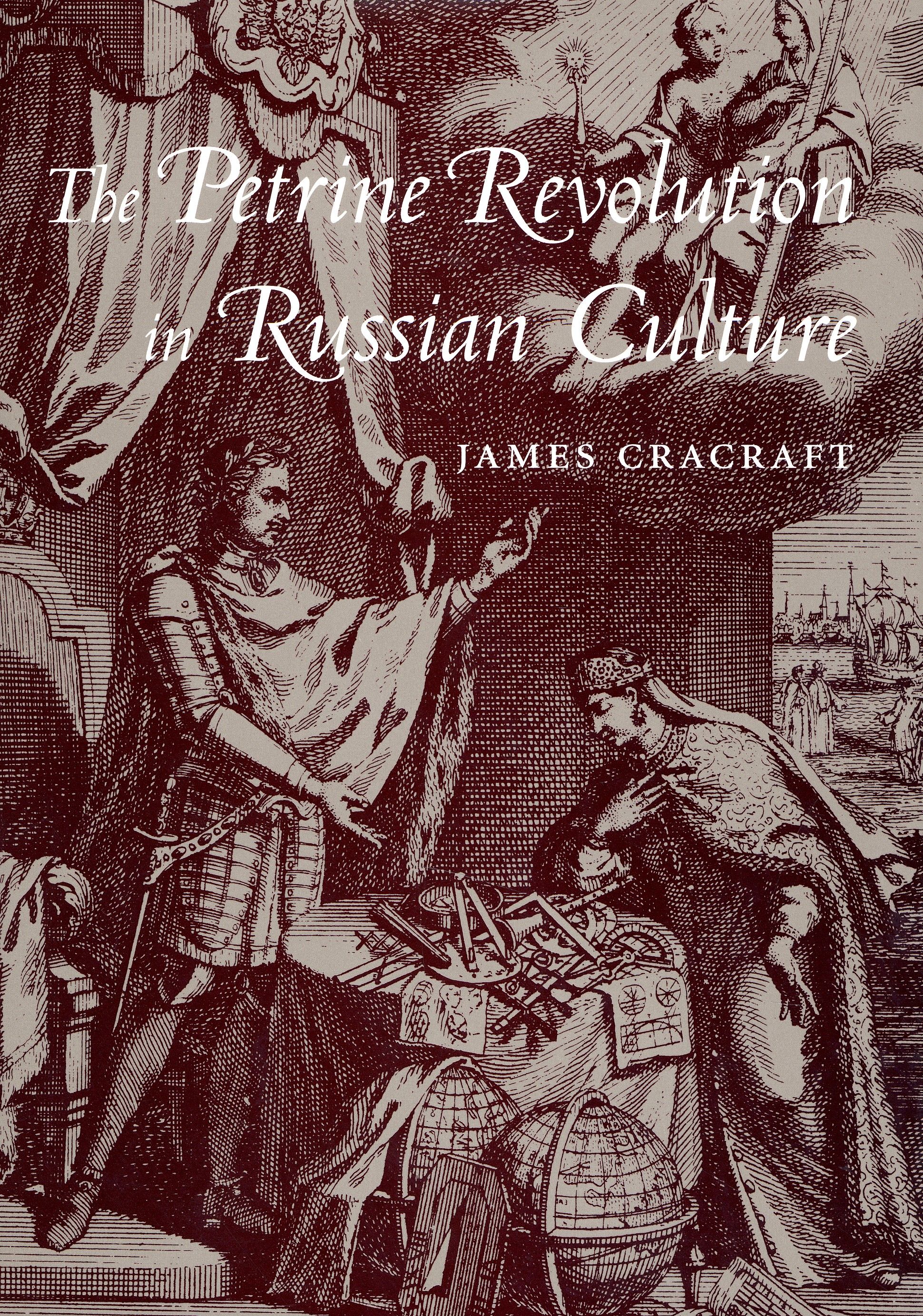
The Petrine revolution in Russian culture
The reforms initiated by Peter the Great transformed Russia not only into a European power, but into a European culture--a shift, argues James Cracraft, that was nothing less than revolutionary. The author of seminal works on visual culture in the Petrine era, Cracraft now turns his attention to the changes that occurred in Russian verbal culture.
The forceful institutionalization of the tsar's reforms--the establishment of a navy, modernization of the army, restructuring of the government, introduction of new arts and sciences--had an enormous impact on language. Cracraft details the transmission to Russia of contemporary European naval, military, bureaucratic, legal, scientific, and literary norms and their corresponding lexical and other linguistic effects. This crucial first stage in the development of a \"modern\" verbal culture in Russia saw the translation and publication of a wholly unprecedented number of textbooks and treatises; the establishment of new printing presses and the introduction of a new alphabet; the compilation, for the first time, of grammars and dictionaries of Russian; and the initial standardization, in consequence, of the modern Russian literary language. Peter's creation of the St. Petersburg Academy of Sciences, the chief agency advancing these reforms, is also highlighted.
In the conclusion to his masterwork, Cracraft deftly pulls together the Petrine reforms in verbal and visual culture to portray a revolution that would have dramatic consequences for Russia, and for the world.
eBook


HISTORY AS PHILOSOPHY
Historians have taken a beating in recent times from an array of critics troubled by our persistent unwillingness to properly theorize our work. This essay contends that their criticisms have generally failed to make headway among mainstream historians owing to a little noticed cognitive byproduct of our work that I call history as philosophy. In so doing I offer a novel defense of professional history as it has been understood and practiced in the Anglophone world over the last half-century or so while suggesting, in conclusion, that historians could not do other than they do without serious psychic and societal loss.
Journal Article
HISTORY AS PHILOSOPHY
Historians have taken a beating in recent times from an array of critics troubled by our persistent unwillingness to properly theorize our work. This essay contends that their criticisms have generally failed to make headway among mainstream historians owing to a little noticed cognitive byproduct of our work that I call history as philosophy. In so doing I offer a novel defense of professional history as it has been understood and practiced in the Anglophone world over the last half-century or so while suggesting, in conclusion, that historians could not do other than they do without serious psychic and societal loss.
Journal Article
HISTORY AS PHILOSOPHY
Historians have taken a beating in recent times from an array of critics troubled by our persistent unwillingness to properly theorize our work. This essay contends that their criticisms have generally failed to make headway among mainstream historians owing to a little noticed cognitive byproduct of our work that I call history as philosophy. In so doing I offer a novel defense of professional history as it has been understood and practiced in the Anglophone world over the last half‐century or so while suggesting, in conclusion, that historians could not do other than they do without serious psychic and societal loss.
Journal Article
History as philosophy
Historians have taken a beating in recent times from an array of critics troubled by our persistent unwillingness to properly theorize our work. This essay contends that their criticisms have generally failed to make headway among mainstream historians owing to a little noticed cognitive byproduct of our work that I call history as philosophy. In so doing I offer a novel defense of professional history as it has been understood and practiced in the Anglophone world over the last half-century or so while suggesting, in conclusion, that historians could not do other than they do without serious psychic and societal loss. Reprinted by permission of Wesleyan University
Journal Article