
Catalogue Search | MBRL


Are you sure you want to remove the book from the shelf?

{{itemTitle}}
236
result(s) for
"Cai, Tuo"
Sort by:

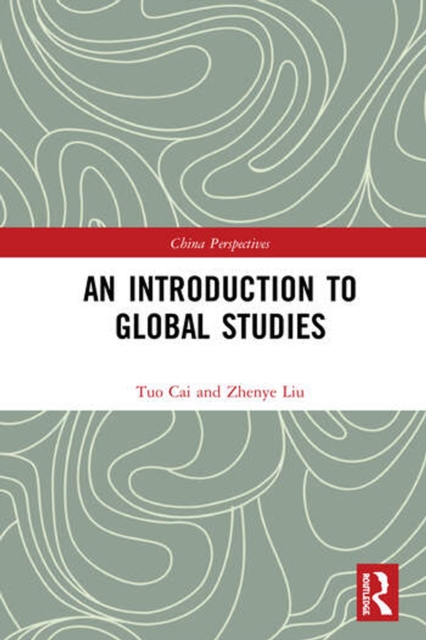
An Introduction to Global Studies
These two volumes introduce the core concepts, critical issues, processes and systems of globalization, an increasingly irresistible trend that has exerted a tremendous impact on the political, economic, military, environmental, and social fortunes of mankind.
eBook

Detection and Genomic Characterization of Torque Teno Virus in Pneumoconiosis Patients in China
Pneumoconiosis is a common occupational disease that can worsen with accompanying infection. Torque teno virus (TTV) is a prevalent human virus with multiple genotypes that can chronically and persistently infect individuals. However, the prevalence of TTV in pneumoconiosis patients is still unclear. This research aims to detect the presence and prevalence of TTV in the alveolar lavage fluid of pneumoconiosis patients in the Hunan Province of China using PCR. As a result, a 65.5% positive rate (19 out of 29) of TTV was detected. The TTV detection rate varies among different stages of silicosis and different pneumoconiosis patient ages. Nine novel TTV genomes ranging in size from 3719 to 3908 nt, named TTV HNPP1, HNPP2, HNPP3, HNPP4, HNPP5, HNPP6-1, HNPP6-2, HNPP7-1 and HNPP7-2, were identified. A genomic comparison and phylogenetic analysis indicated that these nine TTVs represent five different species with high genetic diversity which belong to the genus Alphatorquevirus. HNPP6-1 and HNPP6-2 belong to TTV3, HNPP5 belongs to TTV13, HNPP1 belongs to TTV24, HNPP4 belongs to TTV20, and the others belong to TTV19. The genomes of TTV HNPP1, HNPP6-1, and HNPP6-2 contain three putative open reading frames (ORFs) coding for proteins, ORF1, ORF2, and ORF3, while the other six TTV genomes contain two ORFs coding for proteins, ORF1 and ORF2. These results provide the first description of TTV epidemiology in pneumoconiosis patients in China. The newly identified TTV genome sequences reveal the high genetic diversity of TTV in pneumoconiosis patients and could contribute to a deeper understanding of TTV retention and infection in humans.
Journal Article

Chinese Perspectives on Globalization and Autonomy
This book records the anxiety, concerns, uncertainty and enthusiasm of Chinese scholars in the face of China's embracing of globalization. In other words, it presents a unique Chinese perspective on globalization and state autonomy.
eBook

Effect of total dissolved gas supersaturated water on early life of David’s schizothoracin (Schizothorax davidi)
The effect of total dissolved gas (TDG) supersaturation on fish living downstream of dams is one of the main ecological risks of high dam construction. A strategy for mitigating the negative effects is needed urgently since many high dams are under construction in the upper reaches of the Yangtze River in China. Experiments on the hatching process of David’s schizothoracin were carried out and the results show that the hatching rate decreased with increasing TDG levels, and that most eggs hatched within a very short time in the higher TDG saturation groups. By using a stereomicroscope, damages to the head, yolk sac, body, anus, etc. were found in larvae which hatched in TDG supersaturated water. Results show that the lesion rate increased with increasing TDG levels. Furthermore, 7-d-old David’s schizothoracin were exposed to TDG supersaturated water levels of 100%, 105%, 110%, 115%, 120%, 125%, 130%, 135%, and 140% for testing their tolerance to TDG supersaturation. We found that the median lethal concentrations (LC
50
) for 13, 14, 20, 35, 52, 73, and 96 h exposure were 138%, 138%, 134%, 130%, 129%, 128%, and 126%, respectively. The median lethal times (LT
50
) were 7.49, 11.04, 19.25, and 35.38 h for exposure to water with TDG levels of 145%, 140%, 135%, and 130%, respectively.
Journal Article

Chinese perspectives on globalization and autonomy
Marx's \"view on world history\" and theoretical thinking about globalization / Zhou Minkai -- Have a concrete and historic understanding of globalization and what China has done / Hu Daping -- A preliminary exploration of global co-governance theory / Yu Zhengliang and Chen Yugang -- Global governance : a Chinese perspective and practice / Cai Tuo -- Globalisation and the common interest of mankind / Wang Xinyan -- Globalization and state sovereignty / Yu Keping -- Challenges of globalization and responses of state power / He Zengke -- Rethinking state interests / Wang Yizhou -- The new role of the state in the process of globalization / Yu Jianxing and Xu Yueqian -- State autonomy and China's developing path / Yang Xuedong -- The cultural implications of globalization on national interests : cultural modernization and China's national interests / Guo Shuyong -- Neo-internationalism and China's diplomacy / Qin Yaqing and Zhu Liqun -- Seeking China's new identity : the myth of Chinese nationalism / Wang Yiwei -- The internal conflicts and clashes of world politics in the trend of globalisation / Shi Yinhong -- Globalisation and international regimes : theoretical implications / Men Honghua -- Globalization of the market economy and world transformation / Wang Zaibang -- An analysis of anti-globalization movements from the perspective of \"democratic deficit\" / Ruan Zongze -- Anti-globalization movement and its restrictions on globalization / Liu Jinyuan -- Analytical remarks of anti-economic globalism / Han Deqiang
Book
Characterization of Nestin-positive stem Leydig cells as a potential source for the treatment of testicular Leydig cell dysfunction
The ability to identify and isolate lineage-specific stem cells from adult tissues could facilitate cell replacement therapy. Leydig cells (LCs) are the primary source of androgen in the mammalian testis, and the prospective iden- tification of stem Leydig cells (SLCs) may offer new opportunities for treating testosterone deficiency. Here, in a transgenic mouse model expressing GFP driven by the Nestin (Nes) promoter, we observed Nes-GFP~ cells located in the testicular interstitial compartment where SLCs normally reside. We showed that these Nes-GFP~ cells expressed LIFR and PDGFR-e, but not LC lineage markers. We further observed that these cells were capable of clonogenic self-renewal and extensive proliferation in vitro and could differentiate into neural or mesenchymal cell lineages, as well as LCs, with the ability to produce testosterone, under defined conditions. Moreover, when transplanted into the testes of LC-disrupted or aging models, the Nes-GFP+ cells colonized the interstitium and partially increased testosterone production, and then accelerated meiotic and post-meiotic germ cell recovery. In addition, we further demonstrated that CD51 might be a putative cell surface marker for SLCs, similar with Nestin. Taken together, these results suggest that Nes-GFP~ cells from the testis have the characteristics of SLCs, and our study would shed new light on developing stem cell replacement therapy for testosterone deficiency.
Journal Article
Effect of total dissolved gas supersaturated water on early life ofDavid's schizothoracin (Schizothorax davidl)
The effect of total dissolved gas (TDG) supersaturation on fish living downstream of dams is one of the main ecological risks of high dam construction. A strategy for mitigating the negative effects is needed urgently since many high dams are under construction in the upper reaches of the Yangtze River in China. Experiments on the hatching process of David's schizothoracin were carried out and the results show that the hatching rate decreased with increasing TDG levels, and that most eggs hatched within a very short time in the higher TDG saturation groups. By using a stereomicroscope, damages to the head, yolk sac, body, anus, etc. were found in larvae which hatched in TDG supersaturated water. Results show that the lesion rate increased with increasing TDG levels. Furthermore, 7-d-old David's schizothoracin were exposed to TDG supersaturated water levels of 100%, 105%, 110%, 115%, 120%, 125%, 130%, 135%, and 140% for testing their tolerance to TDG supersaturation. We found that the median lethal concentrations (LC50) for 13, 14, 20, 35, 52, 73, and 96 h exposure were 138%, 138%, 134%, 130%, 129%, 128%, and 126%, respectively. The median lethal times (LTs0) were 7.49, 11.04, 19.25, and 35.38 h for exposure to water with TDG levels of 145%, 140%, 135%, and 130%, respectively.
Journal Article