
Catalogue Search | MBRL


Are you sure you want to remove the book from the shelf?

{{itemTitle}}
490
result(s) for
"Campbell, Dennis"
Sort by:

Employee Selection as a Control System
Theories from the economics, management control, and organizational behavior literatures predict that when it is difficult to align incentives by contracting on output, aligning preferences via employee selection may provide a useful alternative. This study investigates this idea empirically using personnel and lending data from a financial services organization that implemented a highly decentralized business model. I exploit variation in this organization in whether or not employees are selected via channels that are likely to sort on the alignment of their preferences with organizational objectives. I find that employees selected through such channels are more likely to use decision-making authority in the granting and structuring of consumer loans than those who are not. Conditional on using decision-making authority, their decisions are also less risky ex post. These findings demonstrate employee selection as an important, but understudied, element of organizational control systems.
Journal Article
Nonfinancial Performance Measures and Promotion-Based Incentives
In this paper, I examine the sensitivity of promotion and demotion decisions for lower-level managers to financial and nonfinancial measures of their performance and investigate the extent to which the behavior of lower-level managers reflects promotion-based incentives. Additionally, I test for learning versus effort-allocation effects of promotion-based incentives. I find that promotion and demotion decisions for store managers of a major U.S.-based fast-food retailer (QSR) are sensitive to nonfinancial performance measures of service quality and employee retention after controlling for financial performance. The likelihood of demotion in this organization is also sensitive to nonfinancial performance on the dimension of service quality, while the probability of exit is primarily sensitive to financial performance measures rather than nonfinancial performance measures. I also find evidence that the behavior of lower-level managers is consistent with the incentives created by the weighting of nonfinancial performance measures in promotion decisions. Managers in locations where there is a higher ex ante probability of promotion and a higher potential reward upon promotion demonstrate significantly higher levels and rates of performance improvement in service quality. Finally, consistent with promotion-based incentives inducing both effort-allocation and learning effects, I find that performance-improvement rates for service quality: (1) are higher in prepromotion periods in markets where promotions occur, (2) decrease immediately after the occurrence of a promotion in the same market area, and (3) remain higher than in markets where promotions do not occur. These findings provide some of the first empirical evidence on an alternative to the explicit weighting of nonfinancial metrics in compensation contracts as a mechanism for generating improvements in nonfinancial dimensions of performance.
Journal Article

Cost Structure, Customer Profitability, and Retention Implications of Self-Service Distribution Channels: Evidence from Customer Behavior in an Online Banking Channel
This paper uses the context of online banking to investigate the consequences of using self-service distribution channels to alter customer interactions with the firm. Using a sample of retail banking customers observed over a 30-month period at a large U.S. bank, we test whether changes in service consumption, cost to serve, and customer profitability are associated with the adoption of online banking. We find that customer adoption of online banking is associated with (1) substitution , primarily from incrementally more costly self-service delivery channels (automated teller machine and voice response unit); (2) augmentation of service consumption in more costly service delivery channels (branch and call center); (3) a substantial increase in total transaction volume; (4) an increase in estimated average cost to serve resulting from the combination of points (1)–(3); and (5) a reduction in short-term customer profitability. However, we find that use of the online banking channel is associated with higher customer retention rates over one-, two-, and three-year horizons. The documented relationship between the use of online banking and customer retention remains positive even after controlling for self-selection into the online channel. We also find evidence that future market shares for our sample firm are systematically higher in markets with high contemporaneous utilization rates for the online banking channel. This finding holds even after controlling for contemporaneous market share, suggesting it is not simply the result of increased market power leading to the acquisition of online banking customers.
Journal Article
The Customer May Not Always Be Right: Customer Compatibility and Service Performance
This paper investigates the impact of customer compatibility—the degree of fit between customers’ needs and the capabilities of the operations serving them—on customer experiences and firm performance. We use variance decomposition analysis to quantify the relative importance of customer, employee, process, location, and market-level effects on customer satisfaction. In our models, which explain roughly a quarter of the aggregate variance, differences among customers account for 96%–97% of the explainable portion. Further analysis of interaction-level data from banking and quick-service restaurants reveals that customers report relatively consistent satisfaction across transactions with particular firms but that some customers are habitually more satisfied than others. A second set of empirical studies provides evidence that these customer-level differences are explained in part by customer compatibility. Customers whose needs, proxied by differences in demographics and product choices, diverge more starkly from those of their bank’s average customers report significantly lower levels of satisfaction. Consistently, banks that serve customer bases with more dispersed needs receive lower satisfaction scores than banks serving customer bases with less dispersed needs. Finally, a longitudinal analysis of the deposit and loan growth of all federally insured banks in the United States from 2006 to 2017 reveals that customer compatibility affects a firm’s financial performance. Branches with more divergent customers grow more slowly than branches with less divergent customers. Institutions serving customer bases with more dispersed needs have branches that exhibit slower growth than those of institutions serving customer bases with less dispersed needs.
This paper was accepted by Vishal Gaur, operations management.
Journal Article
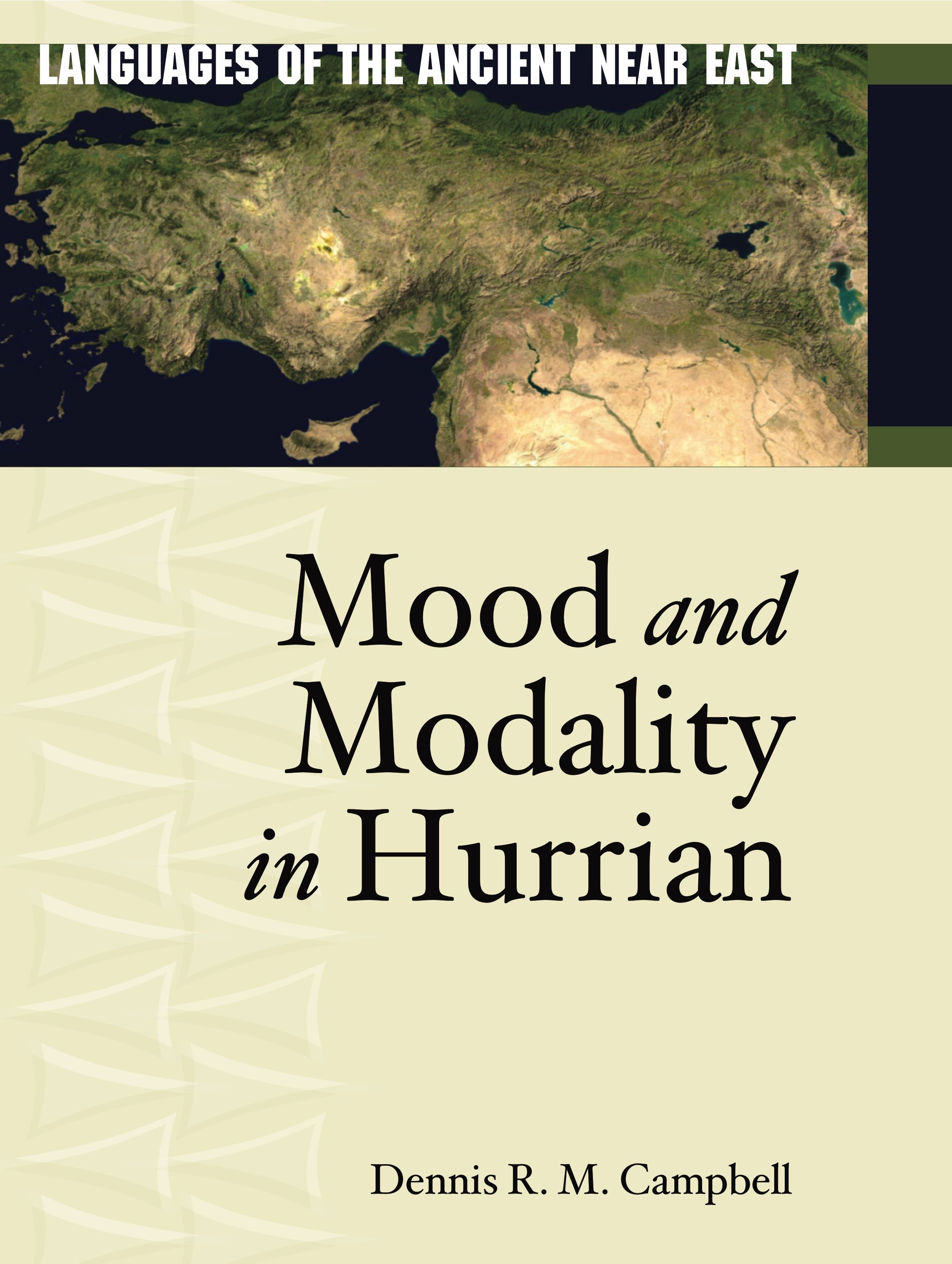
Mood and modality in Hurrian
In a long dead language isolate such as Hurrian, grammatical studies are replete with difficulties. The paucity of material and our inability to compare it to modern, well-documented languages typically results in more questions than answers. Many posited answers to these questions lead inevitably to dead ends. Studies in languages such as Hurrian run the risk of either stagnating due to an adherence to the status quo by scholars or fragmenting when no two scholars can (or will) agree on any point. In this book, Campbell has in many ways broken with tradition in an attempt to go beneath the surface and reveal further complexities in Hurrian grammar. This work, the first English-language monograph on Hurrian since 1941, is not a dogmatic treatise meant to counter the status quo but an exploration of the complexities of the Hurrian language from a new perspective. His conclusions may challenge present perceptions, but the hope is that they will in turn inspire challenges, for it is only in this way that our understanding of this wonderful language and the people who spoke it can be furthered.
Mood and Modality in Hurrian provides a formal and functional analysis of the Hurrian modal morphemes. Unlike the better-known Semitic and Indo-European languages of the ancient Near East, Hurrian has a rich complement of modal endings. This at-times bewildering variety in form and function of modal morphemes in Hurrian has been a largely unstudied topic. Although it has been touched upon in a number of studies, it has not received a detailed treatment until now.
Beyond a philological treatment of a dead language, Campbell also adds to the accumulated knowledge of ergativity. This book explores the interplay between ergativity and modality in Hurrian. Furthermore, Campbell explores the issue of voice in Hurrian and its relation to modality.
eBook

Are Self-Service Customers Satisfied or Stuck?
This paper investigates the impact of self‐service technology (SST) usage on customer satisfaction and retention. Specifically, we disentangle the distinct effects of satisfaction and switching costs as drivers of retention among self‐service customers. Our empirical analysis examines 26,924 multi‐channel customers of a nationwide retail bank. We track each customer's channel usage, overall satisfaction, and retention over a 1‐year period. We find that, relative to face‐to‐face service, customers who use self‐service channels for a greater proportion of their transactions are either no more satisfied, or less satisfied with the service they receive, depending on the channel. However, we also find that these same customers are predictably less likely to defect to a competitor if they are heavily reliant on self‐service channels characterized by high switching costs. Through a mediation model, we demonstrate that, when self‐service usage promotes retention, it does so in a way that is consistent with switching costs. As a robustness check, we examine the behavior of channel enthusiasts, who concentrate transactions among specific channels. Relative to more diversified customers, we find that self‐service enthusiasts in low switching cost channels defect with greater frequency, while self‐service enthusiasts in high switching cost channels are retained with greater frequency.
Journal Article

Organizational Design and Control across Multiple Markets: The Case of Franchising in the Convenience Store Industry
Many companies operate units that are dispersed across different types of markets, serving significantly divergent customer bases. Such dispersion is likely to compromise headquarters' ability to control local managers' behavior and satisfy the needs of different customer types. In this study we find that market-type dispersion is an important determinant of the delegation of decision rights and the provision of incentives. Using a sample of convenience store chains, we show that market-type dispersion is positively associated with the degree of franchising at the chain level as well as the probability of franchising a given store within a chain. Our results are robust to alternative definitions of market-type dispersion and to other determinants of franchising such as the stores' geographic dispersion. Additional analyses suggest that chains that do not franchise cope with market-type dispersion by decentralizing operations from headquarters to their stores and providing their store managers higher variable pay.
Journal Article

A Hurrian Ritual Against Toothache: A Reanalysis of Mari 5
We offer a new analysis here of Mari 5, one of the six Hurrian-language tablets discovered in the palace of Mari. According to our research, this text contains a ritual to cure a toothache. In the process of translating the ritual we posit several new readings of Hurrian words. This ritual is distinct from the better known “Worm and the Toothache” from Mesopotamia. We instead discuss several structural characteristics of the text that link it to the manna lušpur incantations, which were so-called Mesopotamian folk remedies for medical ailments. This would situate Mari 5 within the broader Mesopotamian cultural sphere.
Journal Article

Das Ritual der Aštu (CTH 490): Rekonstruktion und Tradition eines hurritisch-hethitischen Rituals aus Boğazköy/Ḫattuša. By Susanne Görke
Das Ritual der Aštu (CTH 490): Rekonstruktion und Tradition eines hurritisch-hethitischen Rituals aus Boğazköy/Ḫattuša. By Susanne Görke. Culture and History of the Ancient Near East, vol. 40. Leiden: Brill, 2010. Pp. xvii + 365. $179.
Journal Article