
Catalogue Search | MBRL


Are you sure you want to remove the book from the shelf?

{{itemTitle}}
3,987
result(s) for
"Carson, M"
Sort by:
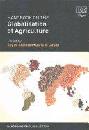
Handbook on the globalisation of agriculture
This handbook provides insights to the ways in which globalisation is affecting the whole agri-food system, from farms to the consumer. The expert contributors cover themes including the physical basis of agriculture, the influence of trade policies, the nature of globalised agriculture, and resistance to globalisation in the form of attempts to foster sustainability and multifunctional agricultural systems.
Book

A pan-genomic approach to genome databases using maize as a model system
Research in the past decade has demonstrated that a single reference genome is not representative of a species’ diversity. MaizeGDB introduces a pan-genomic approach to hosting genomic data, leveraging the large number of diverse maize genomes and their associated datasets to quickly and efficiently connect genomes, gene models, expression, epigenome, sequence variation, structural variation, transposable elements, and diversity data across genomes so that researchers can easily track the structural and functional differences of a locus and its orthologs across maize. We believe our framework is unique and provides a template for any genomic database poised to host large-scale pan-genomic data.
Journal Article

Mission to Mars
Based on the American Museum of Natural History's exhibit Beyond Planet Earth: The Future of Space Exploration, Mission to Mars provides an incredible introduction to the Red Planet. Through breathtaking images from NASA, and information sent to Earth from satellites, budding astronomers and astronauts can explore Mars's climate and features and learn what it would take for a human to travel there.
Book

Impact of COVID-19 on emergency medical services utilization and severity in the U.S. Upper Midwest
The COVID-19 pandemic has claimed over one million lives in the United States and has drastically changed how patients interact with the healthcare system. Emergency medical services (EMS) are essential for emergency response, disaster preparedness, and responding to everyday emergencies. We therefore examined differences in EMS utilization and call severity in 2020 compared to trends from 2015–2019 in a large, multi-state advanced life support EMS agency serving the U.S. Upper Midwest. Specifically, we analyzed all emergency calls made to Mayo Clinic Ambulance, the sole advanced life support EMS provider serving a large area in Minnesota and Wisconsin, and compared the number of emergency calls made in 2020 to the number of calls expected based on trends from 2015–2019. We similarly compared caller demographics, call severity, and proportions of calls made for overdose/intoxication, behavioral health, and motor vehicle accidents. Subgroup analyses were performed for rural vs. urban areas. We identified 262,232 emergent EMS calls during 2015–2019 and 53,909 calls in 2020, corresponding to a decrease of 28.7% in call volume during 2020. Caller demographics shifted slightly towards older patients (mean age 59.7 [SD, 23.0] vs. 59.1 [SD, 23.7] years; p<0.001) and to rural areas (20.4% vs. 20.0%; p = 0.007). Call severity increased, with 95.3% of calls requiring transport (vs. 93.8%; p<0.001) and 1.9% resulting in death (vs. 1.6%; p<0.001). The proportion of calls for overdose/intoxication increased from 4.8% to 5.5% (p<0.001), while the proportion of calls for motor vehicle collisions decreased from 3.9% to 3.0% (p<0.001). All changes were more pronounced in urban areas. These findings underscore the extent to which the COVID-19 pandemic impacted healthcare utilization, particularly in urban areas, and suggest that patients may have delayed calling EMS with potential implications on disease severity and risk of death.
Journal Article

Nickelodeon pandemonium! 1, Channeling fun
Collects eleven stories featuring the stars of Nickelodeon, including Sanjay and Craig, Pig, Boat, Banana, and Cricket, and Fee and Foo.
Book

Haplotype structure in commercial maize breeding programs in relation to key founder lines
Key messageHigh-density haplotype analysis revealed significant haplotype sharing between ex-PVPs registered from 1976 to 1992 and key maize founders, and uncovered similarities and differences in haplotype sharing patterns by company and heterotic group.Proprietary inbreds developed by the private seed industry have been the major source for driving genetic gain in successful North American maize hybrids for decades. Much of the history of industry germplasm can be traced back to key founder lines, some of which were pivotal in the development of prominent heterotic groups. Previous studies have summarized pedigree-based relationships, genetic diversity and population structure among commercial inbreds with expired Plant Variety Protection (ex-PVP). However, less is known about the extent of haplotype sharing between historical founders and ex-PVPs. A better understanding of the relationships between founders and ex-PVPs provides insight into the haplotype and heterotic group structure among industry germplasm. We performed high-density haplotype analysis with 11.3 million SNPs on 212 maize inbreds, which included 157 ex-PVPs registered 1976–1992 and 55 public lines relevant to PVPs. Among these lines were 12 key founders identified in literature review: 207, A632, B14, B37, B73, LH123HT, LH82, Mo17, Oh43, OH7, PHG39 and Wf9. Our results revealed that, on average, 81.6% of an ex-PVP’s genome is shared with at least 1 of these 12 founder lines and more than half when limited to B73, Mo17 and 207. Quantifiable similarities and contrasts among heterotic groups and major US seed industry companies were also observed. The results from this study provide high-resolution haplotype data on ex-PVP germplasm, confirm founder relationship trends observed in previous studies, uncover region-specific haplotype structure differences and demonstrate how haplotype sharing analysis can be used as a tool to explore germplasm diversity.
Journal Article

Nickelodeon pandemonium! 3, Receiving you loud and clear
\"Calling all Nickelodeon fans! Calling all Nickelodeon fans! All-new comics featuring Nickelodeon's craziest characters are here! Join the Breadwinners, Sanjay and Craig, Harvey Beaks, Pig, Goat, Banana, Cricket, and the residents of The Loud House as they cause all sorts of Pandemonium in true Nickelodeon style!\"-- Amazon.com.
Book
The effect of forward postural lean on running economy, kinematics, and muscle activation
Running economy, commonly defined as the metabolic energy demand for a given submaximal running speed, is strongly associated with distance running performance. It is commonly believed among running coaches and runners that running with increased forward postural lean either from the ankle or waist improves running economy. However, recent biomechanical research suggests using a large forward postural lean during running may impair running economy due to increased demand on the leg muscles.
This study tests the effect of altering forward postural lean and lean strategy on running economy, kinematics, and muscle activity.
16 healthy young adult runners (23±5 years, 8M/8F) ran on a motorized treadmill at 3.58m/s using three postural lean angles [upright, moderate lean (50% of maximal lean angle), and maximal lean] and two strategies (lean from ankle and lean from waist [trunk lean]). Metabolic energy consumption, leg kinematics, and muscle activation data were recorded for all trials.
Regardless of lean strategy, running with an increased forward postural lean (up to 8±2 degrees) increased metabolic cost (worsened economy) by 8% (p < .001), increased hip flexion (p < .001), and increased gluteus maximus (p = .016) and biceps femoris (p = .02) muscle activation during the stance phase. This relation between running economy and postural lean angle was similar between the ankle and trunk lean strategies (p = .743).
Running with a large forward postural lean reduced running economy and increased reliance on less efficient extensor leg muscles. In contrast, running with a more upright or moderate forward postural lean may be more energetically optimal, and lead to improved running performance.
Journal Article

FINDER: an automated software package to annotate eukaryotic genes from RNA-Seq data and associated protein sequences
Background
Gene annotation in eukaryotes is a non-trivial task that requires meticulous analysis of accumulated transcript data. Challenges include transcriptionally active regions of the genome that contain overlapping genes, genes that produce numerous transcripts, transposable elements and numerous diverse sequence repeats. Currently available gene annotation software applications depend on pre-constructed full-length gene sequence assemblies which are not guaranteed to be error-free. The origins of these sequences are often uncertain, making it difficult to identify and rectify errors in them. This hinders the creation of an accurate and holistic representation of the transcriptomic landscape across multiple tissue types and experimental conditions. Therefore, to gauge the extent of diversity in gene structures, a comprehensive analysis of genome-wide expression data is imperative.
Results
We present FINDER, a fully automated computational tool that optimizes the entire process of annotating genes and transcript structures. Unlike current state-of-the-art pipelines, FINDER automates the RNA-Seq pre-processing step by working directly with raw sequence reads and optimizes gene prediction from BRAKER2 by supplementing these reads with associated proteins. The FINDER pipeline (1) reports transcripts and recognizes genes that are expressed under specific conditions, (2) generates all possible alternatively spliced transcripts from expressed RNA-Seq data, (3) analyzes read coverage patterns to modify existing transcript models and create new ones, and (4) scores genes as high- or low-confidence based on the available evidence across multiple datasets. We demonstrate the ability of FINDER to automatically annotate a diverse pool of genomes from eight species.
Conclusions
FINDER takes a completely automated approach to annotate genes directly from raw expression data. It is capable of processing eukaryotic genomes of all sizes and requires no manual supervision—ideal for bench researchers with limited experience in handling computational tools.
Journal Article

GenomeQC: a quality assessment tool for genome assemblies and gene structure annotations
Background
Genome assemblies are foundational for understanding the biology of a species. They provide a physical framework for mapping additional sequences, thereby enabling characterization of, for example, genomic diversity and differences in gene expression across individuals and tissue types. Quality metrics for genome assemblies gauge both the completeness and contiguity of an assembly and help provide confidence in downstream biological insights. To compare quality across multiple assemblies, a set of common metrics are typically calculated and then compared to one or more gold standard reference genomes. While several tools exist for calculating individual metrics, applications providing comprehensive evaluations of multiple assembly features are, perhaps surprisingly, lacking. Here, we describe a new toolkit that integrates multiple metrics to characterize both assembly and gene annotation quality in a way that enables comparison across multiple assemblies and assembly types.
Results
Our application, named GenomeQC, is an easy-to-use and interactive web framework that integrates various quantitative measures to characterize genome assemblies and annotations. GenomeQC provides researchers with a comprehensive summary of these statistics and allows for benchmarking against gold standard reference assemblies.
Conclusions
The GenomeQC web application is implemented in R/Shiny version 1.5.9 and Python 3.6 and is freely available at
https://genomeqc.maizegdb.org/
under the GPL license. All source code and a containerized version of the GenomeQC pipeline is available in the GitHub repository
https://github.com/HuffordLab/GenomeQC
.
Journal Article