
Catalogue Search | MBRL


Are you sure you want to remove the book from the shelf?

{{itemTitle}}
14
result(s) for
"Casariego Castiñeira, Paula"
Sort by:

Academias en el teatro de Calderón
This paper aims to study the presence of the academies in Calderón de la Barca’s comedias. First of all, it will be considered the typology of academies used by the author, its tradition as entertainment and its particular characteristics. Then, it will be examined how they are used as a literary topic, regarding its thematic and metrical aspects, in two religious plays, El José de las mujeres and La sibila del Oriente, in one ‘capa y espada’ comedia, El hombre pobre todo es trazas, and in one ‘palatina’ comedia, El secreto a voces. Este trabajo pretende hacer una primera aproximación a las academias en las comedias de Calderón de Barca. Tras identificar las tipologías usadas por el dramaturgo, gracias a la tradición precedente de estos fenómenos de entretenimiento y a sus características definitorias, examinaremos el modo en el que se integran como materia literaria través del análisis temático y métrico en dos comedias religiosas, El José de las mujeres y La sibila del Oriente, en una de capa y espada, El hombre pobre todo es trazas, y en una palatina, El secreto a voces.
Journal Article

Sobre falsas atribuciones y duplicidad de títulos en el teatro calderoniano: \Haz bien y guárdate\ o \La confusión de un jardín\
El estudio de nuestro patrimonio bibliográfico teatral áureo encuentra uno de sus mayores problemas al enfrentarse a la asignación de autorías y títulos falsos en sus textos, una práctica habitual en la imprenta del Siglo de Oro que gozó de especial fortuna en el género editorial de las sueltas. Estas circunstancias también se dan en los impresos conservados de Haz bien y guárdate, atribuido a Calderón, y La confusión de un jardín, atribuido a Moreto. Este artículo aborda la tipografía de sus sueltas, su historia textual y sus atribuciones, a partir de las herramientas de la bibliografía material, la crítica textual y la estilometría. Frente a lo que se sabía hasta el momento, nuestros resultados permiten concluir que se trata de la misma obra, transmitida bajo dos títulos y dos autorías, y que su paternidad no le corresponde a ninguno de estos dramaturgos. The study of Spanish Golden Age theatrical bibliographic heritage encounters one of its main problems when confronted with the assignment of false authorship and titles, a common practice in Golden Age printing and, especially, in the theatre chapbooks.These circumstances are also present in the preserved printings of Haz bien y guárdate, attributed to Calderón, and La confusión de un jardín, attributed to Moreto. This article deals with the typography of their sueltas, their textual history and their attributions, using the tools of material bibliography, textual criticism and stylometry. As an innovativecontribution, our results allow us to conclude that we are dealing with the same play, transmitted under two titles and two authorships, and that its paternity does not correspond to either of these playwrights.
Journal Article
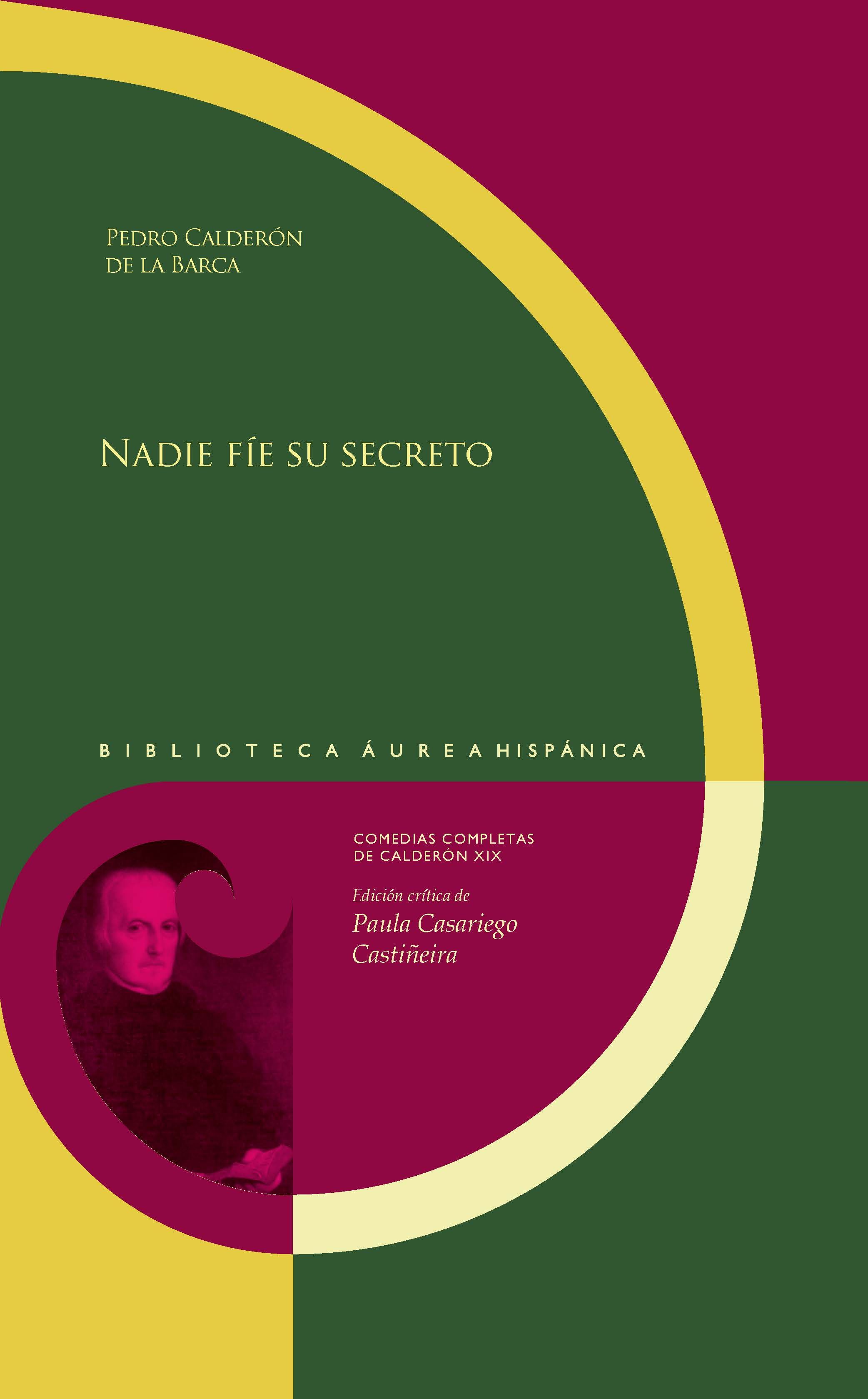
Nadie fíe su secreto
Nadie fíe su secreto fue impresa por primera vez en una suelta (c. 1650) y en la Segunda parte de comedias escogidas (1652). No volvió a las prensas hasta 1691, momento en que Vera Tassis la incorporó a su Novena parte de comedias de Calderón. Si bien los estudiosos posteriores, como Keil y Hartzenbusch, la incluyeron en sus colecciones de teatro calderoniano, esta temprana obra dramática carecía de estudios textuales y literarios de conjunto. Este libro ofrece la primera edición crítica moderna de Nadie fíe su secreto, acompañada de una breve introducción con novedades sobre su recepción, un estudio textual, notas filológicas y su correspondiente aparato crítico. [Texto de la editorial].
eBook


Secrecy as Dramatic Strategy in Calderón’s \Nadie fíe su secreto\
Despite the fact that secrecy has been highlighted as an outstanding theme in Calde-rón’s writing, it has not been studied on every occasion. This paper aims to analyze its dramatic construction in the comedia Nadie fíe su secreto (c. 1629) from a thematic and rhetorical perspective. This main theme is traced back to the classical tradition and is studied from the development of the plot: the secret of love contention ends with its public revelation. This particular construction of secrecy is deeply connected to the rhetorical resources, especially to those related to the expression of silence, which strengthen the suspense.
Journal Article
Un breve recorrido por tres questioni d'amore en Calderón
This study delves deeper into the question of intertextuality, rewriting, and revision with reference to a series of comedias by Pedro Calderon de la Barca--El hombre pobre todo es trazas (1627), El secreto a voces (1642), and Los tres mayores prodigios (1636)--that engage the literary tradition which stems from the questioni d'amore of the book 4 of Boccaccio's Filocolo. Each of these comedias uses an academia--understood as a learned gathering depicted within the drama--to debate two questions from the rich literary tradition associated with Boccaccio: What is the greatest pain love brings? Is it better to give or receive a token of love? In turn, I consider how Calderon rewrites and reconfigures these scenes, proposing yet another questione in Los tres afectos de amor, piedad, desmayo y valor (1658), which asks what kind of husband a woman should choose. Is a courageous husband more desirable than a strong one? Is wisdom preferable to gallantry?
Journal Article


«POR DIVERTIRTE NO MÁS / HACER ACADEMIA QUIERO»: FUNCIONES Y ASUNTOS DE LAS ACADEMIAS EN LAS COMEDIAS DE CALDERÓN
El estudio sistemático de las academias poéticas en las comedias de Calderón de la Barca ofrece un valioso campo de investigación apenas explotado por los especialistas. A partir de la diversidad de formas de la denominada por Calderón «academia» en su obra para referirse a las academias literarias, las academias de amor y los debates, este trabajo quiere abordar el análisis de su función y de sus temáticas en nueve comedias calderonianas: El José de las mujeres, La sibila del Oriente, El hombre pobre todo es trazas, El mayor encanto, amor, Los tres mayores prodigios, El secreto a voces, Amado y aborrecido, Los tres afectos de amor, piedad, desmayo y valor y Los dos amantes del cielo. Con este objetivo, se propondrá, por un lado, la interpretación de su funcionalidad en términos metateatrales y, por otro, se pondrá de relieve que sus asuntos, si bien algunos fueron debatidos en los círculos académicos de su contemporaneidad, remiten a una larga tradición literaria y filosófica no tenida en cuenta hasta la fecha.
Journal Article

Libros en español en la corte vienesa a finales del siglo XVII: un caso de biblioteca de mujeres
In 1666, after the arrival of Margaret Theresa of Spain to Vienna due to her marriage with Leopold I, the reception of the Spanish culture in Viennese court was significantly increased, specially thanks to the theatrical activity and, more in particular, the representations of comedias. Even though the impact of Spanish culture decreased again when Margarita passed away in 1673, noble families maintained this cultural influence not only as an elite but intimate culture. By studying the Spanish books of the library possessed by the countess of Harrach, this paper aims to investigate her transcultural and transnational process, as well as to reveal the survival of the Spanish books’ reading in Vienna after the death of Margaret Theresa of Spain.
Journal Article
El secreto como estrategia dramática: el caso de Nadie fíe su secreto, de Calderón /Secrecy as Dramatic Strategy in Calderón's Nadie fíe su secreto
Despite the fact that secrecy has been highlighted as an outstanding theme in Calderon's writing, it has not been studied on every occasion. This paper aims to analyze its dramatic construction in the comedia Nadie fe su secreto (c 1629) from a thematic and rhetorical perspective. This main theme is traced back to the classical tradition and is studied from the development of the plot: the secret of love contention ends with its public revelation. This particular construction of secrecy is deeply connected to the rhetorical resources, especially to those related to the expression of silence, which strengthen the suspense.
Journal Article