
Catalogue Search | MBRL


Are you sure you want to remove the book from the shelf?

{{itemTitle}}
4
result(s) for
"Castle, Helen, editor"
Sort by:

Neurosurgical Diseases
A structured, evidence-based approach to neurosurgical decision-making for brain pathologies
Evidence-based neurosurgery is one of the most important pillars upon which to build decision management pathways. Effective delivery of care involves understanding the natural history of the disease and the evidence behind available treatment options. Neurosurgical Diseases: An Evidence-Based Approach to Guide Practice by esteemed neurosurgeons Leon T. Lai, Cristian Gragnaniello, and expert contributors covers cranial pathologies neurosurgeons commonly encounter in everyday practice.
The book combines a structured approach to evidence-based neurosurgery with expert opinions, analysis of up-to-date clinical data, understanding of patient preferences and values, and firsthand experiences to facilitate translation of evidence into clinical practice. Twenty-seven consistently formatted chapters are each dedicated to a different disease state, including brain tumors, cerebrovascular disease, Cushing's disease, traumatic brain injury, trigeminal neuralgia, and normal pressure hydrocephalus. All chapters include an introduction, current statistics and data, natural history of the pathology, selected papers for further reading, procedural options and outcomes, and recommended treatment protocols from the authors.
Key Features
* Key content summarized in reader-friendly bullets, diagrams, tables, and illustrative figures enhances acquisition of knowledge
* Discussion of new developments including treatment recommendations for primary and metastatic brain tumors
* Statistical data on cerebral aneurysm treatment outcomes and recommendations for treatment
* New protocols for treating head trauma, closed head injuries, and spontaneous intracranial hemorrhage
This essential resource will help neurosurgical residents and junior neurosurgeons make challenging surgical treatment decisions for complex conditions, clearly and concisely and based on the best evidence.
eBook
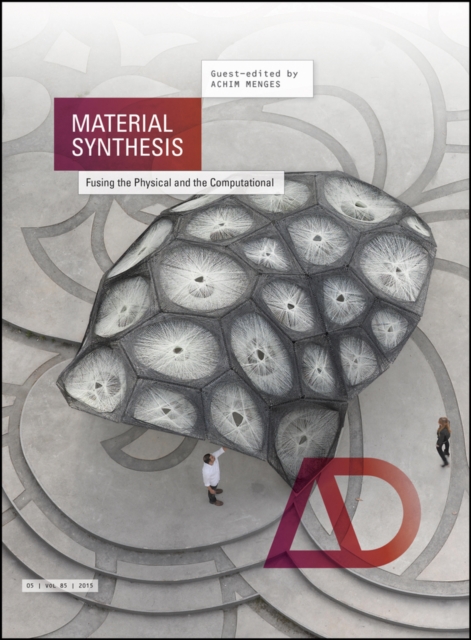
Material synthesis : fusing the physical and the computational
Material Synthesis: Fusing the Physical and the Computational Guest-edited by Achim Menges A new understanding of the material in architecture is fast emerging. Designers are no longer conceiving of the digital realm as separate from the physical world. Instead computation is being regarded as the key interface for material exploration and vice versa. This represents a significant perceptual shift in which the materiality of architecture is no longer seen to be a fixed property and passive receptor of form, but is transformed into an active generator of design and an adaptive agent of architectural performance. In stark contrast to previous linear and mechanistic modes of fabrication and construction, materialisation is now beginning to coexist with design as explorative robotic processes. This represents a radical departure from both the trite modernist emphasis on 'truth to materials' and the dismissal of materials by the previous generation of digital architects. The issue features designers, researchers and thinkers that are at the forefront of exploring new modes of material enquiry and its deep interrelationship with technology, biology and culture. Through their work, which unfolds from multifaceted alliances between the fields of design, engineering and natural sciences, it seeks to trace the emergence of a novel material culture in architecture. Architectural and engineering contributors include: Sean Ahlquist, Martin Bechthold, Philippe Block, Karola Dierichs, Jan Knippers, Achim Menges, Neri Oxman, Steffen Reichert and Tobias Schwinn. Scientific and philosophical perspectives provided by: Mario Carpo, Manuel De Landa, Neil Gershenfeld and Thomas Speck. Features the design research of: Harvard's Material Processes and Systems Group, MIT's Mediated Matter Group and Stuttgart University's Institute for Computational Design.
eBook
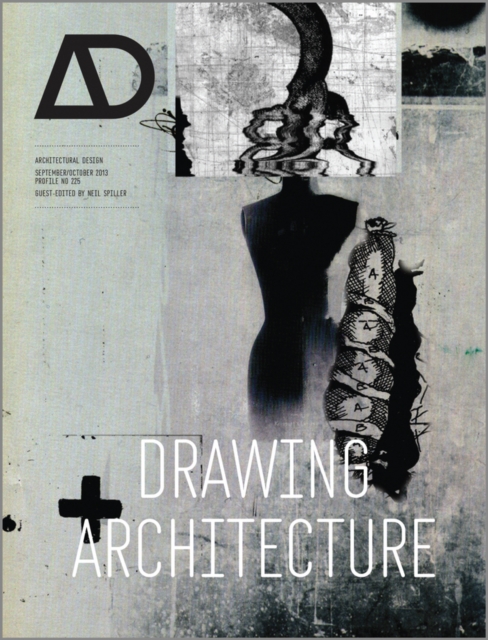
Drawing Architecture
We are in the second decade of the 21st century and, as with most things, the distinction between digital and analogue has become tired and inappropriate. This is also true in the world of architectural drawing, which paradoxically is enjoying a renaissance supported by the graphic dexterity of the computer. This new fecundity has produced a contemporary glut of stunning architectural drawings and representations that could rival the most recent outpouring of architectural vision in the 1960s, 1970s and 1980s. Indeed, there is much to learn by comparing the then and the now. The contemporary drawing is often about its ability to describe the change, fluctuations and mutability of architecture in relation to the virtual/real 21st-century continuum of architectural space. Times have changed, and the status of the architectural drawing must change with them. This reassessment is well overdue, and this edition of AD will be the catalyst for such re-examination. Features the work of: Pascal Bronner, Bryan Cantley, Peter Cook, Perry Kulper, CJ Lim, Tom Noonan, Dan Slavinsky, Neil Spiller, Peter Wilson, Nancy Wolf, Lebbeus Woods and Mas Yendo. Contributors include: Nic Clear, Mark Garcia, Simon Herron and Mark Morris.
eBook