
Catalogue Search | MBRL


Are you sure you want to remove the book from the shelf?

{{itemTitle}}
364
result(s) for
"Caute, David"
Sort by:

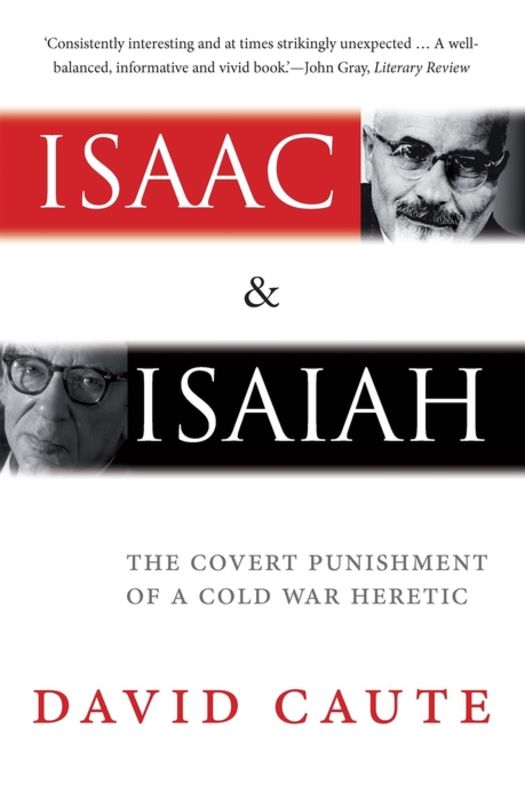
Isaac and Isaiah
Rancorous and highly public disagreements between Isaiah Berlin and Isaac Deutscher escalated to the point of cruel betrayal in the mid-1960s, yet surprisingly the details of the episode have escaped historians' scrutiny. In this gripping account of the ideological clash between two of the most influential scholars of Cold War politics, David Caute uncovers a hidden story of passionate beliefs, unresolved antagonism, and the high cost of reprisal to both victim and perpetrator.
Though Deutscher (1907-1967) and Berlin (1909-1997) had much in common-each arrived in England in flight from totalitarian violence, quickly mastered English, and found entry into the Anglo-American intellectual world of the 1950s-Berlin became one of the presiding voices of Anglo-American liberalism, while Deutscher remained faithful to his Leninist heritage, resolutely defending Soviet conduct despite his rejection of Stalin's tyranny. Caute combines vivid biographical detail with an acute analysis of the issues that divided these two icons of Cold War politics, and brings to light for the first time the full severity of Berlin's action against Deutscher.
eBook


The Cultural Cold War in Western Europe 1945-1960
The idea of the Cold War as a propaganda contest as opposed to a military conflict is being increasingly accepted. This has led to a re-evaluation of the relationship between economic policies, political agendas and cultural activities in Western Europe post 1945. This book provides an important cross-section of case studies that highlight the connections between overt/covert activities and cultural/political agendas during the early Cold War. It therefore provides a valuable bridge between diplomatic and intelligence research and represents an important contribution towards our understanding of the significance and consequences of this linkage for the shaping of post-war democratic societies.
eBook

The CIA, The British Left and The Cold War
Shortly after it was founded in 1947, the CIA launched a secret effort to win the Cold War allegiance of the British left. Hugh Wilford traces the story of this campaign from its origins in Washington DC to its impact on Labour Party politicians, trade unionists, and Bloomsbury intellectuals
eBook