
Catalogue Search | MBRL


Are you sure you want to remove the book from the shelf?

{{itemTitle}}
33
result(s) for
"Central European University"
Sort by:

The Soros lectures : at the Central European University
Five lectures delivered at the Central European University in Budapest, Oct. 26-30, 2009, share the author's thinking on international finance, capitalism, and politics and ethics.
Book

Sacred Polities, Natural Law and the Law of Nations in the 16th-17th Centuries
A fresh look at the importance of natural and international law in the religious politics at the heartlands of the Reformation, from the Low Countries, the German principalities up to Transylvania; from Niels Hemmingsen to Gian Battista Vico; from religious reasons for the universalist claims of natural law to political arguments for the sacred polity, their tension and creative potential.
eBook


The Strasbourg Court and Indirect Race Discrimination: Going Beyond the Education Domain
Prohibiting indirect discrimination has been hailed as guaranteeing substantive equality by addressing issues of structural discrimination and inequalities in a way that direct discrimination cannot and will not. However, Article 14, the ECHR's non-discrimination provision, does not distinguish between direct and indirect discrimination. It was only in 2007 that the European Court of Human Rights explicitly included the notion of indirect (race) discrimination under Article 14 in DH and Others v the Czech Republic, its famous judgment on Roma education segregation. Since then it has applied the prohibition of indirect race discrimination in a limited manner to similar education cases. However, in its recent Grand Chamber decision, Biao v Denmark, the Strasbourg Court started clarifying some unsolved issues in the distinction between direct and indirect discrimination in its case law and finally applied the concept to the much broader area of immigration and citizenship.
Journal Article

The Soros lectures : at the Central European University
Five lectures George Soros recently delivered at the Central European University in Budapest - which he founded in 1991 - distill a lifetime of thinking on finance, capitalism and open society In a series of lectures delivered at the Central European University in October 2009, George Soros provided a broad overview of his thoughts on economics and politics. The lectures are the culmination of a lifetime of practical and philosophical reflection. In the first and second lecture, Soros discusses his general theory of reflexivity and its application to financial markets, providing insight into the recent financial crisis. The third and fourth lectures examine the concept of open society, which has guided Soros' global philanthropy, as well as the potential for conflict between capitalism and open society. The closing lecture focuses on the way ahead, closely examining the increasingly important economic and political role that China will play in the future. \"The Budapest Lectures\" presents these five seminal talks into one volume, which offers a condensed and highly readable summary of Soros' world view.
eBook

Health, Hygiene and Eugenics in Southeastern Europe to 1945
This volume is a collection of chapters that deal with issues of health, hygiene and eugenics in Southeastern Europe to 1945, specifically, in Bosnia-Herzegovina, Bulgaria, Croatia, Greece and Romania. Its major concern is to examine the transfer of medical ideas to society via local, national and international agencies and to show in how far developments in public health, preventive medicine, social hygiene, welfare, gender relations and eugenics followed a regional pattern. This volume provides insights into a region that has to date been marginal to scholarship of the social history of medicine.
eBook

Environment and Development
Intro -- Contents -- Preface -- Acknowledgements -- Introduction -- Chapter One: Environmental Topics for Non-Majors -- Ecological Economics as an Interdisciplinary Course Taught to Master's Students of Environmental Protection -- Political Dimensions of Environmental Problems -- Environmental Engineering for Future Engineers -- Ecological Economics: An Introduction for Non-Majors -- Fundamentals of Ecotourism -- Environmental Discourse in Theory and Practice -- Chapter Two: Environmental History -- Environmental History of Russia -- Grounds of Environmental History of Ukraine -- Chapter Three: Environmental Management -- Urbanization and Sustainable Development -- Environmental Management -- Sustainable Development through Quality Management Standards in the European Area -- Environmentally-Friendly Agriculture and Sustainable Food Production -- Sustainable Development: Environmental Protection and Management Tools -- Landscape Planning: Introductory Course -- Ecology and Tourism: Strategic Environmental Assessment -- Our Environment in a Plurality of Policies Through the Future -- Chapter Four: Region-Specific Sustainable Development -- Sustainable Human Development -- Meaningful Learning for Sustainable Development -- Strategic Planning of Sustainable Regional and Spatial Development -- Implementing Principles of Sustainable Development in the Kyrgyz Republic -- Energy Efficiency and Sustainable Development for Non-environmental Students -- Chapter Five: Environmental Risk -- Food Security: Global and Regional Prospects -- Transboundary Environmental Issues and Security -- Sociological Approaches to Biotechnology: Using Genetically Modified Organisms in Agriculture -- Environmental Security in Central Asia -- Biographical Data of Authors
eBook
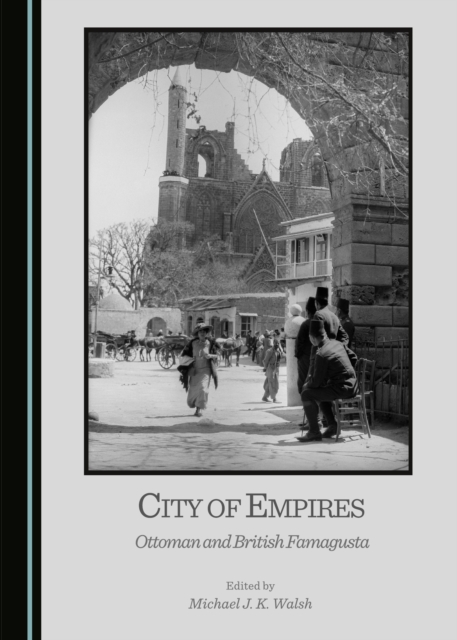
City of Empires
Despite its undoubted importance, there has never been a volume dedicated entirely to studies of the historic city of Famagusta in the years which followed the siege of 1571. City of Empires: Ottoman and British Famagusta takes an important first step in redressing this imbalance. The four centuries which followed the conflict, as the contributions gathered here demonstrate, are rich research seams for scholars of history, urban design, photography, art history, literature, drama, military history and the post-war mandates. City of Empires also places emphasis on the tangible heritage of Famagusta - twice listed as endangered by World Monuments Fund and now the recipient of an increasing number of international efforts to protect it.
eBook

Capacity building in economics education and research
This book presents papers from the conference on 'Scaling up the Success of Capacity Building in Economic Education and Research,' which took place in Budapest at the Central European University campus.
eBook
Seed exchange networks for agrobiodiversity conservation. A review
The circulation of seed among farmers is central to agrobiodiversity conservation and dynamics. Agrobiodiversity, the diversity of agricultural systems from genes to varieties and crop species, from farming methods to landscape composition, is part of humanity’s cultural heritage. Whereas agrobiodiversity conservation has received much attention from researchers and policy makers over the last decades, the methods available to study the role of seed exchange networks in preserving crop biodiversity have only recently begun to be considered. In this overview, we present key concepts, methods, and challenges to better understand seed exchange networks so as to improve the chances that traditional crop varieties (landraces) will be preserved and used sustainably around the world. The available literature suggests that there is insufficient knowledge about the social, cultural, and methodological dimensions of environmental change, including how seed exchange networks will cope with changes in climates, socio-economic factors, and family structures that have supported seed exchange systems to date. Methods available to study the role of seed exchange networks in the preservation and adaptation of crop specific and genetic diversity range from meta-analysis to modelling, from participatory approaches to the development of bio-indicators, from genetic to biogeographical studies, from anthropological and ethnographic research to the use of network theory. We advocate a diversity of approaches, so as to foster the creation of robust and policy-relevant knowledge. Open challenges in the study of the role of seed exchange networks in biodiversity conservation include the development of methods to (i) enhance farmers’ participation to decision-making in agro-ecosystems, (ii) integrate ex situ and in situ approaches, (iii) achieve interdisciplinary research collaboration between social and natural scientists, and (iv) use network analysis as a conceptual framework to bridge boundaries among researchers, farmers and policy makers, as well as other stakeholders.
Journal Article