
Catalogue Search | MBRL


Are you sure you want to remove the book from the shelf?

{{itemTitle}}
1
result(s) for
"Chammas, Carla editor"
Sort by:
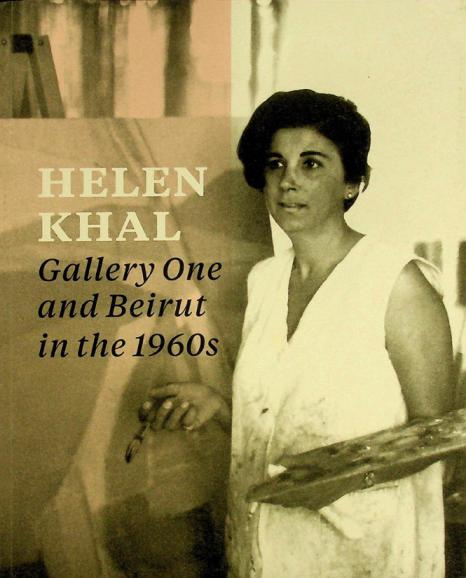
Helen Khal : Gallery One and Beirut in the 1960s
Helen Khal: Gallery One and Beirut in the 1960s is a reflective exhibition catalogue; part archive, as well as a living testament to the late Helen Khal (1923-2009). A polymath, an artist, educator, and writer, Khal was also the co-founder of Gallery One, the first modern and contemporary art gallery in Lebanon, which opened its doors to the public in Beirut, in 1963. The catalogue follows on from an exhibition initiated by Carla Chammas and curated by Chammas and Rachel Dedman as part of \"Home Works 8: A Forum on Cultural Practices\", opening its doors at the Sursock Museum, Beirut in October 2019. The exhibition, like the catalogue, detailed Helen's life and practice as a catalytic lens through which to explore the work of a group of artists whom she was close to, in life and in art, including: Chafic Abboud, Yvette Achkar, Etel Adnan, Huguette Caland, Simone Fattal, Farid Haddad, Saloua Raouda Choucair, Aref El Rayess, and Dorothy Salhab-Kazemi. From here, the publication seeks to address the exhibition's themes of love, sex, and motherhood, the relationship between visual art and the literary landscape of 1960s and 1970s Beirut, and the galleries and studios in which public collaborations and private kinships were forged. Taking an intimate approach to a fabled period, Helen Khal: Gallery One and Beirut in the 1960s, unfolds a rich picture of the friendships, connections, modes of exchange, common concerns, and differing approaches of some of the best-known and least-remembered artists of the mid-twentieth century in Lebanon
Book