
Catalogue Search | MBRL


Are you sure you want to remove the book from the shelf?

{{itemTitle}}
255
result(s) for
"Charles J. Halperin"
Sort by:

Ivan the Terrible : free to reward & free to punish
Ivan the Terrible is infamous as a sadistic despot responsible for the deaths of thousands of innocent people, particularly during the years of the oprichnina, his state-within-a-state. Ivan was the first ruler in Russian history to use mass terror as a political instrument. However, Ivan's actions cannot be dismissed by attributing the behavior to insanity. Ivan interacted with Muscovite society as both he and Muscovy changed. This interaction needs to be understood in order properly to analyze his motives, achievements, and failures.Ivan the Terrible: Free to Reward and Free to Punish provides an up-to-date comprehensive analysis of all aspects of Ivan's reign. It presents a new interpretation not only of Ivan's behavior and ideology, but also of Muscovite social and economic history. Charles Halperin shatters the myths surrounding Ivan and reveals a complex ruler who had much in common with his European contemporaries, including Henry the Eighth.
Book
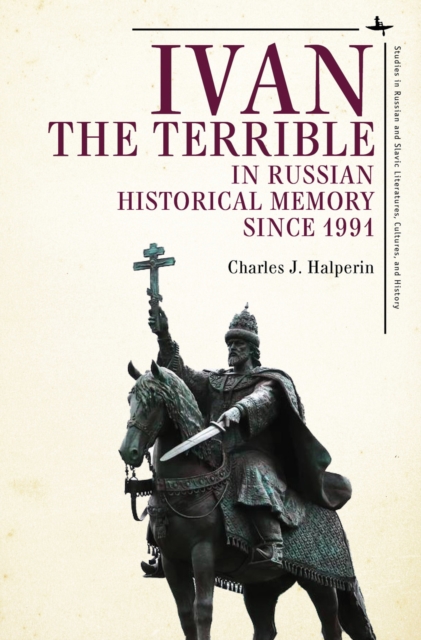
Ivan the Terrible in Russian historical memory since 1991
Tsar Ivan the Terrible (Ivan IV, 1533-1584) is one of the most controversial rulers in Russian history, infamous for his cruelty. He was the first Russian ruler to use mass terror as a political instrument, and the only Russian ruler to do so before Stalin. Comparisons of Ivan to Stalin only exacerbated the politicization of his image. Russians have never agreed on his role in Russian history, but his reign is too important to ignore. Since the abolition of censorship in 1991 professional historians and amateurs have grappled with this problem. Some authors have manipulated that image to serve political and cultural agendas. This book explores Russia's contradictory historical memory of Ivan in scholarly, pedagogical and political publications.
eBook

Lay Cash Donations to the Trinity-Sergius Monastery during the Reign of Ivan IV
Lay elite cash donations to the Trinity-Sergius Monastery and other monasteries during the reign of Ivan IV demonstrate that its members disposed of significant discretionary cash resources, which impugns the argument that the lay elite did not oppose Ivan's reign of terror because it was economically dependent upon the state, disputes the economic impact of the oprichnina, and raises the question of how the lay elite acquired the silver contained in the coinage it donated. It also demonstrates that the Trinity-Sergius Monastery was supported by a distinct cohort of loyal donors.
Journal Article

Signatures and Signatories
This article identifies 627 signatures by at least 361 lay non-scribes, presumably overwhelmingly gentry, in 179 documents from the reign of Ivan IV. These data provide new information on literacy and documentation in sixteenth-century Muscovy. Signatures appeared in a variety of forms, often in short sentences. Not just witnesses but primaries, executors and others signed documents. Literate men signed some documents but not others. Although we do not know what motives determined whether a participant in the transaction signed it, signing was a socially acceptable and normal procedure. Failure to sign did not signify illiteracy. The ambiguities of the evidence of signatures reflect the transitional status of writing in Muscovite culture as written documentation gradually replaced oral transmission.
Journal Article
Signatures and Signatories
This article identifies 627 signatures by at least 361 lay non-scribes, presumably overwhelmingly gentry, in 179 documents from the reign of Ivan IV. These data provide new information on literacy and documentation in sixteenth-century Muscovy. Signatures appeared in a variety of forms, often in short sentences. Not just witnesses but primaries, executors and others signed documents. Literate men signed some documents but not others. Although we do not know what motives determined whether a participant in the transaction signed it, signing was a socially acceptable and normal procedure. Failure to sign did not signify illiteracy. The ambiguities of the evidence of signatures reflect the transitional status of writing in Muscovite culture as written documentation gradually replaced oral transmission.
Journal Article

Ivan the Terrible in Russian Historical Memory since 1991
Tsar Ivan the Terrible (Ivan IV, 1533-1584) is one of the most
controversial rulers in Russian history, infamous for his cruelty.
He was the first Russian ruler to use mass terror as a political
instrument, and the only Russian ruler to do so before Stalin.
Comparisons of Ivan to Stalin only exacerbated the politicization
of his image. Russians have never agreed on his role in Russian
history, but his reign is too important to ignore. Since the
abolition of censorship in 1991 professional historians and
amateurs have grappled with this problem. Some authors have
manipulated that image to serve political and cultural agendas.
This book explores Russia's contradictory historical memory of Ivan
in scholarly, pedagogical and political publications.
eBook

Josephans and Non-Possessors (Trans-Volga Elders) during the Reign of Ivan IV
Abstract
In Ivan the Terrible: Free to Reward and Free to Punish I contradicted myself in discussing the possible existence of church parties in Muscovy. After accepting Ostrowski's argument that Iosif Volotskii and Nil Sorskii did not belong to antagonistic \"parties,\" I followed Goldfrank's earlier publications that there were Josephan and Non-Possessor \"parties\" after the deaths of their \"founders.\" I proposed that the Josephans were an old-boy network in Iosif's time and then promptly dropped that concept in discussing the rest of the sixteenth century. This article attempts to rectify those errors by consistently applying the concept of old-boy network to the Josephans throughout the sixteenth century. Because the persecution of heretics is central to the paradigm of the Josephans as a \"party,\" this reconsideration entailed engaging the very notion of \"heresy\" in the Russian Orthodox Church at the time. It also proposes that the paradigm of antagonistic church parties, the Josephans and the Non-Possessors / Trans-Volga Elders, originated in Prince Andrei Kurbsky's History of the Grand Prince of Moscow.
Journal Article
A Riddle Wrapped in a Mystery Inside an Enigma: Ivan the Terrible
Nine of the ten articles in this Forum critique and/or expand upon themes, conclusions, or interpretations in Charles J. Halperin's Ivan the Terrible: Free to Reward and Free to Punish (2019), albeit in greatly varying proportion. The tenth addresses how to teach from the book. The quality of the articles speaks for itself. The range of the themes addressed speaks to the scope of Ivan's reign. All the contributions to the Forum constitute valuable contributions to scholarship on Ivan, but to further discussion the remarks below concentrate on areas of disagreement. Much research remains to be done, but it is doubtful that historians will ever fully understand Ivan the Terrible and his reign. Ivan will always remain \"a riddle wrapped in a mystery inside an enigma,\" and consensus among historians will forever remain an elusive dream.
Journal Article
\Do Not Curse Me for My Copying Errors: Sixteenth-Century Russian Manuscript Books\
On the basis of 734 dated colophons in sixteenth-century Russian manuscript books, Sergei Usachev examines where the books were written, who copied them, and who ordered them. He concludes that the books were produced in all regions of Russia and that members of all social classes ordered them and copied them, although in different proportions: the former had a higher social profile than the latter. His publication of the full texts of the colophons makes it possible for historians to explore additional themes of sixteenth-century Russian social and cultural history.
Journal Article
\Scratch a Russian, Find a Turk\
In this first-rate monograph, Cornelia Soldat confirms earlier impressionistic assertions that the portrayal of Ivan iv as a tyrant and the Muscovites as barbarians in German-language pamphlets (Flugschriften) written as propaganda during the Livonian War (1558-1582), are simply projections onto the Muscovite discourse of the motifs of the anti-Ottoman discourse that originated in the fifteenth century after the fall of Constantinople in 1453. Therefore the pamphlets have no value whatsoever for the study of sixteenth- and seventeenth-century Muscovite history. These conclusions have wider significance for the interpretation of the historical reliability of two other source genres beyond the scope of Soldat's monograph, Livonian chronicles and defector German travel accounts written by Germans who served Ivan iv but then fled Muscovy to write scurrilous denunciations of him as a tyrant.
Journal Article