
Catalogue Search | MBRL


Are you sure you want to remove the book from the shelf?

{{itemTitle}}
40
result(s) for
"Chaubal, Pinakin"
Sort by:
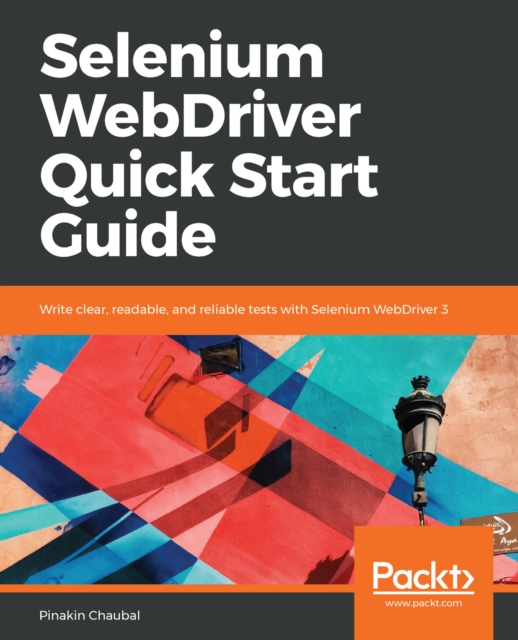
Selenium WebDriver Quick Start Guide
Selenium WebDriver is a platform-independent API for automating testing of both browser and mobile applications. It is also a core technology in many other browser automation tools, APIs and frameworks. This book will guide you through the WebDriver APIs that are used in automation tests.
eBook
Mastering MEAN Stack
A step-by-step guide to building web applications with the MEAN stack
Key Features
? Gain a comprehensive understanding of full stack development and the MEAN stack.
? Implement automated testing using Supertest and JEST for reliable and efficient code testing.
? Understand the importance of deployment with containers.
Description
The MEAN stack, comprising MongoDB, Express.js, Angular, and Node.js, is a widely used and robust web development framework. Acquiring expertise in the MEAN stack will equip you with the necessary skills to strengthen your web development capabilities, enabling you to build efficient and modern web applications. This book is a comprehensive guide to full stack development using the MEAN stack (MongoDB, Express.js, Angular, and Node.js). It covers all the essential aspects of building robust web applications, from architectural design to implementation. The book introduces the fundamentals of full-stack development and the advantages of using the MEAN stack. It explains the installation and configuration of the MEAN stack components and teaches how to connect them to create powerful full-stack applications seamlessly. The book also covers security mechanisms like authentication and authorization to ensure application security. The book will help you gain proficiency in front-end development with Angular and back-end integration with Node.js. The book also covers real-time data updates using NATS Streaming, automated testing techniques, and the integration of additional services like comments. By the end of the book, you can confidently build full-stack applications using the MEAN stack.
What you will learn
? Install and configure the necessary components for building web applications.
? Master frontend development using Angular, including component creation and data binding.
? Discover the power of Node.js and its integration with Angular for efficient backend development.
? Explore the integration of the Comments service and understand the concepts of subdocuments and references.
? Test the integration of the Posts and Comments service, ensuring smooth communication between the two components.
Who this book is for
Whether you are an absolute beginner or an experienced developer, this book caters to both audiences, providing valuable insights and practical knowledge.
Table of Contents
1. Fundamentals of Full Stack Development and the MEAN Stack
2. Architectural Design of Our Sample Application
3. Installing the Components
4. Creation of the Frontend Using Angular
5. Addition of Node.js and Ideas for Integration
6. Handling Authorization
7. Creating the Posts Service and NATS Streaming Integration
8. Introducing Automated Testing
9. Integrating the Comments Service
10. Creating the Comments Service
11. Implementing the Frontend
eBook


Carbon structure of coke at high temperatures and its influence on coke fines in blast furnace dust
A thermal annealing study of three industrial cokes was carried out in a horizontal tube furnace at a range of temperatures up to 1600 °C under N^sub 2^. Evolution of the carbon structure of cokes was established by determining the stack height (L^sub 002^) of aromatic carbon layers on the basis of the 002 carbon peak in their X-ray diffraction (XRD) spectra by using the classical Scherrer's approach. The heat-treatment temperature is shown to have a strong impact on the growth of crystalline order of coke carbon by demonstrating a linear correlation between the carbon crystallite height (L^sub 002^) and the annealing temperature. The intensity of the thermal effects on the growth of the crystalline order of coke carbon is influenced by the coke ash chemistry, particularly with the iron content of the coke. The carbon structure of blast furnace (BF) dust samples was also analyzed by using XRD and scanning electron microscopy (SEM). Under a similar range of heat-treatment temperatures, growth of the carbon crystallite (L^sub 002^) of coke, in both the laboratory and the industrial BF, was found to be of the same order of magnitude. The correlation between the carbon structure (L^sub 002^) of coke and the annealing temperature is used to ascertain the temperature of the origin of coke fines in a BF. The carbon structure of coke is shown to have a significant influence on the coke behavior in a BF such that highly ordered coke displayed lower reactivity as well as higher proportion of coke fines in the dust. The carbon structure of coke fines in BF dust has been shown as an indicator of the crystallite dimension (L^sub 002^) of the coke in a BF, and has a potential to assess coke performance, particularly of the coke fine generations from different thermal regimes of a BF and also their subsequent consumption. [PUBLICATION ABSTRACT]
Journal Article
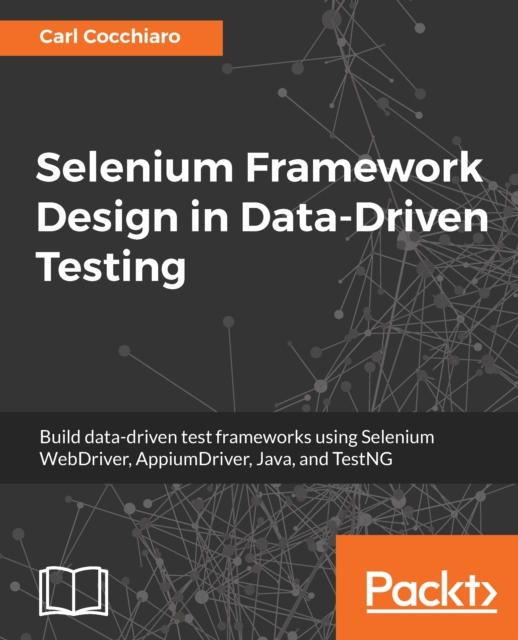
Selenium framework design in data-driven testing
The Selenium WebDriver 3.x Technology is an open source API available to test both Browser and Mobile applications. It is completely platform independent in that tests built for one browser or mobile device, will also work on all other browsers and mobile devices. Selenium supports all major development languages which allow it to be tied directly into the technology used to develop the applications. This guide will provide a step-by-step approach to designing and building a data-driven test framework using Selenium WebDriver, Java, and TestNG. The book starts off by introducing users to the Selenium Page Object Design Patterns and D.R.Y Approaches to Software Development. In doing so, it covers designing and building a Selenium WebDriver framework that supports both Browser and Mobile Devices. It will lead the user through a journey of architecting their own framework with a scalable driver class, Java utility classes, JSON Data Provider, Data-Driven Test Classes, and support for third party tools and plugins. Users will learn how to design and build a Selenium Grid from scratch to allow the framework to scale and support different browsers, mobile devices, versions, and platforms, and how they can leverage third party grids in the Cloud like SauceLabs. Other topics covered include designing abstract base and sub-classes, inheritance, dual-driver support, parallel testing, testing multi-branded applications, best practices for using locators, and data encapsulation. Finally, you will be presented with a sample fully-functional framework to get them up and running with the Selenium WebDriver for browser testing
eBook

Industry 4.0...the continuing story
Delegates were in for a treat at the Future Steel Forum 2018 conference in Warsaw where leading experts in the fields of Industry 4.0 and steel manufacturing met to discuss the latest trends in this dynamic sector of the market. The Future Steel Forum is a steel conference that concentrates on Industry 4.0 (or 'smart manufacturing') and its complex (and growing) relationship with the steel manufacturing process.
Journal Article