
Catalogue Search | MBRL


Are you sure you want to remove the book from the shelf?

{{itemTitle}}
2,917
result(s) for
"Chin, Joseph"
Sort by:


Abiraterone acetate preferentially enriches for the gut commensal Akkermansia muciniphila in castrate-resistant prostate cancer patients
Abiraterone acetate (AA) is an inhibitor of androgen biosynthesis, though this cannot fully explain its efficacy against androgen-independent prostate cancer. Here, we demonstrate that androgen deprivation therapy depletes androgen-utilizing
Corynebacterium
spp. in prostate cancer patients and that oral AA further enriches for the health-associated commensal,
Akkermansia muciniphila
. Functional inferencing elucidates a coinciding increase in bacterial biosynthesis of vitamin K2 (an inhibitor of androgen dependent and independent tumor growth). These results are highly reproducible in a host-free gut model, excluding the possibility of immune involvement. Further investigation reveals that AA is metabolized by bacteria in vitro and that breakdown components selectively impact growth. We conclude that
A
.
muciniphila
is a key regulator of AA-mediated restructuring of microbial communities, and that this species may affect treatment response in castrate-resistant cohorts. Ongoing initiatives aimed at modulating the colonic microbiota of cancer patients may consider targeted delivery of poorly absorbed selective bacterial growth agents.
Abiraterone acetate (AA) is indicated for the treatment of patients with metastatic castrate-resistant prostate cancer. Here, the authors show that, in prostate cancer patients, orally administered AA remodels the gut microbiome and promotes the enrichment of the commensal bacterium
Akkermansia muciniphila
at the expense of androgen-utilizing
Corynebacterium
species.
Journal Article

Perspectives on the Barriers to and Needs of Teachers’ Professional Development in the Philippines during COVID-19
Due to COVID-19, remote or distance education has become the norm in the Philippines. Yet even in its second year, remote teaching and learning still face ongoing challenges, as does the need for teachers’ professional development. This paper describes a study that examined teachers’ perspectives on barriers and needs in professional development. The study involved 174 teachers who were teaching online courses in the National Capital Region. The participants completed a survey detailing their professional development frequency, perspectives, barriers, and needs, while eight teachers agreed to participate in a follow-up interview. Results from hierarchical multiple regression analysis have shown that teachers’ pedagogical and information technology skills requirements are influenced primarily by their prior professional development experiences and their need to apply active learning and innovative teaching ideas. Qualitative analyses indicate that teachers’ professional development needs are mostly focused on skills related to online teaching, information technology literacy, and conducting research. In addition, data indicated that barriers to professional development were primarily caused by financial and time constraints and a lack of teacher motivation and logistical support. In summary, for remote education to be sustainable, teachers need ongoing professional development as well as adequate logistical support.
Journal Article

Denosumab and bone-metastasis-free survival in men with castration-resistant prostate cancer: results of a phase 3, randomised, placebo-controlled trial
Bone metastases are a major cause of morbidity and mortality in men with prostate cancer. Preclinical studies suggest that osteoclast inhibition might prevent bone metastases. We assessed denosumab, a fully human anti-RANKL monoclonal antibody, for prevention of bone metastasis or death in non-metastatic castration-resistant prostate cancer.
In this phase 3, double-blind, randomised, placebo-controlled study, men with non-metastatic castration-resistant prostate cancer at high risk of bone metastasis (prostate-specific antigen [PSA] ≥8·0 μg/L or PSA doubling time ≤10·0 months, or both) were enrolled at 319 centres from 30 countries. Patients were randomly assigned (1:1) via an interactive voice response system to receive subcutaneous denosumab 120 mg or subcutaneous placebo every 4 weeks. Randomisation was stratified by PSA eligibility criteria and previous or ongoing chemotherapy for prostate cancer. Patients, investigators, and all people involved in study conduct were masked to treatment allocation. The primary endpoint was bone-metastasis-free survival, a composite endpoint determined by time to first occurrence of bone metastasis (symptomatic or asymptomatic) or death from any cause. Efficacy analysis was by intention to treat. The masked treatment phase of the trial has been completed. This trial was registered at
ClinicalTrials.gov, number
NCT00286091.
1432 patients were randomly assigned to treatment groups (716 denosumab, 716 placebo). Denosumab significantly increased bone-metastasis-free survival by a median of 4·2 months compared with placebo (median 29·5 [95% CI 25·4–33·3]
vs 25·2 [22·2–29·5] months; hazard ratio [HR] 0·85, 95% CI 0·73–0·98, p=0·028). Denosumab also significantly delayed time to first bone metastasis (33·2 [95% CI 29·5–38·0]
vs 29·5 [22·4–33·1] months; HR 0·84, 95% CI 0·71–0·98, p=0·032). Overall survival did not differ between groups (denosumab, 43·9 [95% CI 40·1–not estimable] months
vs placebo, 44·8 [40·1–not estimable] months; HR 1·01, 95% CI 0·85–1·20, p=0·91). Rates of adverse events and serious adverse events were similar in both groups, except for osteonecrosis of the jaw and hypocalcaemia. 33 (5%) patients on denosumab developed osteonecrosis of the jaw versus none on placebo. Hypocalcaemia occurred in 12 (2%) patients on denosumab and two (<1%) on placebo.
This large randomised study shows that targeting of the bone microenvironment can delay bone metastasis in men with prostate cancer.
Amgen Inc.
Journal Article

Tracking Private WhatsApp Discourse About COVID-19 in Singapore: Longitudinal Infodemiology Study
Worldwide, social media traffic increased following the onset of the COVID-19 pandemic. Although the spread of COVID-19 content has been described for several social media platforms (eg, Twitter and Facebook), little is known about how such content is spread via private messaging platforms, such as WhatsApp (WhatsApp LLC).
In this study, we documented (1) how WhatsApp is used to transmit COVID-19 content, (2) the characteristics of WhatsApp users based on their usage patterns, and (3) how usage patterns link to COVID-19 concerns.
We used the experience sampling method to track day-to-day WhatsApp usage during the COVID-19 pandemic. For 1 week, participants reported each day the extent to which they had received, forwarded, or discussed COVID-19 content. The final data set comprised 924 data points, which were collected from 151 participants.
During the weeklong monitoring process, most participants (143/151, 94.7%) reported at least 1 COVID-19-related use of WhatsApp. When a taxonomy was generated based on usage patterns, around 1 in 10 participants (21/151, 13.9%) were found to have received and shared a high volume of forwarded COVID-19 content, akin to super-spreaders identified on other social media platforms. Finally, those who engaged with more COVID-19 content in their personal chats were more likely to report having COVID-19-related thoughts throughout the day.
Our findings provide a rare window into discourse on private messaging platforms. Such data can be used to inform risk communication strategies during the pandemic.
ClinicalTrials.gov NCT04367363; https://clinicaltrials.gov/ct2/show/NCT04367363.
Journal Article

Histologic tissue components provide major cues for machine learning-based prostate cancer detection and grading on prostatectomy specimens
Automatically detecting and grading cancerous regions on radical prostatectomy (RP) sections facilitates graphical and quantitative pathology reporting, potentially benefitting post-surgery prognosis, recurrence prediction, and treatment planning after RP. Promising results for detecting and grading prostate cancer on digital histopathology images have been reported using machine learning techniques. However, the importance and applicability of those methods have not been fully investigated. We computed three-class tissue component maps (TCMs) from the images, where each pixel was labeled as nuclei, lumina, or other. We applied seven different machine learning approaches: three non-deep learning classifiers with features extracted from TCMs, and four deep learning, using transfer learning with the 1) TCMs, 2) nuclei maps, 3) lumina maps, and 4) raw images for cancer detection and grading on whole-mount RP tissue sections. We performed leave-one-patient-out cross-validation against expert annotations using 286 whole-slide images from 68 patients. For both cancer detection and grading, transfer learning using TCMs performed best. Transfer learning using nuclei maps yielded slightly inferior overall performance, but the best performance for classifying higher-grade cancer. This suggests that 3-class TCMs provide the major cues for cancer detection and grading primarily using nucleus features, which are the most important information for identifying higher-grade cancer.
Journal Article

The use of Lutetium-177 PSMA radioligand therapy with high dose rate brachytherapy for locally recurrent prostate cancer after previous definitive radiation therapy: a randomized, single-institution, phase I/II study (ROADSTER)
Background
Isolated local failure (ILF) can occur in patients who initially receive definitive radiation therapy for prostate cancer. Salvage therapy for ILF includes high dose rate (HDR) brachytherapy. Prostate Specific Membrane Antigen (PSMA) Positron Emission Tomography (PET) can accurately detect ILF and can exclude extraprostatic disease. Lutetium-177 PSMA Radioligand Therapy (RLT) is a novel treatment for prostate cancer that can target prostate cancer accurately, while sparing radiation dose to normal tissues.
Methods
ROADSTER is a phase I/II randomized, single-institution study. Patients with an ILF of prostate cancer after definitive initial radiation therapy are eligible. The ILF will be confirmed with biopsy, magnetic resonance imaging (MRI) and PSMA PET. Patients will be randomized between HDR brachytherapy in two fractions (a standard of care salvage treatment at our institution) (cohort 1) or one treatment of intravenous Lutetium-177 PSMA RLT, followed by one fraction of HDR brachytherapy (cohort 2). The primary endpoints for the phase I portion of the study (n = 12) will be feasibility, defined as 10 or more patients completing the study protocol within 24 months of study activation; and safety, defined as zero or one patients in cohort 2 experiencing grade 3 or higher toxicity in the first 6 months post-treatment. If feasibility and safety are achieved, the study will expand to a phase II study (n = 30 total) where preliminary efficacy data will be evaluated. Secondary endpoints include changes in prostate specific antigen levels, acute toxicity, changes in quality of life, and changes in translational biomarkers. Translational endpoints will include interrogation of blood, urine, and tissue for markers of DNA damage and immune activation with each treatment.
Discussion
ROADSTER explores a novel salvage therapy for ILF after primary radiotherapy with combined Lutetium-177 PSMA RLT and HDR brachytherapy. The randomized phase I/II design will provide a contemporaneous patient population treated with HDR alone to facilitate assessment of feasibility, tolerability, and biologic effects of this novel therapy.
Trial registration
NCT05230251 (ClinicalTrials.gov).
Journal Article

Effects of Mobile App-Based Mindfulness Practice on Healthcare Workers: a Randomized Active Controlled Trial
Objectives
Amidst the COVID-19 pandemic, healthcare workers (HCWs) may be at greater risk of suffering from psychological distress compared to the general population. This study aimed to investigate the effects of mindfulness practice as delivered using
Headspace
on psychological and cognitive outcomes among HCWs in Singapore.
Methods
A total of 80 HCWs were recruited and randomly assigned to engage in either 3 weeks (10 min/day) of mindfulness practice using
Headspace
or an active control condition (
Lumosity
; involving playing cognitive games). Participants were administered several self-report measures and two working memory (digit span) tasks at pre- and post-intervention, and one-month follow-up.
Results
There were no significant between-condition changes on any outcome variables from pre- to post-intervention. From pre-intervention to 1-month follow-up, there were significantly greater improvements among
Headspace
participants on fear of COVID-19 (
p
= .005), compassion satisfaction (
p
= .007), trait mindfulness (
p
= .002), self-compassion (
p
= .005), sleep quality (
p
= .002), and the forward digit span task (
p
< .001). Several outcomes were mediated by increases in trait mindfulness or self-compassion.
Conclusions
Use of
Headspace
may lead to downstream benefits in reducing distress and improving psychological health outcomes among HCWs. The findings have implications for improving psychological support resources for HCWs amidst a pandemic.
Trial Registration
ClinicalTrials.gov (Identifier: NCT04936893).
Journal Article
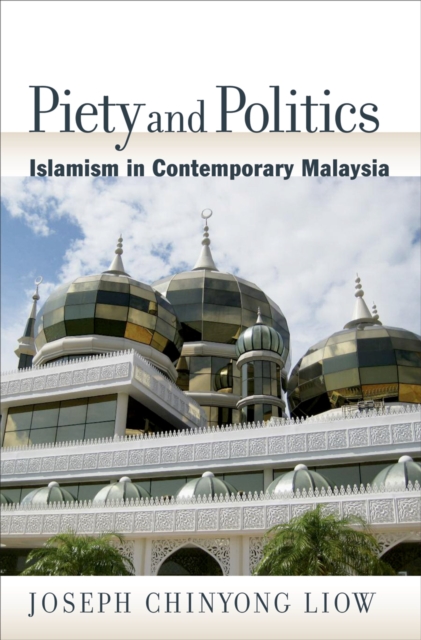
Piety and politics : Islamism in contemporary Malaysia
This book challenges conventional wisdom by arguing that tectonic movements and subterranean shifts that underscore the gradual politicization of Islam and the rise of an Islamism in political and popular discourse based on conservatism and orthodoxy have long been at work in Malaysia, despite popular media representations of Malaysia as the epitome of moderate, progressive Islamic governance. While the opposition Islamist party is widely regarded as the main Islamist player in the drama, the book suggests that the ruling regime has proven equally strident in its Islamist predilections, at times to the extent that there is little differentiating the two. The net result of this “Islamization race” has been the increasing alienation of Malaysia’s non-Muslim population from mainstream politics that has increasingly come to be defined with decidedly Islamist referents. The book also explores two previously underexplored dimensions of Muslim politics in Malaysia. First, it investigates the role of Islamic civil society movements in negotiating and redefining the parameters of Islamism. This dimension has greater salience today given that Islamic civil society movements and coalitions have located themselves at the forefront of major debates over religious freedoms, civil liberties, constitutional rights, the sanctity of shari’a, and the nature and manifestation of the Islamic state. Second, it investigates Islamism as expressed in “netizen politics.” Both these dynamics underscore the rise of Muslim conservatism in Malaysia in general, and constitute major challenges to our traditional understanding of the nature of politics and political compromise in the country.
eBook
Author Correction: Abiraterone acetate preferentially enriches for the gut commensal Akkermansia muciniphila in castrate-resistant prostate cancer patients
A Correction to this paper has been published: https://doi.org/10.1038/s41467-020-20410-x
Journal Article