
Catalogue Search | MBRL


Are you sure you want to remove the book from the shelf?

{{itemTitle}}
175
result(s) for
"Clapp, Jennifer"
Sort by:

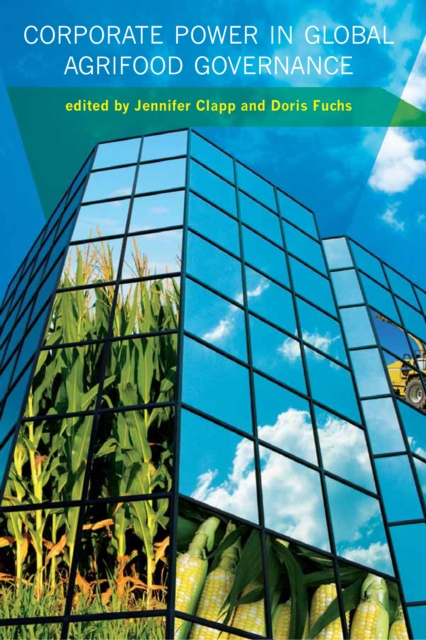
Corporate power in global agrifood governance
Experts examine the ways transnational corporations exercise power over governance of the global food system and the implications this has for sustainability
In today's globally integrated food system, events in one part of the world can have multiple and wide-ranging effects, as has been shown by the recent and rapid global rise in food prices. Transnational corporations (TNCs) have been central to the development of this global food system, dominating production, international trade, processing, distribution, and retail sectors. Moreover, these global corporations play a key role in the establishment of rules and regulations by which they themselves are governed. This book examines how TNCs exercise power over global food and agriculture governance and what the consequences are for the sustainability of the global food system. The book defines three aspects of this corporate power: instrumental power, or direct influence; structural power, or the broader influence corporations have over setting agendas and rules; and discursive, or communicative and persuasive, power. The book begins by examining the nature of corporate power in cases ranging from “green” food certification in Southeast Asia and corporate influence on U.S. food aid policy to governance in the seed industry and international food safety standards. Chapters examine such issues as promotion of corporate-defined “environmental sustainability” and “food security,” biotechnology firms and intellectual property rights, and consumer resistance to GMOs and other cases of contestation in agrobiology. In a final chapter, the editors raise the crucial question of how to achieve participation, transparency, and accountability in food governance.
Contributors
Maarten Arentsen, Jennifer Clapp, Robert Falkner, Doris Fuchs, Agni Kalfagianni, Peter Newell, Steffanie Scott, Susan Sell, Elizabeth Smythe, Peter Vandergeest, Marc Williams, Mary Young
eBook

Titans of industrial agriculture : how a few giant corporations came to dominate the farm sector and why it matters
\"A deeply researched book revealing how a handful of giant transnational corporations has come to dominate the farm sector, why it matters, and what might be done about it\"-- Provided by publisher
BOOK

The Global Food Crisis: Governance Challenges and Opportunities
The global food crisis is a stark reminder of the fragility of the global food system. The Global Food Crisis: Governance Challenges and Opportunities captures the debate about how to go forward and examines the implications of the crisis for food security in the world’s poorest countries, both for the global environment and for the global rules and institutions that govern food and agriculture.In this volume, policy-makers and scholars assess the causes and consequences of the most recent food price volatility and examine the associated governance challenges and opportunities, including short-term emergency responses, the ecological dimensions of the crisis, and the longer-term goal of building sustainable global food systems. The recommendations include vastly increasing public investment in small-farm agriculture; reforming global food aid and food research institutions; establishing fairer international agricultural trade rules; promoting sustainable agricultural methods; placing agriculture higher on the post-Kyoto climate change agenda; revamping biofuel policies; and enhancing international agricultural policy-making.Co-published with the Centre for International Governance Innovation
eBook


The rise of financial investment and common ownership in global agrifood firms
Financial investment in the food and agriculture sector has grown in recent decades, including investment in equity-related funds that invest in or track the performance of a range of publicly traded transnational agrifood companies. At their height in recent years, equity-related investment funds accounted for around one third of financial investment in the sector. Despite their significance, investment in the agrifood sector via these types of investment funds has received much less academic and policy attention than other types of financial investment, such as farmland acquisition and commodity speculation. This paper examines the rise of equity-related investment in the agricultural sector and analyzes its implications for the food system. It provides an overview and analysis of the available data on these investment vehicles, including their holdings (i.e. the companies in which they invest) and ownership (i.e. the investors who own shares in those companies). This data shows a rise in common ownership of large agrifood firms by large asset management companies. The paper makes the case that this new pattern of investment in agrifood firms by large asset management firms has the potential to contribute to the already concentrated market power in the agrifood system.
Journal Article


Distant agricultural landscapes
This paper examines the relationship between the development of the dominant industrial food system and its associated global economic drivers and the environmental sustainability of agricultural landscapes. It makes the case that the growth of the global industrial food system has encouraged increasingly complex forms of “distance” that separate food both geographically and mentally from the landscapes on which it was produced. This separation between food and its originating landscape poses challenges for the ability of more localized agricultural sustainability initiatives to address some of the broader problems in the global food system. In particular, distance enables certain powerful actors to externalize ecological and social costs, which in turn makes it difficult to link specific global actors to particular biophysical and social impacts felt on local agricultural landscapes. Feedback mechanisms that normally would provide pressure for improved agricultural sustainability are weak because there is a lack of clarity regarding responsibility for outcomes. The paper provides a brief illustration of these dynamics with a closer look at increased financialization in the food system. It shows that new forms of distancing are encouraged by the growing significance of financial markets in global agrifood value chains. This dynamic has a substantial impact on food system outcomes and ultimately complicates efforts to scale up small-scale local agricultural models that are more sustainable.
Journal Article


Hunger in the Balance
Food aid has become a contentious issue in recent decades, with
sharp disagreements over genetically modified crops, agricultural
subsidies, and ways of guaranteeing food security in the face of
successive global food crises. In Hunger in the Balance ,
Jennifer Clapp provides a timely and comprehensive account of the
contemporary politics of food aid, explaining the origins and
outcomes of recent clashes between donor nations-and between donors
and recipients.
She identifies fundamental disputes between donors over \"tied\"
food aid, which requires that food be sourced in the donor country,
versus \"untied\" aid, which provides cash to purchase food closer to
the source of hunger. These debates have been especially intense
between the major food aid donors, particularly the European Union
and the United States. Similarly, the EU's rejection of GMO
agricultural imports has raised concerns among recipients about
accepting GMO foodstuffs from the United States. For the several
hundred million people who at present have little choice but to
rely on food aid for their daily survival, Clapp concludes, the
consequences of these political differences are profound.
Food aid has become a contentious issue in recent decades, with
sharp disagreements over genetically modified crops, agricultural
subsidies, and ways of guaranteeing food security in the face of
successive global food crises. In Hunger in the Balance ,
Jennifer Clapp provides a timely and comprehensive account of the
contemporary politics of food aid, explaining the origins and
outcomes of recent clashes between donor nations-and between donors
and recipients.She identifies fundamental disputes between donors
over \"tied\" food aid, which requires that food be sourced in the
donor country, versus \"untied\" aid, which provides cash to purchase
food closer to the source of hunger. These debates have been
especially intense between the major food aid donors, particularly
the European Union and the United States. Similarly, the EU's
rejection of GMO agricultural imports has raised concerns among
recipients about accepting GMO foodstuffs from the United States.
For the several hundred million people who at present have little
choice but to rely on food aid for their daily survival, Clapp
concludes, the consequences of these political differences are
profound.
eBook