
Catalogue Search | MBRL


Are you sure you want to remove the book from the shelf?

{{itemTitle}}
9,073
result(s) for
"Clark, K."
Sort by:

Don't wait for the next war : a strategy for American growth and global leadership
\"Can America have a real national strategy and move forward together without the focus of war? In the twentieth century, America came together to become the \"Arsenal of Democracy,\" and emerged from World War II as the greatest power in the world. We shaped a global civilization in our own values, first with international institutions and our allies, then triumphing over our long-term adversary, the Soviet Union to emerge as the world's lone superpower. But in losing our adversary, America's leadership has founded. We have not replaced our post-World War II strategic vision with something appropriate for a postwar role. In Syria, and more broadly across the Middle East, bellicosity has not served us well and we look adrift in the face of that region's turbulence. Guns and swords don't seem to help. America's new challenges, global in scope, not amenable to military solutions, require intricate interdependence between government and the private sector. Terrorism, cybersecurity, financial system vulnerabilities, the rise of China, and accelerating climate change constitute a new class of national security challenges-and meeting these will require America to revisit hallowed mythologies and concert domestic and foreign policies in a way which has never before been achieved. All the resources are at hand, but will we have the vision and will to lead? Based on his experience at the highest levels in the military, politics and business, Wesley Clark offers a way forward, if only the American people will demand it of their elected leaders\"-- Provided by publisher.
Book

Computational Inverse Method for Constructing Spaces of Quantum Models from Wave Functions
Traditional computational methods for studying quantum many-body systems are “forward methods,” which take quantum models, i.e., Hamiltonians, as input and produce ground states as output. However, such forward methods often limit one’s perspective to a small fraction of the space of possible Hamiltonians. We introduce an alternative computational “inverse method,” the eigenstate-to-Hamiltonian construction (EHC), that allows us to better understand the vast space of quantum models describing strongly correlated systems. EHC takes as input a wave function|ψT⟩and produces as output Hamiltonians for which|ψT⟩is an eigenstate. This is accomplished by computing the quantum covariance matrix, a quantum mechanical generalization of a classical covariance matrix. EHC is widely applicable to a number of models and, in this work, we consider seven different examples. Using the EHC method, we construct a parent Hamiltonian with a new type of antiferromagnetic ground state, a parent Hamiltonian with two different targeted degenerate ground states, and large classes of parent Hamiltonians with the same ground states as well-known quantum models, such as the Majumdar-Ghosh model, the XX chain, the Heisenberg chain, the Kitaev chain, and a 2D BdG model. EHC gives an alternative inverse approach for studying quantum many-body phenomena.
Journal Article




Aleutian disease: Risk factors and ImmunAD strategy for genetic improvement of tolerance in American mink (Neogale vison)
Aleutian disease (AD) is a devastating infectious disease in American mink ( Neogale vison ) industry caused by Aleutian mink disease virus (AMDV). Two crucial steps toward controlling infectious diseases in farm animals are: (i) assessment of the infection risk factors to minimize the likelihood of infection and (ii) selection of animals with superior immune responses against pathogens to build tolerant farms. This study aimed to investigate AD risk factors and evaluate a novel “ImmunAD” approach for genetic improvement of AD tolerance. Phenotypic records and pedigree information of 1,366 and 24,633 animals were included in this study. The risk of animal’s age, sex, color type, and year of sampling on AMDV infection was assessed using a logistic regression model and counter immune-electrophoresis (CIEP) test results. ImmunAD phenotype was calculated based on AMDVG enzyme-linked immunosorbent assay (ELISA) and CIEP test results, and breeding values for ImmunAD were estimated using an animal model. Animals were classified into high-coordinated (HCIR), average-coordinated (ACIR), and low-coordinated immune responders (LCIR) using ImmunAD’s breeding values, and the impact of selection of HCIR on live grade of pelt quality (PQ), harvest weight (HW), and harvest length (HL) breeding values were evaluated. Age of > 1 year, male sex, and year of sampling were identified as significant risk factors of AD (p < 0.05). A moderate-to-high heritability (0.55±0.07) was estimated for ImmunAD, while a higher heritability was observed among the CIEP-positive animals (0.76±0.06). Significantly higher breeding values were observed for PQ and HL among HCIR than those for LCIR and ACIR (p < 0.05). Our findings indicate the critical role of male breeders in AD distribution within mink farms. Regular screening of AD in male breeders before pairing them with females during breeding seasons can help disease control. ImmunAD strategy can be applied to genetic improvement of AD tolerance, with favorable impacts on some growth and production traits. Higher genetic gains can be achieved in populations with higher AD seroprevalences.
Journal Article


Rapid and Efficient Clearance of Blood-borne Virus by Liver Sinusoidal Endothelium
The liver removes quickly the great bulk of virus circulating in blood, leaving only a small fraction to infect the host, in a manner characteristic of each virus. The scavenger cells of the liver sinusoids are implicated, but the mechanism is entirely unknown. Here we show, borrowing a mouse model of adenovirus clearance, that nearly all infused adenovirus is cleared by the liver sinusoidal endothelial cell (LSEC). Using refined immunofluorescence microscopy techniques for distinguishing macrophages and endothelial cells in fixed liver, and identifying virus by two distinct physicochemical methods, we localized adenovirus 1 minute after infusion mainly to the LSEC (∼90%), finding ∼10% with Kupffer cells (KC) and none with hepatocytes. Electron microscopy confirmed our results. In contrast with much prior work claiming the main scavenger to be the KC, our results locate the clearance mechanism to the LSEC and identify this cell as a key site of antiviral activity.
Journal Article
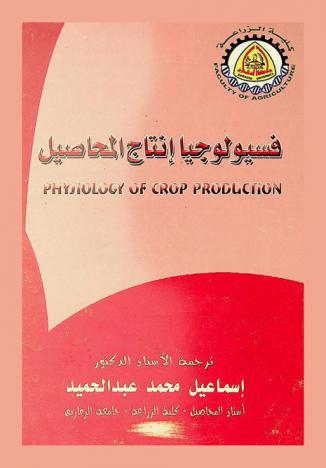
فسيولوجيا إنتاج المحاصيل
يستكشف هذا الكتاب الجوانب النظرية والعملية للعمليات الفسيولوجية للمحاصيل حول العالم، فقد أدى الانخفاض الملحوظ خلال القرن الماضي في الأراضي المتاحة والصالحة لإنتاج المحاصيل إلى زيادة الضغط وبالتالي زيادة المحاصيل، خاصة في الدول النامية. يوفر فسيولوجيا إنتاج المحاصيل أحدث الأبحاث والبيانات للتغطية الكاملة لفسيولوجيا إنتاج المحاصيل، فيقدم هذا المرجع القيم معلومات شاملة ومعمقة يحتاجها المتخصصون في التربة والمحاصيل لزيادة إنتاجية المحاصيل إلى أقصى حد في أي مكان في العالم، حيث يشرح علماء وباحثو التربة والنبات الرائدون بوضوح النظريات والتطبيقات العملية وأحدث التطورات في هذا المجال والذي يعتمد بشكل أساسي على علم حيوي ضروري لفهم نمو المحاصيل وتطورها لتسهيل زيادة غلة النبات، وتم دعم المناقشة في كل فصل ببيانات تجريبية لجعل هذا الكتاب موردا رائعا سيتم استخدامه مرارا وتكرارا، فقد شملت موضوعاته مثلا هندسة النبات والجذور، ومكونات النمو والإنتاج، والبناء الضوئي، وكفاءة استخدام المياه، وإنتاجية المحاصيل بالنسبة للإجهاد المائي، والنقل الأيوني النشط والسلبي، فقد صاحب كل جزء من أجزاء الكتاب وموضوعاته بنظريات مفصلة ومتعمقة لكل جانب من جوانب إنتاج المحاصيل.
BOOK

Fractalkine/CX3CR1 signaling during neuropathic pain
Chronic pain represents a major problem in clinical medicine. Whilst the acute pain that is associated with tissue injury is a protective signal that serves to maintain homeostasis, chronic pain is a debilitating condition that persists long after the inciting stimulus subsides. Chronic neuropathic pain that develops following damage or disease of the nervous system is partially treated by current therapies, leaving scope for new therapies to improve treatment outcome. Peripheral nerve damage is associated with alterations to the sensory neuroaxis that promote maladaptive augmentation of nociceptive transmission. Thus, neuropathic pain patients exhibit exaggerated responses to noxious stimuli, as well as pain caused by stimuli which are normally non-painful. Increased nociceptive input from the periphery triggers physiological plasticity and long lasting transcriptional and post-translational changes in the CNS defined as central sensitization. Nerve injury induces gliosis which contributes to central sensitization and results in enhanced communication between neurons and microglial cells within the dorsal horn. Thus, identification of mechanisms regulating neuro-immune interactions that occur during neuropathic pain may provide future therapeutic targets. Specifically, chemokines and their receptors play a pivotal role in mediating neuro-immune communication which leads to increased nociception. In particular, the chemokine Fractalkine (FKN) and the CX3CR1 receptor have come to light as a key signaling pair during neuropathic pain states.
Journal Article