
Catalogue Search | MBRL


Are you sure you want to remove the book from the shelf?

{{itemTitle}}
20,860
result(s) for
"Clark, Michael"
Sort by:


Comparative analysis of environmental impacts of agricultural production systems, agricultural input efficiency, and food choice
Global agricultural feeds over 7 billion people, but is also a leading cause of environmental degradation. Understanding how alternative agricultural production systems, agricultural input efficiency, and food choice drive environmental degradation is necessary for reducing agriculture's environmental impacts. A meta-analysis of life cycle assessments that includes 742 agricultural systems and over 90 unique foods produced primarily in high-input systems shows that, per unit of food, organic systems require more land, cause more eutrophication, use less energy, but emit similar greenhouse gas emissions (GHGs) as conventional systems; that grass-fed beef requires more land and emits similar GHG emissions as grain-feed beef; and that low-input aquaculture and non-trawling fisheries have much lower GHG emissions than trawling fisheries. In addition, our analyses show that increasing agricultural input efficiency (the amount of food produced per input of fertilizer or feed) would have environmental benefits for both crop and livestock systems. Further, for all environmental indicators and nutritional units examined, plant-based foods have the lowest environmental impacts; eggs, dairy, pork, poultry, non-trawling fisheries, and non-recirculating aquaculture have intermediate impacts; and ruminant meat has impacts ∼100 times those of plant-based foods. Our analyses show that dietary shifts towards low-impact foods and increases in agricultural input use efficiency would offer larger environmental benefits than would switches from conventional agricultural systems to alternatives such as organic agriculture or grass-fed beef.
Journal Article


Multiple health and environmental impacts of foods
Food choices are shifting globally in ways that are negatively affecting both human health and the environment. Here we consider how consuming an additional serving per day of each of 15 foods is associated with 5 health outcomes in adults and 5 aspects of agriculturally driven environmental degradation. We find that while there is substantial variation in the health outcomes of different foods, foods associated with a larger reduction in disease risk for one health outcome are often associated with larger reductions in disease risk for other health outcomes. Likewise, foods with lower impacts on one metric of environmental harm tend to have lower impacts on others. Additionally, of the foods associated with improved health (whole grain cereals, fruits, vegetables, legumes, nuts, olive oil, and fish), all except fish have among the lowest environmental impacts, and fish has markedly lower impacts than red meats and processed meats. Foods associated with the largest negative environmental impacts—unprocessed and processed red meat—are consistently associated with the largest increases in disease risk. Thus, dietary transitions toward greater consumption of healthier foods would generally improve environmental sustainability, although processed foods high in sugars harm health but can have relatively low environmental impacts. These findings could help consumers, policy makers, and food companies to better understand the multiple health and environmental implications of food choices.
Journal Article


The healthiness and sustainability of national and global food based dietary guidelines: modelling study
AbstractObjectiveTo analyse the health and environmental implications of adopting national food based dietary guidelines (FBDGs) at a national level and compared with global health and environmental targets.DesignModelling study.Setting85 countries.ParticipantsPopulation of 85 countries.Main outcome measuresA graded coding method was developed and used to extract quantitative recommendations from 85 FBDGs. The health and environmental impacts of these guidelines were assessed by using a comparative risk assessment of deaths from chronic diseases and a set of country specific environmental footprints for greenhouse gas emissions, freshwater use, cropland use, and fertiliser application. For comparison, the impacts of adopting the global dietary recommendations of the World Health Organization and the EAT-Lancet Commission on Healthy Diets from Sustainable Food Systems were also analysed. Each guideline’s health and sustainability implications were assessed by modelling its adoption at both the national level and globally, and comparing the impacts to global health and environmental targets, including the Action Agenda on Non-Communicable Diseases, the Paris Climate Agreement, the Aichi biodiversity targets related to land use, and the sustainable development goals and planetary boundaries related to freshwater use and fertiliser application.ResultsAdoption of national FBDGs was associated with reductions in premature mortality of 15% on average (95% uncertainty interval 13% to 16%) and mixed changes in environmental resource demand, including a reduction in greenhouse gas emissions of 13% on average (regional range −34% to 35%). When universally adopted globally, most of the national guidelines (83, 98%) were not compatible with at least one of the global health and environmental targets. About a third of the FBDGs (29, 34%) were incompatible with the agenda on non-communicable diseases, and most (57 to 74, 67% to 87%) were incompatible with the Paris Climate Agreement and other environmental targets. In comparison, adoption of the WHO recommendations was associated with similar health and environmental changes, whereas adoption of the EAT-Lancet recommendations was associated with 34% greater reductions in premature mortality, more than three times greater reductions in greenhouse gas emissions, and general attainment of the global health and environmental targets. As an example, the FBDGs of the UK, US, and China were incompatible with the climate change, land use, freshwater, and nitrogen targets, and adopting guidelines in line with the EAT-Lancet recommendation could increase the number of avoided deaths from 78 000 (74 000 to 81 000) to 104 000 (96 000 to 112 000) in the UK, from 480 000 (445 000 to 516 000) to 585 000 (523 000 to 646 000) in the USA, and from 1 149 000 (1 095 000 to 1 204 000) to 1 802 000 (1 664 000 to 1 941 000) in China.ConclusionsThis analysis suggests that national guidelines could be both healthier and more sustainable. Providing clearer advice on limiting in most contexts the consumption of animal source foods, in particular beef and dairy, was found to have the greatest potential for increasing the environmental sustainability of dietary guidelines, whereas increasing the intake of whole grains, fruits and vegetables, nuts and seeds, and legumes, reducing the intake of red and processed meat, and highlighting the importance of attaining balanced energy intake and weight levels were associated with most of the additional health benefits. The health results were based on observational data and assuming a causal relation between dietary risk factors and health outcomes. The certainty of evidence for these relations is mostly graded as moderate in existing meta-analyses.
Journal Article

Creative writing in the digital age : theory, practice, and pedagogy
Explores the vast array of opportunities that technology provides the Creative Writing teacher, ranging from effective online workshop models to methods that blur the boundaries of genre. From social media tools such as Twitter and Facebook to more advanced software like Inform 7, the book investigates the benefits and potential challenges these technologies present instructors in the classroom.--Provided by publisher.
Book

Discrete Choice Experiments in Health Economics: A Review of the Literature
Background
Discrete choice experiments (DCEs) are increasingly used in health economics to address a wide range of health policy-related concerns.
Objective
Broadly adopting the methodology of an earlier systematic review of health-related DCEs, which covered the period 2001–2008, we report whether earlier trends continued during 2009–2012.
Methods
This paper systematically reviews health-related DCEs published between 2009 and 2012, using the same database as the earlier published review (PubMed) to obtain citations, and the same range of search terms.
Results
A total of 179 health-related DCEs for 2009–2012 met the inclusion criteria for the review. We found a continuing trend towards conducting DCEs across a broader range of countries. However, the trend towards including fewer attributes was reversed, whilst the trend towards interview-based DCEs reversed because of increased computer administration. The trend towards using more flexible econometric models, including mixed logit and latent class, has also continued. Reporting of monetary values has fallen compared with earlier periods, but the proportion of studies estimating trade-offs between health outcomes and experience factors, or valuing outcomes in terms of utility scores, has increased, although use of odds ratios and probabilities has declined. The reassuring trend towards the use of more flexible and appropriate DCE designs and econometric methods has been reinforced by the increased use of qualitative methods to inform DCE processes and results. However, qualitative research methods are being used less often to inform attribute selection, which may make DCEs more susceptible to omitted variable bias if the decision framework is not known prior to the research project.
Conclusions
The use of DCEs in healthcare continues to grow dramatically, as does the scope of applications across an expanding range of countries. There is increasing evidence that more sophisticated approaches to DCE design and analytical techniques are improving the quality of final outputs. That said, recent evidence that the use of qualitative methods to inform attribute selection has declined is of concern.
Journal Article
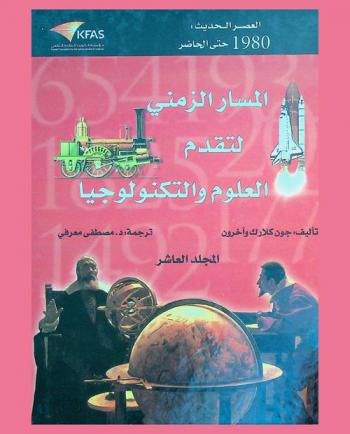
المسار الزمني لتقدم العلوم والتكنولوجيا
يتناول الكتاب من المسار الزمني لتقدم العلوم والتكنولوجيا الحقبة التي شهدتها الثورة الصناعية في الفترة ما بين 1775 وحتى 1839 ميلادي، متنقلا بين عدد من المحطات المهمة التي شكلت الكثير من ملامح العصر الحديث. ويستهل المسار مواضيعه بتسليط الضوء على المهندس البريطاني جيمس وات الذي ابتكر أولى الآلات لتزويد الطاقة لمصانع النسيج والمضخات التي تسحب المياه من المناجم وبفضل هذا النموذج الذي قدمه، كانت هناك العديد من المساهمات من قبل المهندسين في مراحل لاحقة، تمكنوا من خلالها استخدام آلات وات لتوفير الطاقة للمركبات على الطريق والسفن والقطارات التي أحدثت في نهاية المطاف ثورة في مجال النقل البري مع تطور وتوسع السكك الحديدية في أوروبا وأمريكا الشمالية. ثم يتعرض المسار إلى التحولات التي شهدتها صناعة النسيج مع تطور الآلات، لاسيما في الجزء الغربي من العالم. وفي عام 1733 سجلت هذه الصناعة تسارعا كبيرا في معدل الإنتاج مع ابتكار المهندس الإنجليزي جون كي الناقل الطائر والذي يعتبر آلية تمكن النسيج من قذف الناقل من جهة إلى جهة أخرى بسرعة كبيرة.
BOOK

Wolbachia: master manipulators of invertebrate biology
Key Points
This Review focuses on intracellular
Wolbachia
, which are globally widespread
Rickettsia
-like bacteria that infect many arthropod species, as well as filarial nematodes.
The authors discuss recent advances in
Wolbachia
research, with an emphasis on genetics and genomics, ecology, evolution and applications to pest and disease control.
Wolbachia
are primarily reproductive parasites that have several different effects on hosts, including feminization, induced parthenogenesis, male killing and a sperm–egg incompatibility that is known as cytoplasmic incompatibility.
Wolbachia
can effectively manipulate the biology of host cells, and have evolved mutualisms with their hosts. These and other effects of
Wolbachia
are discussed, as well as recent advances on the understanding of cytological interactions between bacteria and their host.
Maintenance of the global
Wolbachia
pandemic is discussed, including factors that affect the spread of
Wolbachia
, transfer between host species and persistence within a host lineage. The usefulness of multilocus strain typing to characterize the movement and diversity of these bacteria is also emphasized.
The evolutionary implications of
Wolbachia
infection are discussed, including the possible role of this endosymbiont in the promotion of reproductive isolation and speciation, as well as its potential to contribute to host genome evolution through horizontal transfer of genes from the bacteria into their host.
Finally, the authors outline possible practical applications of
Wolbachia
in pest and disease vector management strategies and highlight the main unanswered questions regarding
Wolbachia
biology.
Wolbachia
are symbiotic bacteria that live inside invertebrate host cells and can manipulate host biology in dramatic ways, such as sperm–egg incompatibility, feminization and male killing. This Review focuses on the basic biology of these symbionts and their interaction with a range of host invertebrates.
Wolbachia
are common intracellular bacteria that are found in arthropods and nematodes. These alphaproteobacteria endosymbionts are transmitted vertically through host eggs and alter host biology in diverse ways, including the induction of reproductive manipulations, such as feminization, parthenogenesis, male killing and sperm–egg incompatibility. They can also move horizontally across species boundaries, resulting in a widespread and global distribution in diverse invertebrate hosts. Here, we review the basic biology of
Wolbachia
, with emphasis on recent advances in our understanding of these fascinating endosymbionts.
Journal Article