
Catalogue Search | MBRL


Are you sure you want to remove the book from the shelf?

{{itemTitle}}
199
result(s) for
"Cohn, Edward"
Sort by:


Gender-Based Comorbidity in Benign Paroxysmal Positional Vertigo
It has been noted that benign paroxysmal positional vertigo (BPPV) may be associated with certain disorders and medical procedures. However, most studies to date were done in Europe, and epidemiological data on the United States (US) population are scarce. Gender-based information is even rarer. Furthermore, it is difficult to assess the relative prevalence of each type of association based solely on literature data, because different comorbidities were reported by various groups from different countries using different patient populations and possibly different inclusion/exclusion criteria. In this study, we surveyed and analyzed a large adult BPPV population (n = 1,360 surveyed, 227 completed, most of which were recurrent BPPV cases) from Omaha, NE, US, and its vicinity, all diagnosed at Boys Town National Research Hospital (BTNRH) over the past decade using established and consistent diagnostic criteria. In addition, we performed a retrospective analysis of patients' diagnostic records (n = 1,377, with 1,360 adults and 17 children). The following comorbidities were found to be significantly more prevalent in the BPPV population when compared to the age- and gender-matched general population: ear/hearing problems, head injury, thyroid problems, allergies, high cholesterol, headaches, and numbness/paralysis. There were gender differences in the comorbidities. In addition, familial predisposition was fairly common among the participants. Thus, the data confirm some previously reported comorbidities, identify new ones (hearing loss, thyroid problems, high cholesterol, and numbness/paralysis), and suggest possible predisposing and triggering factors and events for BPPV.
Journal Article

Coercion, Reeducation, and the Prophylactic Chat: \Profilaktika\ and the KGB's Struggle with Political Unrest in Lithuania, 1953–64
This article analyzes the Khrushchev‐era KGB's use of a tactic known as profilaktika in its struggle with political unrest in Lithuania, one of the few former Soviet republics with an accessible secret police archive. In many cases involving low‐level anti‐Soviet activity, KGB officials chose not to prosecute citizens accused of minor political crimes, but to “invite” them to a “prophylactic chat” where they would be intimidated or manipulated into confessing and warned that they would be arrested if they broke the law again; in other cases, known as “profilaktika with the public's help,” the KGB organized humiliating public hearings at which the behavior of low‐level offenders was denounced by other Soviet citizens. I argue that profilaktika should not be seen as a straightforward example of post‐Stalin liberalization, but as a tactic that combined traditional secret police coercion and surveillance with ideologically inspired efforts at reeducation and moral reform. In the end, profilaktika suited the interests of both Khrushchev‐era officials and KGB operatives, allowing it to survive as a secret police tactic long after the ideological enthusiasm of the Khrushchev years had faded away.
Journal Article

Policing the Party: Conflicts between Local Prosecutors and Party Leaders under Late Stalinism
During the late Stalin era, many of the USSR's local party control officials and prosecutors entered into a protracted conflict over who had the right to judge the conduct of communists; prosecutors charged that party committees were shielding communists from prosecution, while control officials claimed that party organs were deferring to prosecutors and abandoning their traditional oversight role. This article will argue that although some party committees were interfering in the courts, the dominant story of party-procuracy relations under post-war Stalinism involved the disengagement of party organs from the oversight of administrative wrongdoing, with long-lasting consequences for the Soviet regime's attitude toward corruption.
Journal Article
Sex and the Married Communist: Family Troubles, Marital Infidelity, and Party Discipline in the Postwar USSR, 1945-64
By the 1950s, two models of party discipline competed in the minds of Communists: a traditional, hierarchical model based on censure and expulsion, and a newer model that called on individual party members to reform their personal habits and take the initiative in policing their comrades' behavior.' Here, Cohn traces the party's changing conception of what it meant to be a good Communist by looking at evidence from two provincial archives (in Tver' and Perm') and at the records of the Committee on Party Control (KPK) in Moscow. Moreover, he analyzes the party's view of proper behavior during two different postwar eras. He stresses that party leaders had hoped to transform both the behavior of party members and the means by which their conduct would be judged; they wanted to defend public order and secure the future for a new generation, without resorting to the Stalinist tactics of the past. What they accomplished, however, was the consolidation and expansion of practices that had their roots earlier in Soviet history, especially in the turmoil that followed World War II.
Journal Article


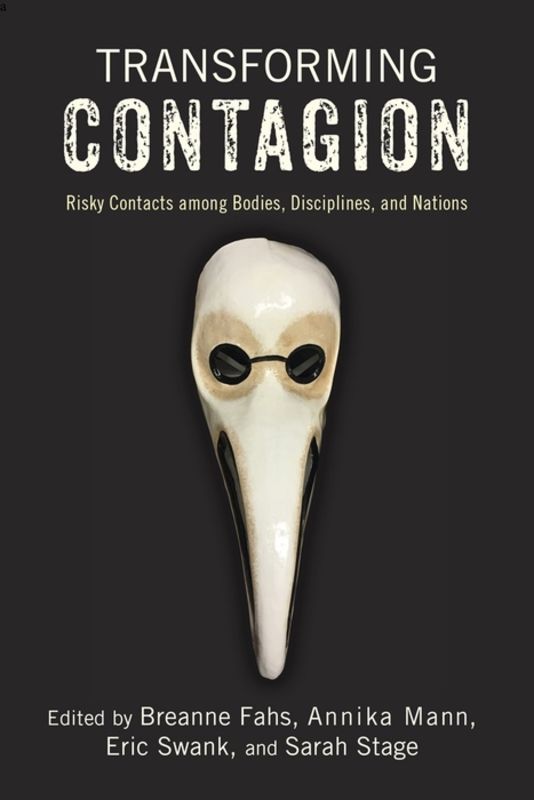
Transforming Contagion
2019 Choice Outstanding Academic Title Moving from viruses, vaccines, and copycat murder to gay panics, xenophobia, and psychopaths, Transforming Contagion energetically fuses critical humanities and social science perspectives into a boundary-smashing interdisciplinary collection on contagion. The contributors provocatively suggest contagion to be as full of possibilities for revolution and resistance as it is for the descent into madness, malice, and extensive state control. The infectious practices rooted in politics, film, psychological exchanges, social movements, the classroom, and the circulation of a literary text or meme on social media compellingly reveal patterns that emerge in those attempts to re-route, quarantine, define, or even exacerbate various contagions.
eBook