
Catalogue Search | MBRL


Are you sure you want to remove the book from the shelf?

{{itemTitle}}
325
result(s) for
"Coker, Christopher"
Sort by:

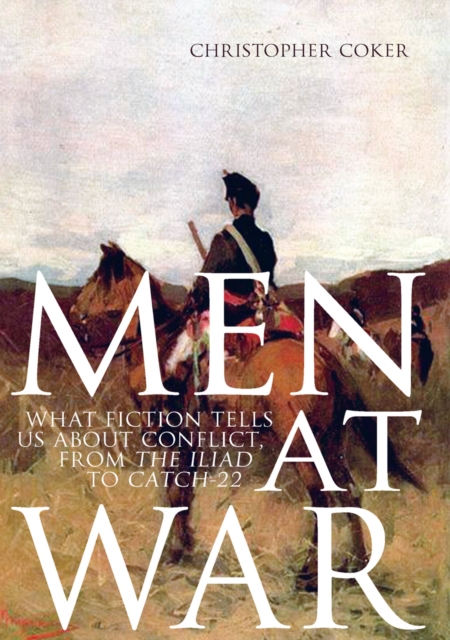
Men At War
Since Achilles first stormed into our imagination, literature has introduced its readers to truly unforgettable martial characters. In Men at War, Christopher Coker discusses some of the most famous of these fictional creations and their impact on our understanding of war and masculinity. Grouped into five archetypes-warriors, heroes, villains, survivors and victims-these characters range across 3000 years of history, through epic poems, the modern novel and one of the twentieth century's most famous film scripts. Great authors like Homer and Tolstoy show us aspects of reality invisible except through a literary lens, while fictional characters such as Achilles and Falstaff, Robert Jordan and Jack Aubrey, are not just larger than life; they are life's largeness-and this is why we seek them out. Although the Greeks knew that the lovers, wives and mothers of soldiers are the chief victims of battle, for the combatants, war is a masculine pursuit. Each of Coker's chapters explores what fiction tells us about war's appeal to young men and the way it makes- and breaks-them. The existential appeal of war too is perhaps best conveyed in fictional accounts, and these too are scrutinized by the author.
eBook

The rise of the civilizational state
\"In this pioneering book renowned political philosopher Christopher Coker looks in-depth at two countries that now claim this title: Xi Jinping's China and Vladimir Putin's Russia. He also discusses the Islamic caliphate, a virtual and aspirational civilizational state that is unlikely to fade despite the recent setbacks suffered by ISIS. The civilizational state, he contends, is an idea whose time has come\"-- Provided by publisher.
Book
Globalisation and Insecurity in the Twenty-First Century
Discusses the impact of globalisation on security in the West and in particular the way it has changed the nature of NATO as well as its security agenda.
eBook

The improbable war : China, the United States and the continuing logic of great power conflict
The Improbable War explains why conflict between the USA and China cannot be ruled out. In 1914 war between the Great Powers was considered unlikely, yet it happened. We learn only from history, and popular though the First World War analogy is, the lessons we draw from its outbreak are usually mistaken. Among these errors is the tendency to over-estimate human rationality. All major conflicts of the past 300 years have been about the norms and rules of the international system. In China and the US the world confronts two 'exceptional' powers whose values differ markedly, with China bidding to challenge the current order. The 'Thucydidean Trap' - when a conservative status quo power confronts a rising new one - may also play its part in precipitating hostilities. To avoid stumbling into an avoidable war both Beijing and Washington need a coherent strategy, which neither of them has. History also reveals that war evolves continually. The next global conflict is likely to be played out in cyberspace and outer space and like all previous wars it will have devastating consequences. Such a war between the United States and China may seem improbable, but it is all too possible, which is why we need to discuss it now.
Book
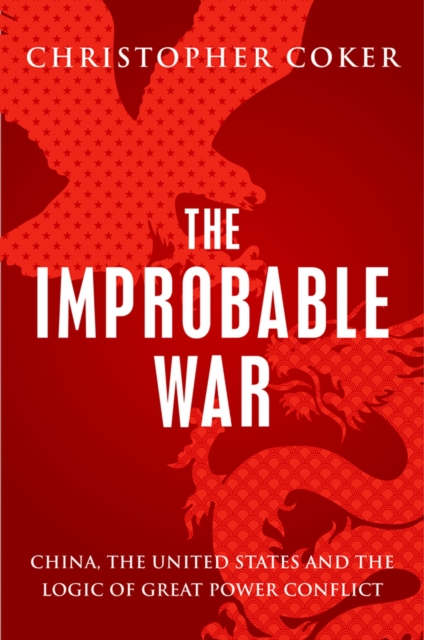
The improbable war : China, the United States and the continuing logic of great power conflict
The Improbable War explains why conflict between the USA and China cannot be ruled out. In 1914 war between the Great Powers was considered unlikely, yet it happened. We learn only from history, and popular though the First World War analogy is, the lessons we draw from its outbreak are usually mistaken. Among these errors is the tendency to over-estimate human rationality. All major conflicts of the past 300 years have been about the norms and rules of the international system. In China and the US the world confronts two 'exceptional' powers whose values differ markedly, with China bidding to challenge the current order. The 'Thucydidean Trap' - when a conservative status quo power confronts a rising new one - may also play its part in precipitating hostilities. To avoid stumbling into an avoidable war both Beijing and Washington need a coherent strategy, which neither of them has. History also reveals that war evolves continually. The next global conflict is likely to be played out in cyberspace and outer space and like all previous wars it will have devastating consequences. Such a war between the United States and China may seem improbable, but it is all too possible, which is why we need to discuss it now.
eBook
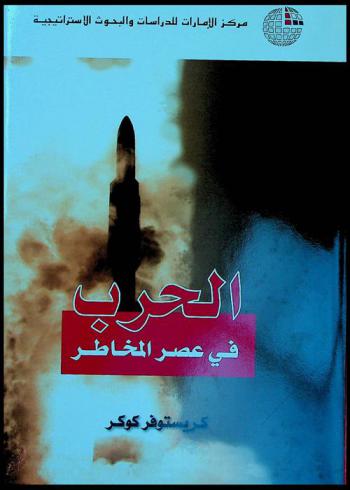
الحرب في عصر المخاطر
يبرز الكتاب الفوارق المتنامية بين الأمن الداخلي والأمن القومي في العصر الحديث، موضحا أن الدفاع عن المواطن الآن بات تحديا أكبر من الدفاع عن الدولة. ويقدم، من خلال كشف السمات والتعقيدات المتغيرة للصراع-من الحرب العالمية الأولى إلى مكافحة الإرهاب حاليا-عرضا قويا ومميزا لتطور مفهوم الحرب في عصر محفوف بالمخاطر. ويطرح الكتاب رؤية واضحة لشكل الحرب في السنوات القادمة. فإذا أراد مؤرخو المستقبل أن يفهموا كيف تحولت الحروب بين الجيوش الحديثة إلى صراعات مجتمع المخاطر التي لا تنتهي، فعليهم قراءة هذا الكتاب. هذا الكتاب الذي يمزج على نحو شائق وفريد ما بين العلوم السياسية والاجتماعية والفلسفة، يثير حوارا وجدلا بين دارسي السياسة الدولية، فضلا عن أنه يستحوذ على اهتمام أي شخص يرغب في فهم الحرب ومكانتها في المجتمع المعاصر. ولاسيما أن مؤلفه، كريستوفر كوكر، يوصف بأنه أحد أبرز المحللين الاستراتيجيين ومن أهم فلاسفة الحرب المعاصرين.
BOOK
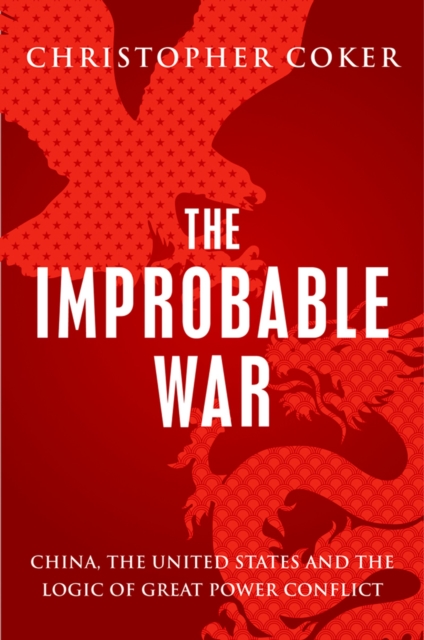
The Improbable War
The Improbable War explains why conflict between the USA and China cannot be ruled out. In 1914 war between the Great Powers was considered unlikely, yet it happened. We learn only from history, and popular though the First World War analogy is, the lessons we draw from its outbreak are usually mistaken. Among these errors is the tendency to over-estimate human rationality. All major conflicts of the past 300 years have been about the norms and rules of the international system. In China and the US the world confronts two 'exceptional' powers whose values differ markedly, with China bidding to challenge the current order. The 'Thucydidean Trap' - when a conservative status quo power confronts a rising new one - may also play its part in precipitating hostilities. To avoid stumbling into an avoidable war both Beijing and Washington need a coherent strategy, which neither of them has. History also reveals that war evolves continually. The next global conflict is likely to be played out in cyberspace and outer space and like all previous wars it will have devastating consequences. Such a war between the United States and China may seem improbable, but it is all too possible, which is why we need to discuss it now.
eBook
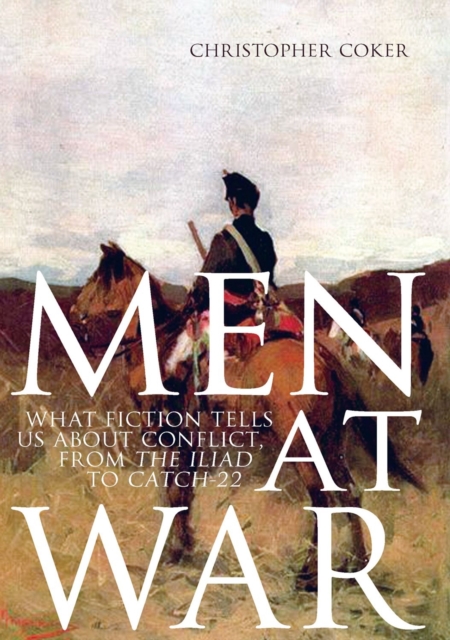
Men at war: what fiction tells us about war, from Achilles to Flashman
Since Achilles first stormed into our imagination, literature has introduced its readers to truly unforgettable martial characters. In Men at War, Christopher Coker discusses some of the most famous of these fictional creations and their impact on our understanding of war and masculinity. Grouped into five archetypes-warriors, heroes, villains, survivors and victims-these characters range across 3000 years of history, through epic poems, the modern novel and one of the twentieth century's most famous film scripts. Great authors like Homer and Tolstoy show us aspects of reality invisible except through a literary lens, while fictional characters such as Achilles and Falstaff, Robert Jordan and Jack Aubrey, are not just larger than life; they are life's largeness-and this is why we seek them out. Although the Greeks knew that the lovers, wives and mothers of soldiers are the chief victims of battle, for the combatants, war is a masculine pursuit. Each of Coker's chapters explores what fiction tells us about war's appeal to young men and the way it makes- and breaks-them. The existential appeal of war too is perhaps best conveyed in fictional accounts, and these too are scrutinized by the author.
eBook

INTROMITTENT ORGAN MORPHOLOGY AND TESTIS SIZE IN RELATION TO MATING SYSTEM IN WATERFOWL
The waterfowl family Anatidae is one of very few avian taxa that possesses an intromittent organ. This paper examines the adaptive significance of the intromittent organ in waterfowl by determining the relationships between intromittent organ morphology and the intensity of sperm competition (as reflected by frequency of forced extrapair copulations [FEPCs]). Intromittent organ morphological characteristics, including length and circumference (adjusted for body size), number of ridges and knobs (per unit area), ridge or knob height, ridge or knob span, and area covered by ridges and knobs, were measured from scaled drawings of museum specimens of 54 waterfowl species (33 genera), 27 of which were ranked by frequency of FEPC (1 = monogamous, 2 = rare FEPC, 3 = frequent FEPC, and 4 = polygynous or promiscuous). Testes sizes were also investigated in relation to FEPCs, where testes mass (adjusted for body size) from 44 species (24 genera) were obtained (29 species with mating strategies). The size of the testes, the length of the intromittent organ, the height of the intromittent organ ridges and knobs, and the area covered by ridges and knobs increased significantly with the frequency of FEPC, and those relationships exist after correcting for common ancestry constraints. These results are consistent with the hypothesis that waterfowl intromittent organs are involved in sperm competition. Further research into the actual mechanism by which the intromittent organ is involved would be worthwhile.
Journal Article