
Catalogue Search | MBRL


Are you sure you want to remove the book from the shelf?

{{itemTitle}}
1,911
result(s) for
"Coleman, Peter T."
Sort by:


Intellectual humility is reliably associated with constructive responses to conflict
Conflict is a ubiquitous, but potentially destructive, feature of social life. In the current research, we argue that intellectual humility—the awareness of one’s intellectual fallibility—plays an important role in promoting constructive responses and decreasing destructive responses to conflict in different contexts. In Study 1, we examine the role of intellectual humility in interpersonal conflicts with friends and family members. In Study 2, we extend this finding to workplace conflicts. In both studies we find that intellectual humility predicts more constructive and less destructive responses to conflict. This work extends the burgeoning literature on the benefits of intellectual humility by demonstrating its association with responses that help defuse conflictual encounters.
Journal Article

The handbook of conflict resolution : theory and practice
\"Written for both the seasoned professional and the student who wants to deepen their understanding of the processes involved in conflicts and their knowledge of how to manage them constructively, this book provides an understanding for managing conflicts at all levels--interpersonal, intergroup, organizational, and international. Each chapter focuses around a central case or illustration of the practice with a discussion for both training and direct intervention. This new edition includes companion downloadable chapters and new information on conflict resolution and IT, social networks, schools, families, environment and much more\"-- Provided by publisher.
Book
Word differences in news media of lower and higher peace countries revealed by natural language processing and machine learning
Language is both a cause and a consequence of the social processes that lead to conflict or peace. “Hate speech” can mobilize violence and destruction. What are the characteristics of “peace speech” that reflect and support the social processes that maintain peace? This study used existing peace indices, machine learning, and on-line, news media sources to identify the words most associated with lower-peace versus higher-peace countries. As each peace index measures different social properties, they can have different values for the same country. There is however greater consensus with these indices for the countries that are at the extremes of lower-peace and higher-peace. Therefore, a data driven approach was used to find the words most important in distinguishing lower-peace and higher-peace countries. Rather than assuming a theoretical framework that predicts which words are more likely in lower-peace and higher-peace countries, and then searching for those words in news media, in this study, natural language processing and machine learning were used to identify the words that most accurately classified a country as lower-peace or higher-peace. Once the machine learning model was trained on the word frequencies from the extreme lower-peace and higher-peace countries, that model was also used to compute a quantitative peace index for these and other intermediate-peace countries. The model successfully yielded a quantitative peace index for intermediate-peace countries that was in between that of the lower-peace and higher-peace, even though they were not in the training set. This study demonstrates how natural language processing and machine learning can help to generate new quantitative measures of social systems, which in this study, were linguistic differences resulting in a quantitative index of peace for countries at different levels of peacefulness.
Journal Article

Tracking managerial conflict adaptivity: Introducing a dynamic measure of adaptive conflict management in organizations
Since Darwin, adaptation to change has been associated with survival and fit. Yet, despite this, leaders and managers often get stuck in dominating approaches to conflict, and few scholars have examined the role of adaptation in managing conflicts effectively over time and across changing situations. The goal of this paper is threefold. First, we develop a new measure for assessing conflict adaptivity of managers [the Managerial Conflict Adaptivity Assessment (MCAA)], based on a situated model of conflict in social relations. We define conflict adaptivity as the capacity to respond to different conflict situations in accordance with the demands specified by the situation. The measure consists of 15 distinct work-conflict scenarios and provides five behavioral response options, which represent five primary strategies employed in conflict. Individuals who tend to respond to the conflicts in a manner consistent with the situations provided are considered to be more adaptive. Second, we test and find that managerial conflict adaptivity is related to higher levels of satisfaction with conflict processes at work as well as higher levels of well-being at work. Third, we test the MCAA’s construct validity and provide evidence that the MCAA is positively related to behavioral flexibility and self-efficacy.
Journal Article

Societies within peace systems avoid war and build positive intergroup relationships
A comparative anthropological perspective reveals not only that some human societies do not engage in war, but also that peaceful social systems exist. Peace systems are defined as clusters of neighbouring societies that do not make war with each other. The mere existence of peace systems is important because it demonstrates that creating peaceful intergroup relationships is possible whether the social units are tribal societies, nations, or actors within a regional system. Peace systems have received scant scientific attention despite holding potentially useful knowledge and principles about how to successfully cooperate to keep the peace. Thus, the mechanisms through which peace systems maintain peaceful relationships are largely unknown. It is also unknown to what degree peace systems may differ from other types of social systems. This study shows that certain factors hypothesised to contribute to intergroup peace are more developed within peace systems than elsewhere. A sample consisting of peace systems scored significantly higher than a comparison group regarding overarching common identity; positive social interconnectedness; interdependence; non-warring values and norms; non-warring myths, rituals, and symbols; and peace leadership. Additionally, a machine learning analysis found non-warring norms, rituals, and values to have the greatest relative importance for a peace system outcome. These results have policy implications for how to promote and sustain peace, cohesion, and cooperation among neighbouring societies in various social contexts, including among nations. For example, the purposeful promotion of peace system features may facilitate the international cooperation necessary to address interwoven global challenges such as global pandemics, oceanic pollution, loss of biodiversity, nuclear proliferation, and climate change.
Journal Article
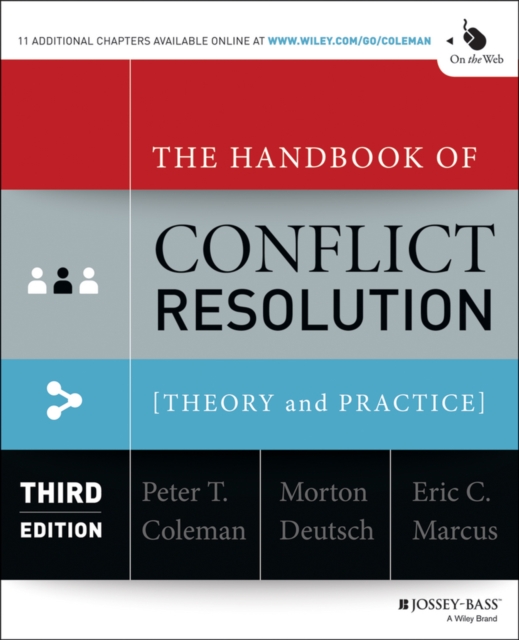
The handbook of conflict resolution : theory and practice
Praise for The Handbook of Conflict Resolution
\"This handbook is a classic. It helps connect the research of academia to the practical realities of peacemaking and peacebuilding like no other. It is both comprehensive and deeply informed on topics vital to the field like power, gender, cooperation, emotion, and trust. It now sits prominently on my bookshelf.\"
—Leymah Gbowee, Nobel Peace Prize Laureate
\" The Handbook of Conflict Resolution offers an astonishing array of insightful articles on theory and practice by leading scholars and practitioners. Students, professors, and professionals alike can learn a great deal from studying this Handbook.\"
—William Ury, Director, Global Negotiation Project, Harvard University; coauthor, Getting to Yes and author, The Third Side
\"Morton Deutsch, Peter Coleman, and Eric Marcus put together a handbook that will be helpful to many. I hope the book will reach well beyond North America to contribute to the growing worldwide interest in the constructive resolution of conflict. This book offers instructive ways to make this commitment a reality.\"
—George J. Mitchell, Former majority leader of the United States Senate; former chairman of the Peace Negotiations in Northern Ireland and the International Fact-Finding Committee on Violence in the Middle East; chairman of the board, Walt Disney Company; senior fellow at the School of International and Public Affairs, Columbia University
\"Let's be honest. This book is just too big to carry around in your hand. But that's because it is loaded with the most critical essays linking the theory and practice of conflict resolution. The Handbook of Conflict Resolution is heavy on content and should be a well-referenced resource on the desk of every mediator—as it is on mine.\"
—Johnston Barkat, Assistant Secretary-General, Ombudsman and Mediation Services, United Nations
eBook
Behavioral and Emotional Dynamics of Two People Struggling to Reach Consensus about a Topic on Which They Disagree
We studied the behavioral and emotional dynamics displayed by two people trying to resolve a conflict. 59 groups of two people were asked to talk for 20 minutes to try to reach a consensus about a topic on which they disagreed. The topics were abortion, affirmative action, death penalty, and euthanasia. Behavior data were determined from audio recordings where each second of the conversation was assessed as proself, neutral, or prosocial. We determined the probability density function of the durations of time spent in each behavioral state. These durations were well fit by a stretched exponential distribution, [Formula: see text] with an exponent, [Formula: see text], of approximately 0.3. This indicates that the switching between behavioral states is not a random Markov process, but one where the probability to switch behavioral states decreases with the time already spent in that behavioral state. The degree of this \"memory\" was stronger in those groups who did not reach a consensus and where the conflict grew more destructive than in those that did. Emotion data were measured by having each person listen to the audio recording and moving a computer mouse to recall their negative or positive emotional valence at each moment in the conversation. We used the Hurst rescaled range analysis and power spectrum to determine the correlations in the fluctuations of the emotional valence. The emotional valence was well described by a random walk whose increments were uncorrelated. Thus, the behavior data demonstrated a \"memory\" of the duration already spent in a behavioral state while the emotion data fluctuated as a random walk whose steps did not have a \"memory\" of previous steps. This work demonstrates that statistical analysis, more commonly used to analyze physical phenomena, can also shed interesting light on the dynamics of processes in social psychology and conflict management.
Journal Article

Where is the expertise? Investigating the drivers of top-down versus bottom-up approaches to cross-cultural conflict resolution training
Purpose
For decades, conflict resolution (CR) educators working cross-culturally have struggled with a fundamental dilemma – whether to offer western, evidence-based approaches through a top-down (prescriptive) training process or to use a bottom-up (elicitive) strategy that builds on local cultural knowledge of effective in situ conflict management. This study aims to explore which conditions that prompted experienced CR instructors to use more prescriptive or elicitive approaches to such training in a foreign culture and the implications for training outcomes.
Design/methodology/approach
There are two parts to this study. First, the authors conducted a literature review to identify basic conditions that might be conducive to conducting prescriptive or elicitive cross-cultural CR training. The authors then tested the identified conditions in a survey with experienced CR instructors to identify different conditions that afforded prescriptive or elicitive approaches. Exploratory factor analysis and regression were used to assess which conditions determined whether a prescriptive or elicitive approach produced better outcomes.
Findings
In general, although prescriptive methods were found to be more efficient, elicitive methods produced more effective, culturally appropriate, sustainable and culturally sensitive training. Results revealed a variety of instructor, participant and contextual factors that influenced whether a prescriptive or elicitive approach was applied and found to be more suitable.
Originality/value
This study used empirical survey data with practicing experts to provide insight and guidance into when to use different approaches to CC-CR training effectively.
Journal Article
One style does not fit all: the relationship of mediator behavioral adaptivity to mediator empowerment, efficacy, and satisfaction
Purpose
Prior research on the situated model of mediation has suggested that mediators’ abilities to be more flexible and adaptive in responding to potential derailers in mediation situations lead to better outcomes. The purpose if this paper is to build on this theory and research by developing a new scale of mediator behavioral adaptivity and investigating the hypothesized effects of mediator adaptivity on their sense of efficacy, empowerment and satisfaction when mediating.
Design/methodology/approach
The paper presents findings from two survey studies with currently active, experienced mediators.
Findings
The findings offer a new scale for the study of effective mediation – the mediator behavioral adaptivity scale – and offer support for the hypothesis that mediators reporting an ability to use more diverse behavioral tactics and strategies (both standard and specialized strategies) report higher levels of satisfaction with mediation outcomes as well as more self-efficacy and empowerment during mediations.
Research limitations/implications
These studies are both self-report and correlational and so should be supplemented by subsequent research using experimental methods and more objective measures of mediation outcomes.
Originality/value
The program of research extended in this paper offers a new integrative model of adaptive mediation, which aims to provide evidence-based guidelines for using different types of mediation strategies in categorically different conflict situations. The model can ultimately help the field transcend discussions of preferred or best mediation styles and focus instead on how distinct strategies offer different degrees of fit for different types of mediation challenges.
Journal Article