
Catalogue Search | MBRL


Are you sure you want to remove the book from the shelf?

{{itemTitle}}
7
result(s) for
"Collier, Gordon, editor"
Sort by:


The Cross-Cultural Legacy
Contributions on various areas of postcolonial literature, including the work of Wilson Harris, the ground-breaking writer to whom the influential university teacher and literary critic Hena Maes-Jelinek devoted much of her career.
eBook

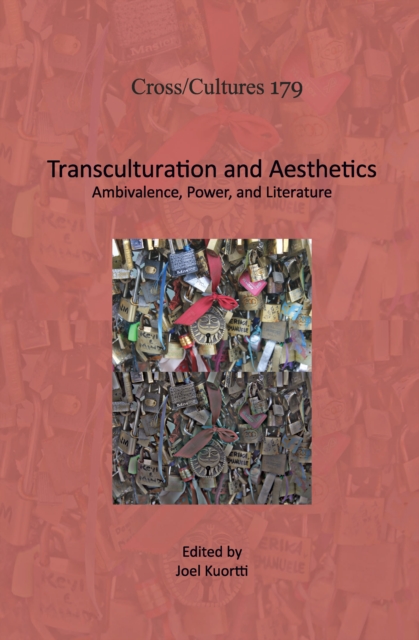
Transculturation and Aesthetics
This collection is a timely reflection on the momentous concept of transculturalism. With its historical roots in globalization, transculturation, oriented to (new) aesthetics, seeks new cultural formations, and, with its heterogeneous author- and readership, enlists active participation by the individual.
eBook
Applied Drama and Theatre as an Interdisciplinary Field in the Context of HIV/AIDS in Africa
Drama for Life, University of the Witwatersrand, aims \"to enhance the capacity of young people, theatre practitioners and their communities to take responsibility for the quality of their lives in the context of HIV and AIDS in Africa. We achieve this through participatory and experiential drama and theatre that is appropriate to current social realities but draws on the rich indigenous knowledge of African communities.\" Collected here is a representative set of research essays written to facilitate dialogue across disciplines on the role of drama and theatre in HIV/AIDS education, prevention, and rehabilitation. Reflections are offered on present praxis and the media, as well as on innovative research approaches in an interdisciplinary paradigm, along with HIV/AIDS education via performance poetry and other experimental methods such as participant-led workshops. Topics include: the call for a move away from the binaries of much critical pedagogy; a project, undertaken in Ghana and Malawi with people living with AIDS, to create and present theatre; the contradictions between global and local expectations of applied drama and theatre methodology, in relation to folk media, participation, and syncretism. Three case studies report on mapping as a creative device for playmaking; the methodology of Themba Interactive Theatre; and applying drama with women living with HIV in the Zandspruit Informal Settlement. The essays validate the importance of play in both energizing those in positions of hopelessness and enabling the distancing essential to observe one's situation and enable change. The book stimulates the ongoing investigation of current practice and extends an invitation to further develop innovative approaches. Hazel Barnes is a retired Head of Drama and Performance Studies at the University of KwaZulu-Natal, where she is a Senior Research
Associate. Her research interests lie in the field of applied drama, including the contexts of interculturalism and post-traumatic stress.
eBook
Arts Activism, Education, and Therapies
This second volume of research emanating from Drama for Life, University of the Witwatersrand, explores the transformative and healing qualities of the arts in South Africa, Botswana, Cameroon, Kenya, Rwanda, and Zimbabwe. Essays on arts for social change illuminate the difficulties of conflict-resolution (in war-scarred countries, tertiary institutions, and child-offender programmes) to promote broader understanding of diversity and difference. Further essays focus on arts and healing, in which music therapy diagnoses, repairs, sustains, and enhances collective health. Intervention theatre - in prisons, fieldwork, and the ethics and politics of storytelling - is examined as a basis for collaboration with children and youth. The musical theatre traditions of Botswana's San people are investigated, as well as the benefits of arts counselling with educators to alleviate psycho-social stress in classrooms. Important insights are provided into ways of applying the arts and raise questions of ethics, effectiveness, and apposite usage. Also treated is the role of aesthetics in the effectiveness of art, particularly in social contexts. Included are overviews of the ways in which the aesthetics of drama have changed over the past four decades and of the cohesive potential of the arts. How can arts practitioners engage in inter-cultural dialogue to facilitate healing? The energy and inventiveness of the playful mode engender new ways of contending with social issues, whereby the focus is on how theatre affects an audience and on how communication in applied theatre and drama can reach audiences more effectively. These essays provide an insight into the application of the arts for transformation across Africa. Through their juxtaposition in this volume they speak to the variety and purposes of arts approaches and offer fresh perspectives on and to the
field. Hazel Barnes is a retired Head of Drama and Performance Studies at the University of KwaZulu-Natal, where she is a Senior Research Associate. Her research interests lie in the field of applied drama, including the contexts of interculturalism and post-traumatic stress.
eBook

Performing Wisdom
This is the third collection produced by members of a six-year research project, funded by the NUFU (Norwegian Programme for Development, Research, and Education), whose concern was to find, preserve, and analyse 'orature' - spoken forms of all kinds, both their unique qualities and their equivalence in importance to 'literature'. A major focus was the ways in which forms of orature can be made relevant to the demands of rapidly developing nations faced with insistent problems (HIV/AIDS, administrative needs, shifts in social and familial structure, the changing roles of women). Both innovative and archival, the essays explore older legends and modern performances to outline their positive and dynamic contribution to a protean society. Some contributors address the ways in which traditional forms may be adapted: e.g., via new media to combat the HIV/AIDS pandemic and to educate children in social and individual responsibility. Traditional narratives and children's songs can function to counter cannibalism and child sacrifice. Less dark aspects of contemporary society also receive attention. Traditional patterns of leadership are adapted to today's conditions, especially by offering women models in the form of earlier figures and their actions. Two essays analyse the use of proverbs in the speeches of political candidates and discussing traditional music festivals as celebrations of traditional kingship and rule. Others examine the nature and operation of specific forms of orature - riddles and their subtle alteration according to performer and audience; concepts of heroism; stories of origin; and variants of 'Little Red Riding Hood'. These sensitive analyses are framed by pieces from members of the research project in Norway and Uganda. Dominica Dipio is Associate Professor in the Department of Literature, Makerere University and coordinator in
the south of the NUFU research project. Stuart Sillars is Professor of English Literature in the Department of Foreign Languages, University of Bergen, and coordinator in the north of the research project.
eBook