
Catalogue Search | MBRL


Are you sure you want to remove the book from the shelf?

{{itemTitle}}
5
result(s) for
"Collinson, Patrick author"
Sort by:

Richard Bancroft and Elizabethan Anti-Puritanism
This major new study is an exploration of the Elizabethan Puritan movement through the eyes of its most determined and relentless opponent, Richard Bancroft, later Archbishop of Canterbury. It analyses his obsession with the perceived threat to the stability of the church and state presented by the advocates of radical presbyterian reform. The book forensically examines Bancroft's polemical tracts and archive of documents and letters, casting important new light on religious politics and culture. Focussing on the ways in which anti-Puritanism interacted with Puritanism, it also illuminates the process by which religious identities were forged in the early modern era. The final book of Patrick Collinson, the pre-eminent historian of sixteenth-century England, this is the culmination of a lifetime of seminal work on the English Reformation and its ramifications.
eBook
The Elizabethan Puritan Movement
Originally published in 1967, this book is a history of church puritanism as a movement and as a political and ecclesiastical organism; of its membership structure and internal contradictions; of the quest for a further reformation. It tells the fascinating story of the rise of a revolutionary moment and its ultimate destruction.
eBook

This England
Patrick Collinson was one of Britain’s foremost early modern historians. This volume collects together a number of his most interesting and least easily accessible essays with a thoughtful introduction written specifically for this book. This England is a celebration of ‘Englishness’ in the sixteenth century. It explores the growing conviction of ‘Englishness’ through the rapidly developing English language; the reinforcement of cultural nationalism as a result of the Protestant Reformation; the national and international situation of England at a time of acute national catastrophe; and of Queen Elizabeth I, the last of her line, remaining unmarried, refusing to even discuss the succession to her throne. Introducing students of the period to an aspect of history largely neglected in the current vogue for histories of the Tudors, Collinson investigates the rising role of English, of England’s God-centredness, before focusing on the role of Elizabethans as citizens rather than mere subjects. It responds to a demand for a history which is no less social than political, and investigates what it meant to be a citizen of early modern England, living through the 1570s and 1580s.
eBook
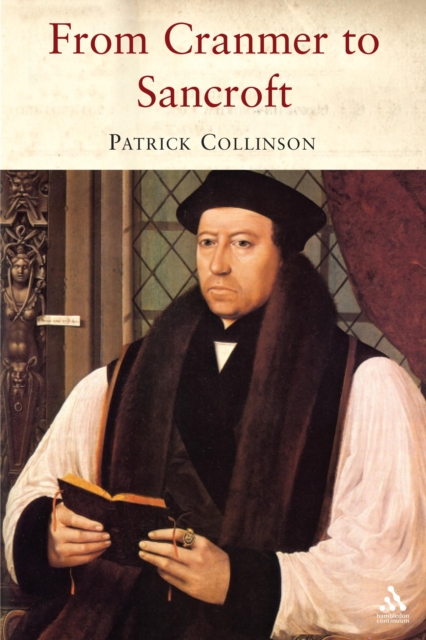
From Cranmer to Sancroft
Patrick Collinson is the leading historian of English religion in the years after the Reformation. This collection of essays ranges from Thomas Cranmer, who was burnt at the stake after repeated recantations in 1556, to William Sancroft, the only other post-Reformation archbishop of Canterbury to have been deprived of office. Patrick Collinson’s work explores the complex interactions between the inclusive and exclusive tendencies in English Protestantism, focusing both on famous figures, such as John Foxe and Richard Hooker, and on the individual reactions of lesser figures to the religious challenges of the time. Two themes throughout are the importance of the Bible and the emergence of Puritanism inside the Church of England.
eBook