
Catalogue Search | MBRL


Are you sure you want to remove the book from the shelf?

{{itemTitle}}
167
result(s) for
"Condamin, M."
Sort by:


Remission of idiopathic nephrotic syndrome after treatment with cyclosporin A
Nephrotic syndrome in minimal change lipoid nephrosis and focal segmental glomerulosclerosis may be due to alteration of glomerular anionic sites by a lymphokine. Six adults with nephrotic syndrome who were resistant to treatment with corticosteroids and immunosuppressants were treated with cyclosporin A. In three patients with minimal change lipoid nephrosis who had been nephrotic for 3.5 to 23 years proteinuria resolved within 12 to 42 days. Subsequently, these patients became dependent on cyclosporin A. In three patients with focal segmental glomerulosclerosis who had been nephrotic for four to six years mean (SD) 24 hour urinary protein decreased from 14.7 (8.4) g to 3.6 (0.6) g within 20 to 25 days, serum albumin concentration rose, and oedema subsided. One patient died of myocardial infarction when still in partial remission after 11 weeks' treatment. Two patients remained proteinuric despite continuing treatment with cyclosporin A, but control of sodium balance was easy and serum albumin concentrations remained higher than without cyclosporin A. In all patients renal function improved during treatment. These preliminary results show that cyclosporin A may be effective in the treatment of patients with nephrotic syndrome that resists every other form of treatment and especially in the treatment of those with minimal change lipoid nephrosis. The results are in keeping with a T lymphocyte mediated mechanism of minimal change lipoid nephrosis and focal segmental glomerulosclerosis, but they also suggest that minimal change lipoid nephrosis and focal segmental glomerulosclerosis are separate entities.
Journal Article
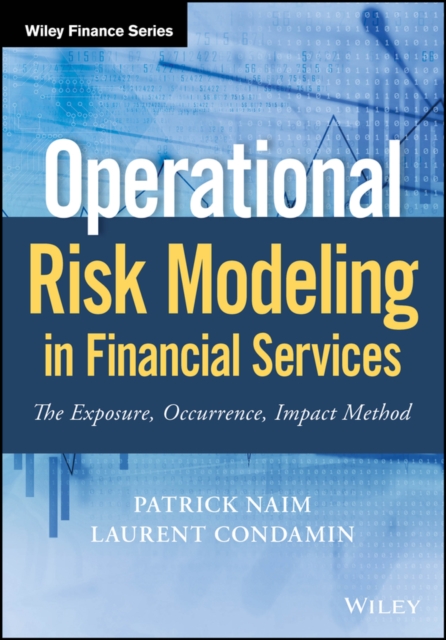
Operational risk modeling in financial services
Transform your approach to oprisk modelling with a proven, non-statistical methodology Operational Risk Modeling in Financial Services provides risk professionals with a forward-looking approach to risk modelling, based on structured management judgement over obsolete statistical methods.
eBook

Analyse des risques opérationnels par les réseaux bayésiens
Cet article présente une démarche de modélisation quantitative des risques opérationnels mise en œuvre au sein d'un groupe bancaire français dans le cadre de Bâle II. Cette approche est fondée sur la modélisation de scénarios de risque par des réseaux bayésiens. Elle repose principalement sur l'expertise humaine, seule source de connaissance capable d'appréhender les risques de gravité. Les modèles de connaissance permettent de calculer les fonds propres exigés par Bâle, de mesurer l'impact des évolutions du contexte ou des objectifs commerciaux et stratégiques sur les fonds propres, et enfin d'identifier les leviers de réduction des risques. This paper presents a quantification approach for operational risks. This method has been designed and implemented within a French banking group as part of the Basel 2 regulation framework. As only human expertise is generally available when addressing severity risks, we use knowledge based Bayesian networks to define and quantify the significant risk scenarios. These models are then merged into a global risk model. Finally, the global risk model is sampled in a Monte Carlo simulation to calculate the capital charge, evaluate the impact of strategic and commercial objectives or contextual changes on capital charge and identify risk control levers.
Journal Article

Registres de justification des managers face à la polémique de l'huile de palme : transition vers un marketing plus responsable ?
The excessive use of palm oil, in food industry, lead to a strong controversy. Based on Boltanski and Thévenot justification model, this paper analyses on one side, the discourse of Nutella in this particular context of crisis communication and on the other side, it analyses the reactions of food industry marketing managers, faced with Nutella's justifications. This confrontation highlights the several logics of argumentation used by Nutella to justify itself among its stakeholders and the judgement of this communication work, by marketing professionals. This double analysis allows to understand how this Nutella gate lead marketing managers to adopt a reflexive approach on their own practise and their responsibility as marketers.
Journal Article
Analyse des risques opérationnels par les réseaux bayésiens
Using Bayesian networks for operational risks analysis This paper presents a quantification approach for operational risks. This method has been designed and implemented within a French banking group as part of the Basel 2 regulation framework. As only human expertise is generally available when addressing severity risks, we use knowledge based Bayesian networks to define and quantify the significant risk scenarios. These models are then merged into a global risk model. Finally, the global risk model is sampled in a Monte Carlo simulation to calculate the capital charge, evaluate the impact of strategic and commercial objectives or contextual changes on capital charge and identify risk control levers. JEL classification : C11, G21, G28, K23 Cet article présente une démarche de modélisation quantitative des risques opérationnels mise en oeuvre au sein d’un groupe bancaire français dans le cadre de Bâle II. Cette approche est fondée sur la modélisation de scénarios de risque par des réseaux bayésiens. Elle repose principalement sur l’expertise humaine, seule source de connaissance capable d’appréhender les risques de gravité. Les modèles de connaissance permettent de calculer les fonds propres exigés par Bâle, de mesurer l’impact des évolutions du contexte ou des objectifs commerciaux et stratégiques sur les fonds propres, et enfin d’identifier les leviers de réduction des risques. Classification JEL : C11, G21, G28, K23
Journal Article

Au fil de l’écriture: comme goutte d’eau va à la mer
En travaillant à cette présentation, j’ai pu voir que le fil de l’écriture avait été celui d’une recherche de base: exprimer ce que je ressens pour mieux comprendre qui je suis, mon rapport aux autres et au monde qui m’entoure et pour y faire une marque – si ténue soit-elle…
Je veux préciser que lorsque je parle d’écriture autobiographique, j’en parle au sens large, en partant du matériau brut qu’est le journal intime, en passant par le récit de vie, l’autofiction, le roman autobiographique, sans oublier que la fiction relève aussi de l’expérience intime. Je cite ici Michèle Lesbre, l’auteure du
Book Chapter
