
Catalogue Search | MBRL


Are you sure you want to remove the book from the shelf?

{{itemTitle}}
1,027
result(s) for
"Condon, Matthew"
Sort by:
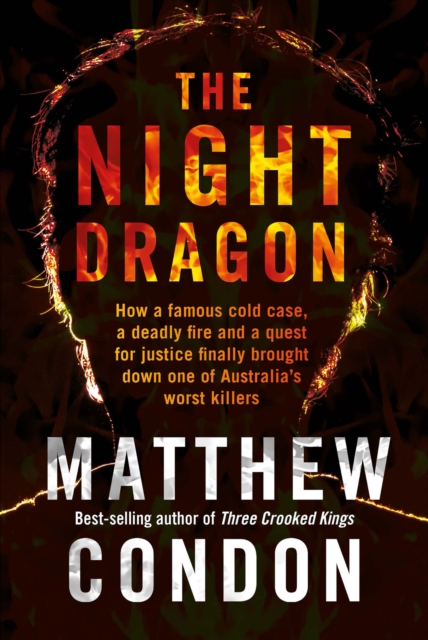
The Night Dragon
'He takes you in the middle of the night, like an angel, and you're gone for good.' - Witness at Vincent O'Dempsey's committal hearing. In 2017, Vincent O'Dempsey was sentenced to life in prison for the brutal murders of Barbara McCulkin and her two young daughters. It took over 40 years to bring him to justice. Feared for decades by criminals and police alike, O'Dempsey associated with convicted underworld figures and has been linked to a string of haunting cold cases, including the deadly Whiskey au Go Go nightclub firebombing that killed 15 innocent people. Award-winning investigative journalist Matthew Condon has interviewed dozens of ex-cons, police and witnesses to put together a compelling picture of the calculating killer who spent his life evading the law before he was finally brought to justice.
eBook

Little Fish Are Sweet
\"I recall meeting Lewis on a number of occasions in company with Tony Murphy.I recall conversation getting around to payments of money with Murphy and Lewis.Lewis thanked me on several occasions and said 'Little fish are sweet.\" --Jack 'The Bagman' Herbert in evidence to the Fitzgerald Inquiry 1988.
eBook
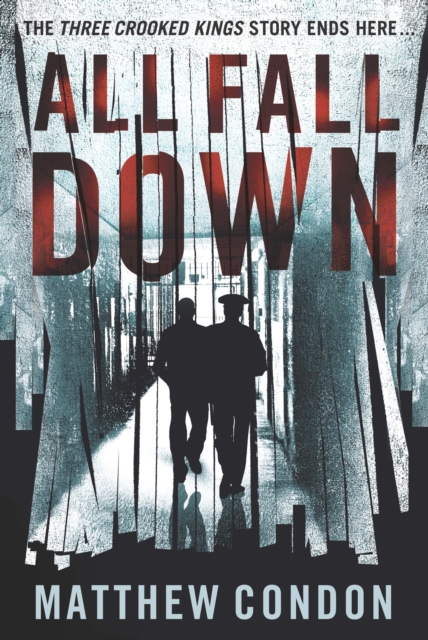
All Fall Down
Continuing on from the bestselling true crime stories Three Crooked Kings and Jacks and Jokers, All Fall Down follows Terry Lewis as he becomes police commissioner and the era of corruption at the highest levels of the police and government goes on. As the Queensland police become more connected with their corrupt colleagues in Sydney, the era of heavy drugs and crime also begins. Tony Murphy and Glen Hallahan, two of the original \"crooked kings,\" become more enmeshed with \"The Joke\" which is run by bagman Jack Herbert. All Fall Down introduces new characters, more extraordinary behavior outside the law by the law, and along the way it charts the meteoric rise of police commissioner Terry Lewis. But with the arrival of the Fitzgerald Inquiry in the late 1980s, many will fall—and it's not always the people who should. Once again award-winning journalist and novelist Matthew Condon has drawn from unprecedented access to Terry Lewis, as well as hundreds of interviews with key players and conspirators to craft the definitive account of the rise—and spectacular fall—of one man, an entire state, and over a generation of corruption.
eBook

Brisbane
Part of a series in which leading Australian authors write about their hometowns, this unique and evocative exploration is part memoir and part guide to Australia's Brisbane. Intertwining personal stories with the city's historical past, this account paints a portrait of the contemporary transformation of the city.
eBook

An investigation into how general dental practitioners in Leeds manage complex tooth wear cases
Introduction Restoring complex tooth wear (TW) cases is technically challenging and not well-remunerated under the NHS General Dental Service (GDS) contract. Therefore, numbers of referrals to secondary care are increasing, but these are often rejected as dental hospitals have a high workload. This may make it difficult for patients with TW to access appropriate care unless paying privately, which may be costly for them.Aim The aim of this investigation was to understand how general dental practitioners (GDPs) in Leeds manage complex TW cases.Methods A postal questionnaire was designed and piloted before postal distribution to all GDPs with a Leeds postcode (n = 289). Non-responders were sent reminders to complete the questionnaire. The questionnaire included questions on the place of qualification and experience of the dentists, their management of an example complex TW case and the potential barriers to management of similar cases. The resulting data were statistically tested using Kruskal-Wallis and Mann-Whitney tests.Results A total of 148 (51%) responded to the questionnaire. There was low confidence in restoring complex TW cases with a mean score of 4.65 out of 10 (0 being not confident at all and 10 being very confident). Only 30 respondents (21%) reported that they would treat complex TW cases under the current NHS GDS contract, and 90 (62%) reported that they had experienced difficulty referring these cases to hospital. Kruskal-Wallis testing showed increased confidence in restoring by those with a diploma or MSc (p = 0.004 and p = 0.014 respectively). Mann-Whitney testing showed those undertaking a higher percentage of NHS work were less likely to restore these cases (U = 2,100; p = 0.02).Conclusion These results suggest that Leeds patients with complex TW may have difficulty in accessing appropriate care under the current NHS GDS contract. The results highlight the benefits of postgraduate education on confidence in restoring complex TW cases.
Journal Article

A Healthy Workforce
In Brief
Successful companies recognize that a reactive approach to worker health is less effective than preventive approaches.
Adding traditional wellness programs to group health benefits is a first step, but can be slow and ineffective.
This article discusses comprehensive healthy workforce programs that companies can employ to address the total health of the workforce and improve not only health insurance premiums, but also workers' compensation costs, absenteeism, morale and other indirect costs.
Early adopters of this shift in employee wellness will be able to effectively manage the health and productivity of their workforce.
Most successful businesses are beginning to understand that the reactive approach to employee health, providing group health insurance to cover employees when they get sick, is far less effective than one that combines preventive efforts with transparent/reactive medical services. In the past, adding a traditional wellness program to group health benefits was the first step for employers that sought to proactively reign in their increasing group healthcare costs. This approach is slow, sometimes ineffective and makes measuring success difficult. More importantly, this philosophy is becoming obsolete.
By adding new, nontraditional wellness programs to existing healthy workforce strategies, employers can take their programs to a new level. Employers can look to a new generation of comprehensive healthy workforce programs to address not only nutrition, cessation education, exercise and disease management, but also disease prevention, functional employment testing, job analysis, ergonomic assessment and injury prevention.
Journal Article
All Fall Down
Continuing on from the bestselling true crime stories Three Crooked Kings and Jacks and Jokers, All Fall Down follows Terry Lewis as he becomes police commissioner and the era of corruption at the highest levels of the police and government goes on. As the Queensland police become more connected with their corrupt colleagues in Sydney, the era of heavy drugs and crime also begins. Tony Murphy and Glen Hallahan, two of the original \"crooked kings,\" become more enmeshed with \"The Joke\" which is run by bagman Jack Herbert. All Fall Down introduces new characters, more extraordinary behavior outside the law by the law, and along the way it charts the meteoric rise of police commissioner Terry Lewis. But with the arrival of the Fitzgerald Inquiry in the late 1980s, many will fall—and it's not always the people who should. Once again award-winning journalist and novelist Matthew Condon has drawn from unprecedented access to Terry Lewis, as well as hundreds of interviews with key players and conspirators to craft the definitive account of the rise—and spectacular fall—of one man, an entire state, and over a generation of corruption.
eBook

In-Hospital Hip Fractures in a Large Irish Teaching Hospital: Patient Risk Factors and Outcomes
In-hospital hip fractures follow falls during unrelated admissions. Little data in the Irish setting is available on this vulnerable subset of hip fracture patients. Our objective is to review the incidence of in-hospital hip fractures, identify risk factors, and evaluate outcomes.
This is a retrospective observational review. We collected patient data in St. James' Hospital using the Hospital In-Patient Enquiry database and Electronic Patient Records for in-hospital hip fractures between 10/02/2017 and 22/04/2020. Comorbidity, survival, and discharge destination data were gathered.
We identified 40 fractures, representing 11.5% of all hip fractures treated at our center during the study period. The patients were 60-95 years old. Median age was 77 years for males and 86 years for females. Most (72.5%) were identified as fall risks, and 52% were unwitnessed falls. Many had a history of falls (67.5%), dementia (52.5%), or both (42.5%). Delirium was common (42.5%), and 75% had at least one vascular/coagulation disorder. Mortality was 10.25% at 30 days, 23.1% at 90 days, and 51.4% at 12 months. Although 70% were admitted from home, only 10% were discharged back home. 30% were admitted to a nursing home, and 55% were discharged from a nursing home.
In-hospital hip fractures accounted for 11.5% of all hip fractures treated at our center, confirming the need for a well-defined hospital protocol. Patients often present with previous falls, dementia, and cardiovascular disease. Outcomes are poor, with 51.4% mortality at 12 months and significant morbidity reflected by a loss of independent living.
Journal Article
Revisiting the dark man: A journey into Queensland's shadow country
One recent Saturday morning, I once again drove my children to the street in Brisbane's west where I grew up as a boy.
They had been on this journey too many times to remember: the pleasant drive through The Gap in the Taylor Range, past the old jam factory and the golf course, left into Payne Road and then sharp left into the dogleg that is Bernarra Street.
Journal Article

The Unnamed and the Defaced: The Limits of Rhetoric in Augustine's Confessiones
This article addresses a seeming aporia for the modern reader of Augustine's Confessiones: why is it that Augustine refuses to name significant figures in his life throughout his self-narrative? By way of attempting an answer, I begin with the formal problems of the Confessiones, that is, how one should approach such a fractured and rhetorically disciplined text. Then I address the more specific problem that has been curiously neglected by a whole range of commentators: the violent unnaming and defacing that occurs as a result of Augustine's willful forgetting of particular people who were once close to him. I draw the conclusions that such unnaming was not an oversight committed by Augustine, that he does so in order to distance his own conversion experience from less inspiring stories, and that this is part of a conscious, rhetorical agenda to align his own name with certain distinguished members of the Latin Church
Journal Article