
Catalogue Search | MBRL


Are you sure you want to remove the book from the shelf?

{{itemTitle}}
36
result(s) for
"Connerton, Paul"
Sort by:

The spirit of mourning : history, memory and the body
\"How is the memory of traumatic events, such as genocide and torture, inscribed within human bodies? In this book, Paul Connerton discusses social and cultural memory by looking at the role of mourning in the production of histories and the reticence of silence across many different cultures. In particular he looks at how memory is conveyed in gesture, bodily posture, speech and the senses - and how bodily memory, in turn, becomes manifested in cultural objects such as tattoos, letters, buildings and public spaces. It is argued that memory is more cultural and collective than it is individual. This book will appeal to researchers and students in anthropology, linguistic anthropology, sociology, social psychology and philosophy\"-- Provided by publisher.
Book

The Spirit of Mourning
How is the memory of traumatic events, such as genocide and torture, inscribed within human bodies? In this book, Paul Connerton discusses social and cultural memory by looking at the role of mourning in the production of histories and the reticence of silence across many different cultures. In particular he looks at how memory is conveyed in gesture, bodily posture, speech and the senses – and how bodily memory, in turn, becomes manifested in cultural objects such as tattoos, letters, buildings and public spaces. It is argued that memory is more cultural and collective than it is individual. This book will appeal to researchers and students in anthropology, linguistic anthropology, sociology, social psychology and philosophy.
eBook


The Rediscovery of Brand Experience Dimensions with Big Data Analysis: Building for a Sustainable Brand
The brand experience research of Brakus et al. has provided new momentum in marketing literature with the concept of brand experience and predicting consumer behavior in 2009. Since then, brand experience has emerged as one of the solid academic constructs for branding and marketing scholars and practitioners who pursue this competitive strategy for sustainable growth in corporate management. The authors explore the new dimensions of brand experience with big data analytics for the first time in academic research. We propose a possible sixth dimension (“External”) of brand experience which includes sensory, affective, intellectual, behavioral, and social aspects drawn from previous studies. A new methodology for combining topic modeling and conjoint analysis is tested with big data-based multi-level compositions that overcome the limits of the traditional survey-based analysis. Moreover, the study reveals the decision-making frame which combines conjoint analysis and the dimensions of brand experience for practical implications. The novelty of this data-driven research and results contribute to new approaches in academia from the perspectives of brand experience dimensions, topic modeling, and conjoint analysis methodology development. Building sustainable brands, this study contributes to the ways of reading consumer behavior, evaluating the current status of the market and deciding the stimuli to affect consumer behavior.
Journal Article
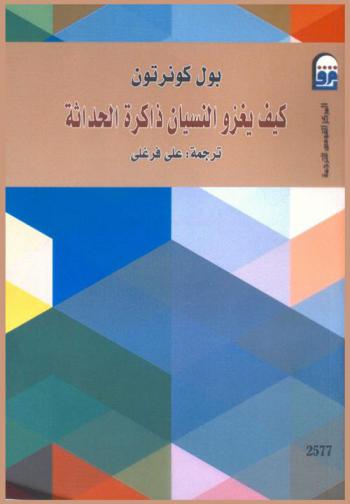
كيف يغزو النسيان ذاكرة الحداثة
هل تعاني الحداثة مشكلة خاصة مع النسيان؟ في ضوء هذا السؤال يمكن قراءة كتاب \"كيف يغزو النسيان ذاكرة الحداثة ؟\" لبول كونرتون فإن ذلك لا يعني أن النسيان الثقافي حكر على الحداثة لأن هناك أنواعا مختلفة من النسيان البنائي وتخص تكوينات اجتماعية مختلفة حيث كان علماء الإنثروبولوجيا والمدرسة الكلاسيكية من أوائل من أشاروا إلى ذلك في سياق بحثهم لخصائص بث الرسائل المميزة لمجتمعات ما قبل المعرفة ولا يعني التسليم بذلك أن هناك سحابة نسيان وقد حطت على أفق العصر الحديث إذ إن التسليم بذلك سيكون نوعا من اللا معقول.
Book
Bodily projection
By speaking of bodily projection I mean to refer to the fact that buildings around us and other features of our habitat are not regarded as entirely external to and wholly separate from us, but that the body-subject ‘reads’ features of the human body onto the habitat around us and within which we conduct our lives. This reading, or projection, can be accomplished in a number of different ways. It might be done by projecting onto the features of the habitat aspects of human bodily states. It might be done by projecting onto features of the habitat particular bodily attributes. Or it might be done by projecting bodily features in a form of cognitive mapping onto elements of nature.I shall speak of these three types of projection as, respectively, empathic, mimetic and cosmic. All of these different types of reading or projection entail different modes of emotional or affective memory being applied to the habitat.
Book Chapter
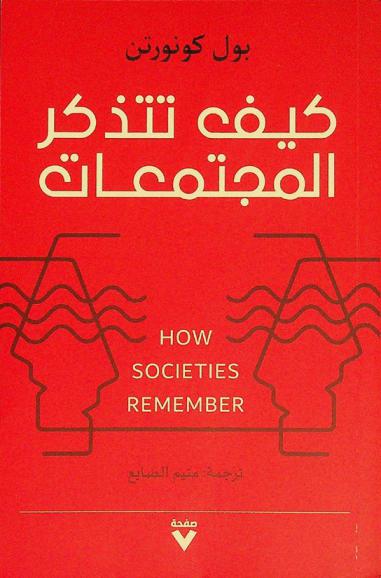
كيف تتذكر المجتمعات
كتاب \"كيف تتذكر المجتمعات\" للكاتب بول كونورتن، بترجمة متيم الضايع، يتناول كيفية تشكيل المجتمعات لذكرياتها الجماعية وتأثير الماضي على الحاضر. يستعرض الكتاب كيف تعتمد خبراتنا الحالية بشكل كبير على معرفتنا بالماضي، وكيف تتداخل الأحداث السابقة مع تجربتنا للحاضر. يأخذنا كونورتن في رحلة لفهم هذه الديناميكيات، موضحا أن عملية التذكر ليست مجرد استرجاع للأحداث، بل هي عملية معقدة تتأثر بعوامل متعددة من الماضي والحاضر. الكتاب يغوص في تفاصيل الحياة اليومية وكيفية تأثير الذكريات على تشكيل الهوية الجماعية للمجتمعات.
BOOK
The birth of histories from the spirit of mourning
Why do we produce histories?The answer frequently given in reply to that question is that histories seek to legitimate a present order of political and social power. That answer has usually taken one of two possible forms. The first form might be called the affirmative version, while the second form might be called the critical version, of the legitimation thesis.
Book Chapter