
Catalogue Search | MBRL


Are you sure you want to remove the book from the shelf?

{{itemTitle}}
2
result(s) for
"Connor, Simon, 1987- author"
Sort by:
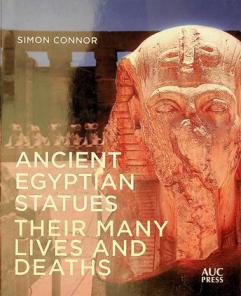
Ancient Egyptian statues : their many lives and deaths
\"Why do ancient Egyptian statues so often have their noses, hands, or genitals broken? Although Late Antiquity appears to have been one of the major moments of large-scale vandalism against pagan monuments, various contexts bear witness to several phases of reuse, modification, or mutilation of statues throughout and after the pharaonic period. Reasons for this range from a desire to erase the memory of specific rulers or individuals for ideological reasons to personal vengeance, war, tomb plundering, and the avoidance of a curse; or simply the reuse of material for construction or the need to ritually \"deactivate\" and bury old statues, without the added motive of explicit hostility toward the subject in question. Drawing on the latest scholarship and over 100 carefully selected illustrations, Ancient Egyptian Statues proceeds from a general discussion of the production and meaning of sculptures, and the mechanisms of their destruction, to review the role of ancient statuary in Egyptian history and belief. It then moves on to explore the various means of damage and their significance, and the role of restoration and reuse. Art historian Simon Connor offers an innovative and lucidly written reflection on beliefs and practices relating to statuary, and images more broadly, in ancient Egypt, showing how statues were regarded as the active manifestations of the entities they represented, and the ways in which they could endure many lives before being finally buried or forgotten.\"-- Provided by publisher.
BOOK

Ancient Egyptian statues : their many lives and deaths
\"Why do ancient Egyptian statues so often have their noses, hands, or genitals broken? Although Late Antiquity appears to have been one of the major moments of large-scale vandalism against pagan monuments, various contexts bear witness to several phases of reuse, modification, or mutilation of statues throughout and after the pharaonic period. Reasons for this range from a desire to erase the memory of specific rulers or individuals for ideological reasons to personal vengeance, war, tomb plundering, and the avoidance of a curse; or simply the reuse of material for construction or the need to ritually \"deactivate\" and bury old statues, without the added motive of explicit hostility toward the subject in question. Drawing on the latest scholarship and over 100 carefully selected illustrations, Ancient Egyptian Statues proceeds from a general discussion of the production and meaning of sculptures, and the mechanisms of their destruction, to review the role of ancient statuary in Egyptian history and belief. It then moves on to explore the various means of damage and their significance, and the role of restoration and reuse. Art historian Simon Connor offers an innovative and lucidly written reflection on beliefs and practices relating to statuary, and images more broadly, in ancient Egypt, showing how statues were regarded as the active manifestations of the entities they represented, and the ways in which they could endure many lives before being finally buried or forgotten.\"-- Provided by publisher.
BOOK