
Catalogue Search | MBRL


Are you sure you want to remove the book from the shelf?

{{itemTitle}}
11
result(s) for
"Cook, Alethia H"
Sort by:

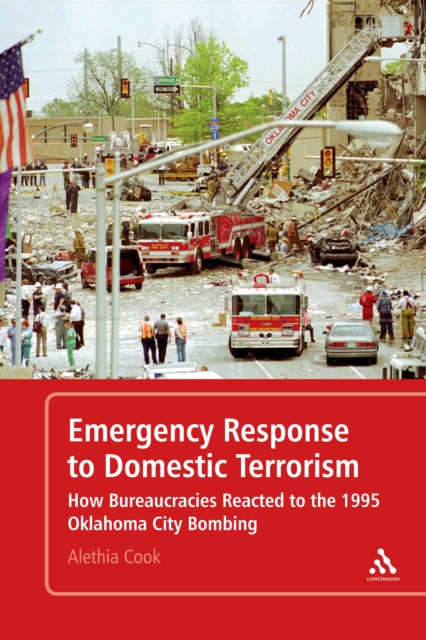
Emergency Response to Domestic Terrorism
Using the 1995 Oklahoma City bombing as a case study, this text examines how various official actors responded were expected to respond to the incident. It offers an assessment of what interventions were effective or failed in their objectives.
eBook
Drawing a line in the sea
The deadly May 31, 2010 Gaza flotilla incident has been misunderstood. This book explores the incident in more detail than mainstream media coverage has allowed—explaining the background, key players, and the incident itself—enriched by the authors having had unique access to senior Israeli officials in the immediate aftermath of the event. The incident is a microcosm of the struggle between terrorism and democratic societies, and raises a number of legal, ethical, and strategic political issues in the contemporary Middle East. Chapters address the political and military scenario preceding the incident, key state and non-state actors involved, military and ethical dimensions of the operation, and the aftermath in the media and politics. The book provides thoughtful and readable analysis that is useful to policy makers and to the general public, and draws some important conclusions for the continuing conflict between democratic states and terrorists and their sponsors.
eBook

Rebellion, mediation, and group change: An empirical investigation of competing hypotheses
Multilateral and diplomatic resolutions to intrastate conflicts are the preferred method of termination. However, mediated settlements tend toward failure and conflict recurrence. A significant factor in this failure is that government and groups are heterogeneous. While the demands, goals, preferences, and intentions of both sides are sometimes viewed as being held in common, they are potentially as diverse as the groups' members. Understanding the relationship between resolution efforts and group heterogeneity is complicated but crucial to improving mediation success. The current article examines all intrastate conflicts for the period 1945—1999, in order to test two competing propositions found in the literature on group change and the occurrence of mediation. The primary question of interest is whether group change tends to result from or precede mediation attempts. In other words, is group change an impetus to engage in mediation or do mediation processes tend to result in altered group characteristics. The findings support only the proposition that when governments engage rebels in mediation, rebel group changes are significantly more likely to occur than without mediation. The implications of the findings are also discussed.
Journal Article
Drawing a Line in the Sea
The deadly May 31, 2010 Gaza flotilla incident has been misunderstood. This book explores the incident in more detail than mainstream media coverage has allowed-explaining the background, key players, and the incident itself-enriched by the authors having had unique access to senior Israeli officials in the immediate aftermath of the event. The incident is a microcosm of the struggle between terrorism and democratic societies, and raises a number of legal, ethical, and strategic political issues in the contemporary Middle East. Chapters address the political and military scenario preceding the incident, key state and non-state actors involved, military and ethical dimensions of the operation, and the aftermath in the media and politics. The book provides thoughtful and readable analysis that is useful to policy makers and to the general public, and draws some important conclusions for the continuing conflict between democratic states and terrorists and their sponsors.
eBook
Rebellion, mediation, and group change
Multilateral and diplomatic resolutions to intrastate conflicts are the preferred method of termination. However, mediated settlements tend toward failure and conflict recurrence. A significant factor in this failure is that government and groups are heterogeneous. While the demands, goals, preferences, and intentions of both sides are sometimes viewed as being held in common, they are potentially as diverse as the groups’ members. Understanding the relationship between resolution efforts and group heterogeneity is complicated but crucial to improving mediation success. The current article examines all intrastate conflicts for the period 1945–1999, in order to test two competing propositions found in the literature on group change and the occurrence of mediation. The primary question of interest is whether group change tends to result from or precede mediation attempts. In other words, is group change an impetus to engage in mediation or do mediation processes tend to result in altered group characteristics. The findings support only the proposition that when governments engage rebels in mediation, rebel group changes are significantly more likely to occur than without mediation. The implications of the findings are also discussed.
Journal Article

The 1995 Oklahoma City bombing: Bureaucratic response to terrorism and a method for evaluation
Terrorism poses complex challenges to American government at all levels. Due to the complexity of the threat, Americans cannot expect government to be able to deter or intervene in every terrorist attack. For that reason, government must plan to be better prepared to respond to acts of terror. A critical element of being better prepared must include some understanding of what constitutes effective response. This dissertation presents the findings of an intensive study of the response to the bombing of the Alfred P. Murrah building in Oklahoma City in 1995. This dissertation is a qualitative case study that utilizes expert interviews to analyze the response efforts undertaken after the bombing. Thirty-one elite participants in the emergency response were interviewed. In addition, after-action reports and interviews conducted by the Oklahoma Memorial Documentation Team were examined. The content of the interviews and other materials was then searched for themes and patterns in the data. The findings of the dissertation were based on analysis of these materials and comparison to bureaucracy theories and emergency response literature. It was found that bureaucratic cultures influenced the outcome of the response, professional and interpersonal networks in place before the incident facilitated response, and the bottom-up theory of bureaucratic implementation best describes emergency response. Furthermore, it was found that the methodology used in the analysis provided valuable insights into emergency response and was useful in evaluating its efficacy.
Dissertation
