
Catalogue Search | MBRL


Are you sure you want to remove the book from the shelf?

{{itemTitle}}
5,944
result(s) for
"Cook, G"
Sort by:


Management of relapsed and refractory multiple myeloma: novel agents, antibodies, immunotherapies and beyond
Despite enormous advances, management of multiple myeloma (MM) remains challenging. Multiple factors impact the decision to treat or which regimen to use at MM relapse/progression. Recent major randomized controlled trials (RCTs) showed widely varying progression-free survivals (PFS), ranging from a median of 4 months (MM-003) to 23.6 months (ASPIRE). Based on these RCTs, next-generation proteasome inhibitors (carfilzomib and ixazomib), next-generation immunomodulatory agent (pomalidomide), and monoclonal antibodies (elotuzumab and daratumumab) were approved for relapsed and refractory MM. Daratumumab, targeting CD38, has multiple mechanisms of action including modulation of the immunosuppressive bone marrow micro-environment. In addition to the remarkable single agent activity in refractory MM, daratumumab produced deep responses and superior PFS in MM when combined with lenalidomide/dexamethasone, or bortezomib/dexamethasone. Other anti-CD38 antibodies, such as isatuximab and MOR202, are undergoing assessment. Elotuzumab, targeting SLAMF7, yielded superior response rates and PFS when combined with lenalidomide/dexamethasone. New combinations of these next generation novel agents and/or antibodies are undergoing clinical trials. Venetoclax, an oral BH3 mimetic inhibiting BCL2, showed single agent activity in MM with t(11;14), and is being studied in combination with bortezomib/dexamethasone. Selinexor, an Exportin-1 inhibitor, yielded promising results in quad- or penta-refractory MM including patients resistant to daratumumab. Pembrolizumab, an anti-PD1 check-point inhibitor, is being tested in combination with lenalidomide/dexamethasone or pomalidomide/dexamethasone. Chimeric antigen receptor-T cells targeting B-cell maturation antigen have yielded deep responses in RRMM. Finally, salvage autologous stem cell transplantation (ASCT) remains an important treatment in MM relapsing/progressing after a first ASCT. Herein, the clinical trial data of these agents are summarized, cautious interpretation of RCTs highlighted, and algorithm for salvage treatment of relapse/refractory MM proposed.
Journal Article
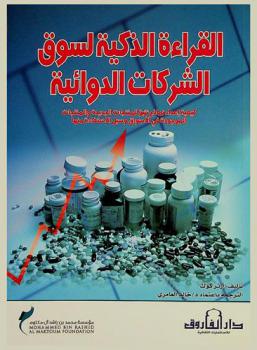
القراءة الذكية لسوق الشركات الدوائية
يوضح هذا الدليل العلمي الأساس الذي تقوم عليه نماذج التنبؤ الناجحة للمنتجات التي مازالت في مراحل التطوير فضلا عن المنتجات التي سبق طرحها في السواق بصورة تحقق التوازن بين الإغراق في المناهج المعقدة والإفراط في التبسيط كما يستكتشف الكتاب أيضا عملية التنبؤ لمجال الصناعة الدوائية مستعرضا العديد من الأدوات والأساليب التي تستخدم في إعداد نماذج تنبؤ للمنتجات الجديدة والتي سبق طرحها في السوق لذلك يعد الكتاب دليلا مفيدا وقيما للقائمين بعلمية التنبؤ ولعدد كبير من متخذي القرار.
Book

Phylogenetic niche conservatism: what are the underlying evolutionary and ecological causes?
Phylogenetic niche conservatism (PNC) is the tendency of lineages to retain their niche-related traits through speciation events. A recent surge in the availability of well-sampled molecular phylogenies has stimulated phylogenetic approaches to understanding ecological processes at large geographical scales and through macroevolutionary time. We stress that PNC is a pattern, not a process, and is found only in some traits and some lineages. At the simplest level, a pattern of PNC is an inevitable consequence of evolution – descent with modification and divergence of lineages – but several intrinsic causes, including physicochemical, developmental and genetic constraints, can lead directly to a marked pattern of PNC. A pattern of PNC can also be caused indirectly, as a by-product of other causes, such as extinction, dispersal limitation, competition and predation. Recognition of patterns of PNC can contribute to understanding macroevolutionary processes: for example, release from constraint in traits has been hypothesized to trigger adaptive radiations such as that of the angiosperms. Given the multiple causes of patterns of PNC, tests should address explicit questions about hypothesized processes. We conclude that PNC is a scientifically useful concept with applications to the practice of ecological research.
Journal Article

البحث في التربية الخاصة : التصميمات والمناهج والتطبيقات
هذا الكتاب تم كتابته كمقرر مقدمة تمهيدية من أجل طلاب الدراسات العليا والممارسين في التربية الخاصة، يقوم بتركيز قدر كبير من المعلومات هنا على دور القارئ لا يقوم فقط بتوجيه الطالب أو الممارس إلى أساسيات تصميم البحث، ولكنه أيضا يعطيه مقدمة حول التراث التخصصي في هذا المجال الدينامي للبحث ومثله مثل الكتاب المصاحب الذي كتبه جيمس بليني وفيليب رزمريل، الأبحاث في أعاده التأهيل والإرشاد حيث يقدم هذا الكتاب الأسس التي سوف يحتاجها الفرد ليبدأ إجراء أي دراسة بحثية، ولكنه يشجع هذا الشخص أن يكمل هذا الكتاب بمقررات دراسية في الإحصاء وتصميم البحث المتقدم قبل البدء في أي دراسة تجريبية.
Book

Animal migration amid shifting patterns of phenology and predation: lessons from a Yellowstone elk herd
Migration is a striking behavioral strategy by which many animals enhance resource acquisition while reducing predation risk. Historically, the demographic benefits of such movements made migration common, but in many taxa the phenomenon is considered globally threatened. Here we describe a long-term decline in the productivity of elk (
Cervus elaphus
) that migrate through intact wilderness areas to protected summer ranges inside Yellowstone National Park, USA. We attribute this decline to a long-term reduction in the demographic benefits that ungulates typically gain from migration. Among migratory elk, we observed a 21-year, 70% reduction in recruitment and a 4-year, 19% depression in their pregnancy rate largely caused by infrequent reproduction of females that were young or lactating. In contrast, among resident elk, we have recently observed increasing recruitment and a high rate of pregnancy. Landscape-level changes in habitat quality and predation appear to be responsible for the declining productivity of Yellowstone migrants. From 1989 to 2009, migratory elk experienced an increasing rate and shorter duration of green-up coincident with warmer spring-summer temperatures and reduced spring precipitation, also consistent with observations of an unusually severe drought in the region. Migrants are also now exposed to four times as many grizzly bears (
Ursus arctos
) and wolves (
Canis lupus
) as resident elk. Both of these restored predators consume migratory elk calves at high rates in the Yellowstone wilderness but are maintained at low densities via lethal management and human disturbance in the year-round habitats of resident elk. Our findings suggest that large-carnivore recovery and drought, operating simultaneously along an elevation gradient, have disproportionately influenced the demography of migratory elk. Many migratory animals travel large geographic distances between their seasonal ranges. Changes in land use and climate that disparately influence such seasonal ranges may alter the ecological basis of migratory behavior, representing an important challenge for, and a powerful lens into, the ecology and conservation of migratory taxa.
Journal Article

Benefits of preparing for childbirth with mindfulness training: a randomized controlled trial with active comparison
Background
Childbirth fear is linked with lower labor pain tolerance and worse postpartum adjustment. Empirically validated childbirth preparation options are lacking for pregnant women facing this problem. Mindfulness approaches, now widely disseminated, can alleviate symptoms of both chronic and acute pain and improve psychological adjustment, suggesting potential benefit when applied to childbirth education.
Methods
This study, the Prenatal Education About Reducing Labor Stress (PEARLS) study, is a randomized controlled trial (RCT;
n
= 30) of a short, time-intensive, 2.5-day mindfulness-based childbirth preparation course offered as a weekend workshop, the
Mind in Labor (MIL)
:
Working with Pain in Childbirth
, based on
Mindfulness-Based Childbirth and Parenting
(MBCP) education. First-time mothers in the late 3rd trimester of pregnancy were randomized to attend either the MIL course or a standard childbirth preparation course with no mind-body focus. Participants completed self-report assessments pre-intervention, post-intervention, and post-birth, and medical record data were collected.
Results
In a demographically diverse sample, this small RCT demonstrated mindfulness-based childbirth education improved women’s childbirth-related appraisals and psychological functioning in comparison to standard childbirth education. MIL program participants showed greater childbirth self-efficacy and mindful body awareness (but no changes in dispositional mindfulness), lower post-course depression symptoms that were maintained through postpartum follow-up, and a trend toward a lower rate of opioid analgesia use in labor. They did not, however, retrospectively report lower perceived labor pain or use epidural less frequently than controls.
Conclusions
This study suggests mindfulness training carefully tailored to address fear and pain of childbirth may lead to important maternal mental health benefits, including improvements in childbirth-related appraisals and the prevention of postpartum depression symptoms. There is also some indication that MIL participants may use mindfulness coping in lieu of systemic opioid pain medication. A large-scale RCT that captures real-time pain perceptions during labor and length of labor is warranted to provide a more definitive test of these effects.
Trial registration
The ClinicalTrials.gov identifier for the PEARLS study is:
NCT02327559
. The study was retrospectively registered on June 23, 2014.
Journal Article
Prediction of outcome in newly diagnosed myeloma: a meta-analysis of the molecular profiles of 1905 trial patients
Robust establishment of survival in multiple myeloma (MM) and its relationship to recurrent genetic aberrations is required as outcomes are variable despite apparent similar staging. We assayed copy number alterations (CNA) and translocations in 1036 patients from the NCRI Myeloma XI trial and linked these to overall survival (OS) and progression-free survival. Through a meta-anlysis of these data with data from MRC Myeloma IX trial, totalling 1905 newly diagnosed MM patients (NDMM), we confirm the association of t(4;14), t(14;16), t(14;20), del(17p) and gain(1q21) with poor prognosis with hazard ratios (HRs) for OS of 1.60 (P=4.77 × 10⁻⁷ ), 1.74 (P=0.0005), 1.90 (P=0.0089), 2.10 (P=8.86 × 10⁻¹⁴ ) and 1.68 (P=2.18 × 10⁻¹⁴ ), respectively. Patients with 'double-hit' defined by co-occurrence of at least two adverse lesions have an especially poor prognosis with HRs for OS of 2.67 (P=8.13 × 10⁻²⁷ ) for all patients and 3.19 (P=1.23 × 10⁻¹⁸ ) for intensively treated patients. Using comprehensive CNA and translocation profiling in Myeloma XI we also demonstrate a strong association between t(4;14) and BIRC2/BIRC3 deletion (P=8.7 × 10⁻¹⁵ ), including homozygous deletion. Finally, we define distinct sub-groups of hyperdiploid MM, with either gain(1q21) and CCND2 overexpression (P<0.0001) or gain(11q25) and CCND1 overexpression (P<0.0001). Profiling multiple genetic lesions can identify MM patients likely to relapse early allowing stratification of treatment.
Journal Article

How Was the Australian Flora Assembled Over the Last 65 Million Years? A Molecular Phylogenetic Perspective
Australia has a mostly dry, open, fire-shaped landscape of sclerophyllous and xeromorphic flora dominated by eucalypt and acacia trees, with diverse shrubs from a few families such as Myrtaceae, Proteaceae, and Fabaceae. Using molecular phylogenies to test hypotheses derived from the fossil record, we review the principal forces that transformed the ancestral Gondwanan rainforest through the Cenozoic. Today's vegetation is a mix of ancient radiations that have persisted in Australia through dramatic climate change since before the breakup of Gondwana, and more recent lineages whose ancestors arrived by trans-oceanic dispersal. Signatures in the fossil record of lineage turnover and trait evolutionary change are detected in phylogenies, but often at earlier dates. The Australian biota is a sample of the wider region, with extinction of some taxa and radiation of others (due to chance and opportunity), but biotic and abiotic interactions have resulted in a unique flora and fauna.
Journal Article

The effects of step-count monitoring interventions on physical activity: systematic review and meta-analysis of community-based randomised controlled trials in adults
Background
Step-count monitors (pedometers, body-worn trackers and smartphone applications) can increase walking, helping to tackle physical inactivity. We aimed to assess the effect of step-count monitors on physical activity (PA) in randomised controlled trials (RCTs) amongst community-dwelling adults; including longer-term effects, differences between step-count monitors, and between intervention components.
Methods
Systematic literature searches in seven databases identified RCTs in healthy adults, or those at risk of disease, published between January 2000–April 2020. Two reviewers independently selected studies, extracted data and assessed risk of bias. Outcome was mean differences (MD) with 95% confidence intervals (CI) in steps at follow-up between treatment and control groups. Our preferred outcome measure was from studies with follow-up steps adjusted for baseline steps (change studies); but we also included studies reporting follow-up differences only (end-point studies). Multivariate-meta-analysis used random-effect estimates at different time-points for change studies only. Meta-regression compared effects of different step-count monitors and intervention components amongst all studies at ≤4 months.
Results
Of 12,491 records identified, 70 RCTs (at generally low risk of bias) were included, with 57 trials (16,355 participants) included in meta-analyses: 32 provided change from baseline data; 25 provided end-point only. Multivariate meta-analysis of the 32 change studies demonstrated step-counts favoured intervention groups: MD of 1126 steps/day 95%CI [787, 1466] at ≤4 months, 1050 steps/day [602, 1498] at 6 months, 464 steps/day [301, 626] at 1 year, 121 steps/day [− 64, 306] at 2 years and 434 steps/day [191, 676] at 3–4 years. Meta-regression of the 57 trials at ≤4 months demonstrated in mutually-adjusted analyses that: end-point were similar to change studies (+ 257 steps/day [− 417, 931]); body-worn trackers/smartphone applications were less effective than pedometers (− 834 steps/day [− 1542, − 126]); and interventions providing additional counselling/incentives were not better than those without (− 812 steps/day [− 1503, − 122]).
Conclusions
Step-count monitoring leads to short and long-term step-count increases, with no evidence that either body-worn trackers/smartphone applications, or additional counselling/incentives offer further benefit over simpler pedometer-based interventions. Simple step-count monitoring interventions should be prioritised to address the public health physical inactivity challenge.
Systematic review registration
PROSPERO number
CRD42017075810
.
Journal Article