
Catalogue Search | MBRL


Are you sure you want to remove the book from the shelf?

{{itemTitle}}
626
result(s) for
"Cook, Walter"
Sort by:
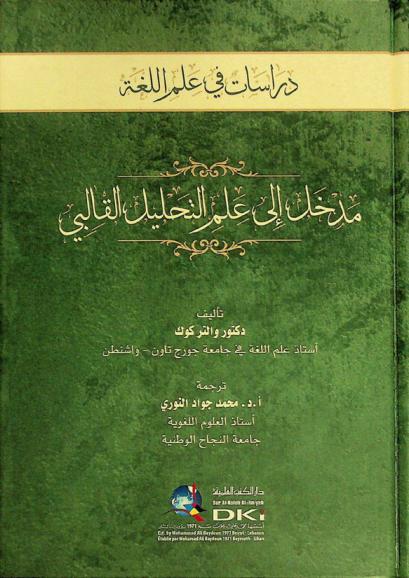
مدخل إلى التحليل القالبي
كتاب في اللغة العربية تناول فيه المؤلف موضوع التحليل القالبي فتناول تعريف الوحدة والمركب القالبي ومستويات علم القواعد ومستوى الجملة والجملة الكبرى والجملة الصغرى ومستوى التركيب والتراكيب المستقلة والتراكيب غير المستقلة وتحليلات مستوى التركيب ومستوى العبارة وعبارات الربط وعبارات الرأس ومستوى الكلمة ومستوى المورفيم ووصف اللغة وغير ذلك فيما يتعلق بالتحليل القالبي وغيرها من الموضعات علم اللغة.
Book

Chronic Wasting Disease Drives Population Decline of White-Tailed Deer
Chronic wasting disease (CWD) is an invariably fatal transmissible spongiform encephalopathy of white-tailed deer, mule deer, elk, and moose. Despite a 100% fatality rate, areas of high prevalence, and increasingly expanding geographic endemic areas, little is known about the population-level effects of CWD in deer. To investigate these effects, we tested the null hypothesis that high prevalence CWD did not negatively impact white-tailed deer population sustainability. The specific objectives of the study were to monitor CWD-positive and CWD-negative white-tailed deer in a high-prevalence CWD area longitudinally via radio-telemetry and global positioning system (GPS) collars. For the two populations, we determined the following: a) demographic and disease indices, b) annual survival, and c) finite rate of population growth (λ). The CWD prevalence was higher in females (42%) than males (28.8%) and hunter harvest and clinical CWD were the most frequent causes of mortality, with CWD-positive deer over-represented in harvest and total mortalities. Survival was significantly lower for CWD-positive deer and separately by sex; CWD-positive deer were 4.5 times more likely to die annually than CWD-negative deer while bucks were 1.7 times more likely to die than does. Population λ was 0.896 (0.859-0.980), which indicated a 10.4% annual decline. We show that a chronic disease that becomes endemic in wildlife populations has the potential to be population-limiting and the strong population-level effects of CWD suggest affected populations are not sustainable at high disease prevalence under current harvest levels.
Journal Article

Respiratory Shedding of Infectious SARS-CoV-2 Omicron XBB.1.41.1 Lineage among Captive White-Tailed Deer, Texas, USA
White-tailed deer (Odocoileus virginianus) have high value for research, conservation, agriculture, and recreation and might be key SARS-CoV-2 reservoirs. In November 2023, we sampled 15 female deer in a captive facility in Texas, USA. All deer had neutralizing antibodies to SARS-CoV-2; respiratory swab samples from 11 deer were SARS-CoV-2-positive by quantitative reverse transcription PCR, and 1 deer also had a positive rectal swab sample. Six of the 11 respiratory swab samples yielded infectious virus; replication kinetics of most samples displayed lower growth 24-48 hours postinfection in vitro than Omicron lineages isolated from humans in Texas in the same period. Virus growth was similar between groups by 72 hours, suggesting no strong attenuation of deer-derived virus. All deer viruses clustered in XBB Omicron clade and demonstrated more mutations than expected compared with contemporaneous viruses in humans, suggesting that crossing the species barrier was accompanied by a high substitution rate.
Journal Article
Evaluating the transmission dynamics and host competency of aoudad (Ammotragus lervia) experimentally infected with Mycoplasma ovipneumoniae and leukotoxigenic Pasteurellaceae
Feral populations of aoudad ( Ammotragus lervia ) occur in Texas bighorn sheep ( Ovis canadensis ) habitat and pose several conceptual ecological threats to bighorn sheep re-establishment efforts. The potential threat of disease transmission from aoudad to bighorn sheep may exacerbate these issues, but the host competency of aoudad and subsequent pathophysiology and transmissibility of pneumonic pathogens involved in the bighorn sheep respiratory disease complex is largely unknown. Because the largest population-limiting diseases of bighorn sheep involve pathogens causing bronchopneumonia, we evaluated the host competency of aoudad for Mycoplasma ovipneumoniae and leukotoxigenic Pasteurellaceae . Specifically, we described the shedding dynamics, pathogen carriage, seroconversion, clinical patterns, and pathological effects of experimental infection among wild aoudad held in captivity. We found that aoudad are competent hosts capable of maintaining and intraspecifically transmitting Mycoplasma ovipneumoniae and Pasteurellaceae and can shed the bacteria for 53 days after exposure. Aoudad developed limited clinical signs and pathological findings ranged from mild chronic lymphohistiocytic bronchointerstitial pneumonia to severe and acute suppurative pneumonia, similarly, observed in bighorn sheep infected with Mycoplasma spp. and Pasteurellaceae bacteria, respectively. Furthermore, as expected, clinical signs and lesions were often more severe in aoudad inoculated with a combination of Mycoplasma ovipneumoniae and Pasteurellaceae as compared to aoudad inoculated with only Mycoplasma ovipneumoniae . There may be evidence of interindividual susceptibility, pathogenicity, and/or transmissibility, indicated by individual aoudad maintaining varying severities of chronic infection who may be carriers continuously shedding pathogens. This is the first study to date to demonstrate that aoudad are a conceptual disease transmission threat to sympatric bighorn sheep populations due to their host competency and intraspecific transmission capabilities.
Journal Article

Distinct host–pathogen and microbiome responses of aoudad (Ammotragus lervia) and bighorn sheep (Ovis canadensis) following exposure to Mycoplasma ovipneumoniae with or without co-exposure to leukotoxigenic Pasteurellaceae
Background
Pathogens can shape their host communities over various timescales. The potential role of host–pathogen co-evolution in driving contemporary shifts in disease ecology is becoming increasingly important as host species emerge and persist outside their native ranges. In North America,
Mycoplasma ovipneumoniae
can cause fatal pneumonia epizootics in native bighorn sheep (
Ovis canadensis
), whereas introduced free-ranging sympatric aoudad (
Ammotragus lervia
) typically act as asymptomatic reservoirs. We describe the responses of two hosts with different biogeographical histories to shared pathogen exposure through a lens of potential host–pathogen co-evolution. Specifically, this work integrates findings on microbiome composition and host transcriptomic responses in aoudad and bighorn sheep before and after controlled exposure to
M. ovipneumoniae
, with or without leukotoxigenic Pasteurellaceae.
Results
Aoudad maintained significantly higher microbial richness (Shannon) in the lower respiratory tract, whereas bighorn sheep experienced post-exposure microbiome perturbations and enhanced growth of some opportunistic taxa. Both molecular detection of and humoral antibodies to
M. ovipneumoniae
reduced the relative abundance of key genera (e.g.,
Bibersteinia
,
Mannheimia
,
Pasteurella
,
Roseomonas
) in the upper respiratory tract, but post-exposure bacterial community alteration was more pronounced in bighorn sheep. Transcriptome profiling revealed that, compared to aoudad, bighorn sheep upregulated pro-inflammatory and oxidative-stress pathways—including interleukin-1, interleukin-12, and NF-κB signaling—alongside reactive oxygen species generation. In contrast, aoudad exhibited comparatively muted inflammatory signatures, enhanced expression of molecular chaperones, antigen-processing machinery, and integrin-mediated regulatory genes (notably CD46, ILK, and NFKBIZ). Network analysis identified distinct hub genes likely underpinning effective pathogen clearance and mucosal resilience in aoudad versus immunopathology in bighorn sheep.
Conclusions
Our integrated microbiome and transcriptomic data underscore the importance of co-evolutionary history in driving host-specific responses to shared respiratory pathogens. Aoudad display microbiome stability and balanced immunoregulation, whereas bighorn sheep suffer dysbiosis and excessive inflammation, potentially increasing mortality risk. Explicit consideration of evolutionary and ecological context regarding host–pathogen co-evolution may increase overall understanding of observed pathobiological and epidemiological patterns commonly targeted for disease management interventions.
Journal Article

Aoudad (Ammotragus lervia) as disease reservoirs for bighorn sheep (Ovis canadensis): experimental and epidemiological evidence
This study evaluates the role of aoudad (
Ammotragus lervia
) as a maintenance host and reservoir for significant respiratory pathogens hindering bighorn sheep (
Ovis canadensis
) conservation;
Mycoplasma ovipneumoniae
and leukotoxigenic
Pasteurellaceae
. An experimental commingling trial and regional disease surveillance revealed significant interspecies transmission risks and epidemiological patterns. Experimentally, 80% of bighorn sheep exposed to aoudad inoculated with
M. ovipneumoniae
and leukotoxigenic
Pasteurellaceae
died of pneumonia under both indirect and direct contact conditions. Conversely, aoudad exhibited prolonged relatively asymptomatic shedding of
M. ovipneumoniae
without severe clinical outcomes. Surveillance of 351 free-ranging aoudad revealed 9.4% with
M. ovipneumoniae
DNA in nasal swabs and
M. ovipneumoniae
-specific antibodies in 55.8%. Aoudad diagnostic profiles were heterogeneous across populations, including variations in strain diversity and distribution. Shedding rates were higher among juveniles than adults. Aoudad can sustain and transmit
M. ovipneumoniae
under free-ranging and experimental conditions, presenting significant risks to bighorn sheep populations. Research on strategies to mitigate pathogen transmission, such as reducing shared water access and aoudad removal, is critical for predicting complex biological outcomes for multi-species management. This study emphasizes the importance of longitudinal herd-specific disease surveillance and fundamental pathobiology research for understanding
M. ovipneumoniae
dynamics in aoudad to inform bighorn sheep conservation efforts in Texas.
Journal Article
Evaluating the transmission dynamics and host competency of aoudad
Feral populations of aoudad (Ammotragus lervia) occur in Texas bighorn sheep (Ovis canadensis) habitat and pose several conceptual ecological threats to bighorn sheep re-establishment efforts. The potential threat of disease transmission from aoudad to bighorn sheep may exacerbate these issues, but the host competency of aoudad and subsequent pathophysiology and transmissibility of pneumonic pathogens involved in the bighorn sheep respiratory disease complex is largely unknown. Because the largest population-limiting diseases of bighorn sheep involve pathogens causing bronchopneumonia, we evaluated the host competency of aoudad for Mycoplasma ovipneumoniae and leukotoxigenic Pasteurellaceae. Specifically, we described the shedding dynamics, pathogen carriage, seroconversion, clinical patterns, and pathological effects of experimental infection among wild aoudad held in captivity. We found that aoudad are competent hosts capable of maintaining and intraspecifically transmitting Mycoplasma ovipneumoniae and Pasteurellaceae and can shed the bacteria for 53 days after exposure. Aoudad developed limited clinical signs and pathological findings ranged from mild chronic lymphohistiocytic bronchointerstitial pneumonia to severe and acute suppurative pneumonia, similarly, observed in bighorn sheep infected with Mycoplasma spp. and Pasteurellaceae bacteria, respectively. Furthermore, as expected, clinical signs and lesions were often more severe in aoudad inoculated with a combination of Mycoplasma ovipneumoniae and Pasteurellaceae as compared to aoudad inoculated with only Mycoplasma ovipneumoniae. There may be evidence of interindividual susceptibility, pathogenicity, and/or transmissibility, indicated by individual aoudad maintaining varying severities of chronic infection who may be carriers continuously shedding pathogens. This is the first study to date to demonstrate that aoudad are a conceptual disease transmission threat to sympatric bighorn sheep populations due to their host competency and intraspecific transmission capabilities.
Journal Article

Improving H2RG Performance in SPHEREx Brassboard Model
Spectro-Photometer for the History of the Universe, Epoch of Reionization, and Ices Explorer is an upcoming NASA satellite mission to study the physics of inflation, the history of galaxy formation, and the abundance of biogenic ices in the Milky Way, obtaining the first all-sky spectroscopic survey at infrared wavelengths 0.75–5.0 μm. The instrument implements HAWAII-2RG (H2RG) detectors and custom-built Video8 electronics with multiple sampling features to optimize the H2RG noise performance, including nonsequential row reads, voltage monitoring, multiple visits to optically dark reference pixels, as well as onboard slope fitting and cosmic-ray removal. We report here the performance of a single H2RG with the readout electronics. We focus on the effectiveness of multiple reference samplings to reduce 1/f noise most relevant to the galaxy formation analysis, in particular the noise on large angular scales k <0.13 [pix−1] (∼5″–20″) where the imprints of galaxy clustering will be measured. Our characterization confirms that increased sampling of reference pixels successfully reduces the 1/f noise by ∼50% at these scales. However, the effectiveness of multiple reference reads is limited by irreducible per-pixel telegraph noise. Further noise reduction can be achieved by using optical pixels in addition to the reference pixels to remove common-mode signal offsets in each channel. Additionally, we observe that the gain of optical pixels is consistently ∼90% that of the reference pixels, prompting additional correction steps in the data reduction pipeline.
Journal Article
Noise Reduction Methods for Large-scale Intensity-mapping Measurements with Infrared Detector Arrays
Intensity-mapping observations measure galaxy clustering fluctuations from spectral–spatial maps, requiring stable noise properties on large angular scales. We have developed specialized readouts and analysis methods for achieving large-scale noise stability with Teledyne 2048 × 2048 H2RG infrared detector arrays. We designed and fabricated a room-temperature low-noise ASIC Video8 amplifier to sample each of the 32 detector outputs continuously in sample-up-the-ramp mode with interleaved measurements of a stable reference voltage that remove current offsets and 1/f noise from the amplifier. The amplifier addresses rows in an order different from their physical arrangement on the array, modulating temporal 1/f noise in the H2RG to high spatial frequencies. Finally, we remove constant signal offsets in each of the 32 channels using reference pixels. These methods will be employed in the upcoming SPHEREx orbital mission that will carry out intensity-mapping observations in near-infrared spectral maps in deep fields located near the ecliptic poles. We also developed a noise model for the H2RG and Video8 to optimize the choice of parameters. Our analysis indicates that these methods hold residual 1/f noise near the level of SPHEREx photon noise on angular scales smaller than ∼30′.
Journal Article
Distinct host-pathogen and microbiome responses of aoudad following exposure to Mycoplasma ovipneumoniae with or without co-exposure to leukotoxigenic Pasteurellaceae
Pathogens can shape their host communities over various timescales. The potential role of host-pathogen co-evolution in driving contemporary shifts in disease ecology is becoming increasingly important as host species emerge and persist outside their native ranges. In North America, Mycoplasma ovipneumoniae can cause fatal pneumonia epizootics in native bighorn sheep (Ovis canadensis), whereas introduced free-ranging sympatric aoudad (Ammotragus lervia) typically act as asymptomatic reservoirs. We describe the responses of two hosts with different biogeographical histories to shared pathogen exposure through a lens of potential host-pathogen co-evolution. Specifically, this work integrates findings on microbiome composition and host transcriptomic responses in aoudad and bighorn sheep before and after controlled exposure to M. ovipneumoniae, with or without leukotoxigenic Pasteurellaceae. Aoudad maintained significantly higher microbial richness (Shannon) in the lower respiratory tract, whereas bighorn sheep experienced post-exposure microbiome perturbations and enhanced growth of some opportunistic taxa. Both molecular detection of and humoral antibodies to M. ovipneumoniae reduced the relative abundance of key genera (e.g., Bibersteinia, Mannheimia, Pasteurella, Roseomonas) in the upper respiratory tract, but post-exposure bacterial community alteration was more pronounced in bighorn sheep. Transcriptome profiling revealed that, compared to aoudad, bighorn sheep upregulated pro-inflammatory and oxidative-stress pathways–including interleukin-1, interleukin-12, and NF-κB signaling–alongside reactive oxygen species generation. In contrast, aoudad exhibited comparatively muted inflammatory signatures, enhanced expression of molecular chaperones, antigen-processing machinery, and integrin-mediated regulatory genes (notably CD46, ILK, and NFKBIZ). Network analysis identified distinct hub genes likely underpinning effective pathogen clearance and mucosal resilience in aoudad versus immunopathology in bighorn sheep. Our integrated microbiome and transcriptomic data underscore the importance of co-evolutionary history in driving host-specific responses to shared respiratory pathogens. Aoudad display microbiome stability and balanced immunoregulation, whereas bighorn sheep suffer dysbiosis and excessive inflammation, potentially increasing mortality risk. Explicit consideration of evolutionary and ecological context regarding host-pathogen co-evolution may increase overall understanding of observed pathobiological and epidemiological patterns commonly targeted for disease management interventions.
Journal Article