
Catalogue Search | MBRL


Are you sure you want to remove the book from the shelf?

{{itemTitle}}
34
result(s) for
"Cooper, Chip"
Sort by:


A Mansion's Memories
An engaging history of The University of Alabama President’s Mansion As part of The University of Alabama’s 175th anniversary celebration (2006), the new edition of A Mansion’s Memories includes details of the tenures of the four presidents who have served since the Mathews term. Profusely illustrated with 69 black-and-white and 17 color photographs, this classic is sure to be welcomed anew by alumni and friends of the University and all lovers of fine old buildings that still function in their original capacities.
eBook
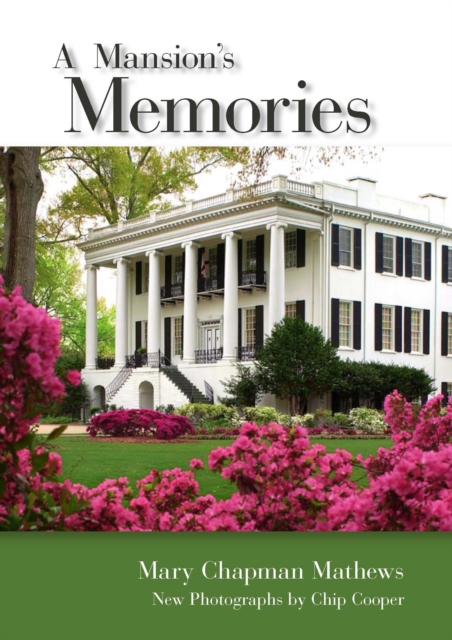
A Mansion's Memories
An engaging history of The University of Alabama President's Mansion As part of The University of Alabama's 175th anniversary celebration (2006), the new edition of A Mansion's Memories includes details of the tenures of the four presidents who have served since the Mathews term.
eBook

Early Stage Venture Capital And SCOR: Needs, New Developments, And Concerns
This article examines the capital market for early stage ventures. The status of the current market and improvements offered by the Small Corporate Offering Registration (SCOR) process is presented. It is argued that information is the critical component needed to develop an effective capital market for early stage investment. This information must come from a healthy base of effectively screened investment opportunities and from the education of an enlarged pool of investors to allow them to understand the unique risks and opportunities posed by these investments. In addition, recent developments in the market such as the Pacific Stock Exchange registration process and SCOR Market Maker are examined in light of these requirements. The article closes with some conclusions and recommendations about the future of a viable early stage marketplace and suggests that the SCOR process may lead to a much broader and more efficient market, but only if the necessary market mechanisms are implemented effectively. [PUBLICATION ABSTRACT]
Journal Article

Community can follow example set by Eliot Battle
Although he made his work look effortless, it wasn't. He regularly took himself and his family outside their comfort zones, actively seeking opportunities to break down the racial divide by becoming involved in the community as an equal. Whether it was breaking the impenetrable red line by making his family the first to move into a white Columbia neighborhood or becoming the first black faculty member at Hickman, or sending his oldest two children to Grant Elementary as the first black students when they were in first and second grades or urging his kids to join school clubs if no black kids had previously been a member, he was always looking for ways to generate positive energy with faith that it would come back around some day for him, his family and other black folks. He never tired of his work. He never lost his smile, ... even when his racist neighbor shot and killed his 13-year old son's dog, Bingo, as they walked on the street outside their home on Crown Point just off West Broadway.
Newspaper Article
Trails enhance life in Columbia
Thousands of people, young and old, will be served by this trail. For the first time, adults and kids alike will be able to cross under I-70 and Highway 63 safely and serenely on foot or on bike. The mayor described the new trail as \"absolutely spectacular.\" I've walked it several times and whole-heartedly agree. The Hominy Branch nature trail has been a part of the Columbia Trails Plan since 2002 -- updated and approved by the Columbia City Council in 2005 and 2010 -- which is intended to create a truly unique 30-mile nature trail loop around our city along with several feeder trails serving interior and exterior neighborhoods. The Hominy Branch is a key feeder. A recent study by University of Missouri researchers of 149 property owners living within 200 yards of MKT Trail found overwhelming support for it. Ninety-four percent said they are \"satisfied\" or \"very satisfied\" having the MKT Trail as a neighbor. Eighty-nine percent of the MKT neighbors indicated the trail has improved their lives. Most used it on a weekly basis and felt the trail will make their property more desirable and valuable if listed for sale. Bottom line for new trails: Early concerns are almost always replaced with broad appreciation and thousands of people living better lives.
Newspaper Article
Downtown again faces period of uncertain change
After years of slow decline, a big change started in 1985 with the opening of the Columbia Mall. In the two years after the mall's opening, more than 80 downtown businesses were shuttered. A few years later, MU began seriously considering a change of mission to be the \"elite\" campus for the University of Missouri System. As I recall, then-Chancellor Charles Kiesler talked of cutting enrollment to around 16,000. Needless to say, there was deep concern for our downtown. Few could have envisioned that future in 1935. Today, enrollment at MU is more than 34,000, up more than 10,000 in the past decade because of MU policy. Stephens College and Columbia College are thriving once again. Downtown, at the bustling hub of this student boom, also is thriving. Worries about the impact of online education, escalating education costs and a declining middle class nag at us, but we don't understand the threat much more than the citizens of 1935 knew what awaited them. It's hard to predict the future. * Downtown's look and feel is changing again, as it has periodically since Columbia's founding. Don't fear the change, and don't think we are smart enough to dictate it.
Newspaper Article
Police in need of community's support now
As Columbia experiences the pains of growing from a town to a city, so does our police department. Columbia's expanding geography and rapidly growing population has been steadily stressing police resources over the years. Furthermore, our apparent preference for the \"community policing\" approach magnifies that stress, as it requires additional time by officers to build and maintain the relationships that make it effective and popular. Sprinkle on the simultaneous creation of the Citizens Police Review Board process that has made leery officers subject to civilian review of their actions along with growing concerns for school safety and gang violence, and you have the recipe for an overextended, demoralized force and a frustrated community.
Newspaper Article
Grindstone Trail should be built, as city pledged
Home delivery of the print edition every day*, unlimited access to ColumbiaTribune.com on your computer, tablet and smart phone, as well as the Web App on your computer or iPad. In 2002, the Columbia City Council adopted the first master trails plan. Updates have been confirmed by the council three times since then. The plan calls for an approximately 30-mile nature trail loop that will encircle our town and provide connectivity for feeder trails that will serve the entire community. To date, we are about half-finished building the backbone loop, many feeder trails have been built, and more will be opened soon, bringing more convenient network access to thousands. We also have a funding source to continue building the trail network: the parks sales tax, which was most recently extended by voters in 2010. The council now is considering the fate of the Grindstone Trail, which has long been part of the master trails plan. Its first phase would connect to the Hinkson Trail -- which terminates in Grindstone Park at Old 63 -- and extend access east along the Grindstone Creek to McGuire Boulevard near LeMone Industrial Park, where IBM is located, and the Crosscreek development. Future phases of the Grindstone Trail would take a north fork all the way to the new Battle High School, while a south fork would connect the Old Hawthorne development.
Newspaper Article
Step into community's PedNet Project
Substantial progress has been made: more than 5,000 PedNet members supporting the mission, inclusion in \"CATSO 2025\" (Columbia's long-range transportation plan), public funding for trails and sidewalks, and new street design standards that require sidewalks and bike facilities on all major streets. In 2003, the PedNet Coalition led a public-private partnership effort to win a $200,000 Active Living by Design grant from the Robert Wood Johnson Foundation. Columbia was among just 25 cities selected from 966 applicants. The grant propelled the programming side of PedNet's mission: walk-to-school events, a daily Walking School Bus program, Bike, Walk and Wheel Week, Cycle-Recycle, bike safety education and many others. We were making slow, steady progress, but we assumed it would take decades to complete the project. One of Mayor Darwin Hindman's first actions after the award of the grant was to appoint a broad-based citizens group (including PedNet Coalition representatives) to advise the city how best to use the funds to build and promote the network. The advisory committee made two early decisions. First, it gave the project a new name, \"The PedNet Project: Connecting Columbia,\" to link it with the existing and widely recognized \"PedNet\" concept originally proposed by the PedNet Coalition. Second, it urged the city to hire an experienced, full-time project coordinator to manage the extensive planning, implementation, promotion and monitoring required for the project. Columbia was able to secure the services of Ted Curtis, a passionate advocate of non-motorized transportation and the longtime director of St. Louis' successful TrailNet organization.
Newspaper Article