
Catalogue Search | MBRL


Are you sure you want to remove the book from the shelf?

{{itemTitle}}
145
result(s) for
"Cooper, Melinda"
Sort by:

Life as Surplus
Focusing on the period between the 1970s and the present, Life as Surplus is a pointed and important study of the relationship between politics, economics, science, and cultural values in the United States today. Melinda Cooper demonstrates that the history of biotechnology cannot be understood without taking into account the simultaneous rise of neoliberalism as a political force and an economic policy. From the development of recombinant DNA technology in the 1970s to the second Bush administration's policies on stem cell research, Cooper connects the utopian polemic of free-market capitalism with growing internal contradictions of the commercialized life sciences.
The biotech revolution relocated economic production at the genetic, microbial, and cellular level. Taking as her point of departure the assumption that life has been drawn into the circuits of value creation, Cooper underscores the relations between scientific, economic, political, and social practices. In penetrating analyses of Reagan-era science policy, the militarization of the life sciences, HIV politics, pharmaceutical imperialism, tissue engineering, stem cell science, and the pro-life movement, the author examines the speculative impulses that have animated the growth of the bioeconomy.
At the very core of the new post-industrial economy is the transformation of biological life into surplus value. Life as Surplus offers a clear assessment of both the transformative, therapeutic dimensions of the contemporary life sciences and the violence, obligation, and debt servitude crystallizing around the emerging bioeconomy.
eBook

Genealogies of resilience: From systems ecology to the political economy of crisis adaptation
The concept of 'resilience' was first adopted within systems ecology in the 1970s, where it marked a move away from the homeostasis of Cold War resource management toward the far-from-equilibrium models of second-order cybernetics or complex systems theory. Resilience as an operational strategy of risk management has more recently been taken up in financial, urban and environmental security discourses, where it reflects a general consensus about the necessity of adaptation through endogenous crisis. The generalization of complex systems theory as a methodology of power has ambivalent sources. While the redefinition of the concept can be directly traced to the work of the ecologist Crawford S. Holling, the deployment of complex systems theory is perfectly in accord with the later philosophy of the Austrian neoliberal Friedrich Hayek. This ambivalence is reflected in the trajectory of complex systems theory itself, from critique to methodology of power.
Journal Article

Adaptation of a clinical reasoning model for use in inflammatory conditions of the lactating breast: a retrospective mixed-methods study
Many potential factors associated with Inflammatory Conditions of the Lactating Breast (ICLB) have been reported in the literature, by lactating mothers and clinicians. Clinicians, including general practitioners, lactation consultants and physiotherapists, require a clinical reasoning model that summarises associated or linked factors, to aid in the assessment, treatment, and prevention of ICLB. Thus, we aimed to adapt the existing Breastfeeding Pain Reasoning Model (BPRM), for use in the management of ICLB, using prior research and clinical audit data to guide adaptation. The existing BPRM categorises contributing factors for breastfeeding nipple pain, rather than ICLB.
Factors linked with ICLB were identified from prior research and considered for inclusion into the existing model. Clinical data from a retrospective audit of ICLB patient notes at a private physiotherapy practice were also examined. Any factors identified from prior research that could not be identified in the clinical notes were not considered for inclusion into the existing model. Additional factors from the clinical notes that appeared repeatedly were considered for inclusion into the adaptation of the BPRM. A draft adapted model was created comprising all eligible factors, considering their counts and percentages as calculated from the clinical data. The research team iteratively examined all factors for appropriate categorisation and modification within the adapted model.
Prior research and data from 160 clinical notes were used to identify factors for inclusion in the adapted model. A total of 57 factors, 13 pre-existing in the BPRM and 44 extra identified from the prior research or clinical audit, comprised the draft adapted model. Factor consolidation and terminology modification resulted in a total of 34 factors in the final proposed adapted ICLB model. The three main categories, CNS modulation, External influences and Local stimulation, from the existing model were maintained, with one minor terminology change to the former Local stimulation category, resulting in 'Local influences' category. Terminology for five subcategories were modified to better reflect the types of factors for ICLB. The most common factors in the adapted model, calculated from the clinical audit population of mothers with ICLB, were employment (85%), high socioeconomic status (81%), antibiotic use during breastfeeding (61%), history of an ICLB (56%), any breast pump use (45%), multiparity (43%), birth interventions (35%), decreased milk transfer (33%), breastfeeding behaviour and practices (33%), nipple pain (30%) and fit and hold (attachment and positioning) difficulty (28%).
An ICLB-specific linked factors model is proposed in this paper. Clinicians treating mothers with ICLB can use this model to identify influencing and determining factors of ICLB clinical presentations and provide targeted education and effective treatment plans.
Journal Article
Construct validity and internal consistency of the Breast Inflammatory Symptom Severity Index in lactating mothers with inflammatory breast conditions
Inflammatory Conditions of the Lactating Breast (ICLB) affect more than one in five lactating mothers, yet no fully validated outcome measures exist to aid clinicians in their patient-centred care of women with ICLB. The Breast Inflammatory Symptom Severity Index (BISSI) is an ICLB-specific clinician administered patient-reported outcome measure, currently used by Australian clinicians, who treat mothers with ICLB. To date the BISSI has undergone partial psychometric development. This study, therefore, aimed to undertake the next stage of psychometric development by determining the construct validity and internal consistency of the BISSI.
A retrospective audit was conducted on patient records of 160 mothers who were treated for ICLB, at a private physiotherapy practice in Melbourne, Australia. An electronic data capture tool was used to collate BISSI scores and associated ICLB assessment variables. Construct validity was determined through factor analysis and discriminant performance. Reliability was determined by assessing measures of internal consistency.
Factor analysis established that BISSI items (
= 10) loaded on to four factors, Wellness, Pain, Physical Characteristics of Affected Area (PCAA), and Inflammation, which together, explained 71.2% of variance. The remaining item ('Wellness/sickness unspecified') did not load. Wellness, Pain, PCAA and Inflammation factors individually and collectively displayed the ability to discriminate symptom severity, as scores were significantly higher in mothers with high symptom severity (assessed via AUC close to or >0.7 and
value <0.005 for each factor). The BISSI demonstrated internal consistency with an overall Cronbach alpha of 0.742.
The BISSI has adequate construct validity, demonstrating behaviour consistent with theoretical constructs of inflammation severity, via its dimensionality and ability to discriminate symptom severity. The BISSI also has adequate internal consistency demonstrating reliability. Therefore, clinicians can have confidence that the BISSI is valid, the individual item scores are correlated, and the concepts are consistently measured.
Journal Article

'Being made into a machine': An extract from Eleanor Dark's unpublished novel 'Pilgrimage'
Eleanor Dark's novel \"Pilgrimage\" has never been published. She began writing it in January 1921, a year before her marriage, and finished it in the late 1920s, when she and Eric Dark were establishing their home in Katoomba. In the early 1930s, Eleanor tried to get \"Pilgrimage\" published, sending it to her literary agent in London, and showing it to P.R. Stephensen, who had published her novel 'Prelude to Christopher' in Sydney in 1934 (Brooks with Clark 122). \"Pilgrimage\" was not accepted for publication, and Eleanor appears to have abandoned any attempt at this.
Journal Article
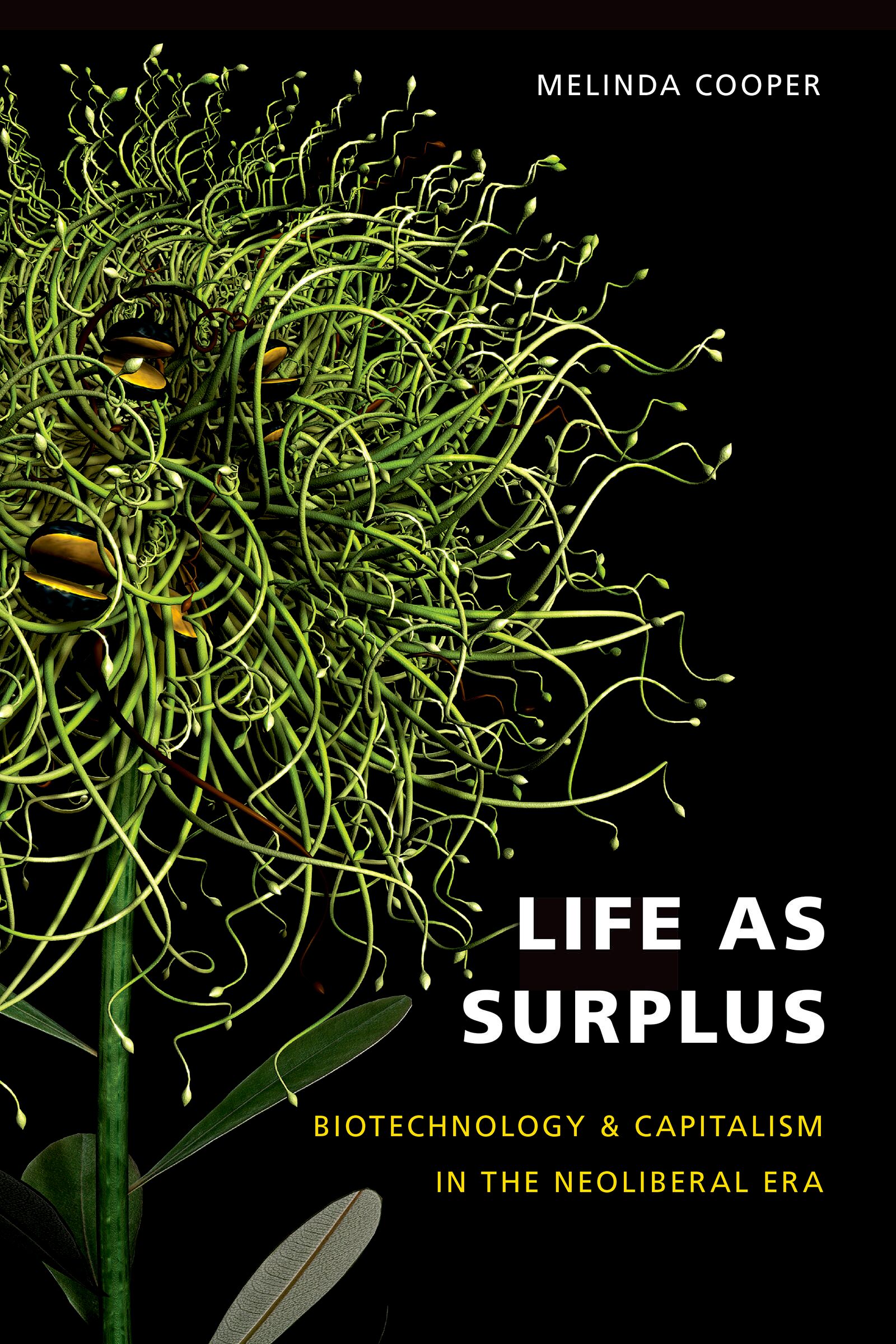
Life as Surplus
Focusing on the period between the 1970s and the present, Life as Surplus is a pointed and important study of the relationship between politics, economics, science, and cultural values in the United States today. Melinda Cooper demonstrates that the history of biotechnology cannot be understood without taking into account the simultaneous rise of neoliberalism as a political force and an economic policy. From the development of recombinant DNA technology in the 1970s to the second Bush administration's policies on stem cell research, Cooper connects the utopian polemic of free-market capitalism with growing internal contradictions of the commercialized life sciences.The biotech revolution relocated economic production at the genetic, microbial, and cellular level. Taking as her point of departure the assumption that life has been drawn into the circuits of value creation, Cooper underscores the relations between scientific, economic, political, and social practices. In penetrating analyses of Reagan-era science policy, the militarization of the life sciences, HIV politics, pharmaceutical imperialism, tissue engineering, stem cell science, and the pro-life movement, the author examines the speculative impulses that have animated the growth of the bioeconomy.At the very core of the new post-industrial economy is the transformation of biological life into surplus value. Life as Surplus offers a clear assessment of both the transformative, therapeutic dimensions of the contemporary life sciences and the violence, obligation, and debt servitude crystallizing around the emerging bioeconomy.
eBook


'This long and shining finger of the sea itself': Sydney harbour and regional cosmopolitanism in Eleanor Dark's 'Waterway'
In Eleanor Dark's novel Waterway (1938), Professor Channon is prompted by the ominous international headline 'Failure of Peace Talks' to imagine the world from a global perspective (120). Channon feels himself metaphorically 'lifted away from the earth … seeing it from an incredible distance, and with an incredible, an all-embracing comprehension' (119-20). This move outward from a located perspective to 'a more detached overview of a wider global space' signifies a cosmopolitan viewpoint, 'in which the viewing subject rises above the place- bound attachments of the nation-state to take the measure of the world as a wider totality' (Hegglund 8-9). Yet even this global view is mediated by Channon's position from within 'a great island continent alone in its south sea' (121). Gazing from a 'vast distance,' he views Europe as 'the patches where parasitic man had lived longest and most densely,' and from which humankind 'went out to infect fresh lands' (120). This description of old world Europe as 'parasitic' provides a glimpse of resistant nationalism, reflecting Channon's location within one of the 'fresh lands' affected by colonisation. Channon is ultimately unable to sustain a 'Godlike' perspective in this scene, desiring 'nothing but to return' to local place (121). Although his view initially 'vaults beyond the bounds of national affiliation' (Alexander and Moran 4), this move outward does not 'nullify an affective attachment to the more grounded locations of human attachment' (Hegglund 20). Channon's return to the 'shabby home… of his own humanity' brings a renewed sense of connection to 'the sun-warmed rail of the gate' and 'the faint breeze [which] ruffled the hair back from his forehead' (122).
Journal Article

Secular Stagnation: Keynesianism and the Demographic Theory of Crisis
Post-GFC, the idea that we have entered a period of secular stagnation has been embraced even by the most mainstream economists. The thesis marks a return to once popular demographic theories of crisis which saw plummeting birth rates as the real driving force behind the Great Depression. In this paper, I consider the fact that even Keynes entertained two contradictory theories of deflation—one demographic and the other distributional—and that both were at work in the construction of the post-war welfare state. I argue that demographic catastrophism plays a recurrent if disavowed role in Keynesian responses to crisis, providing a useful rationale for why the demands of women and racial minorities must defer to the imperatives of national reproduction. But the demographic argument has also been deployed in Marxist feminist pleas on behalf of the welfare state, to ambivalent effect.
Journal Article

Secular Stagnation: Fear of a Non-Reproductive Future
In the wake of the global financial crisis, a number of high profile economists have sought to revive Alvin Hansen’s Depression-era theory of “secular stagnation” to account for the stagnant tendencies in the American economy, citing Japan as a cautionary tale of combined demographic and economic decline. Following Hansen, it is argued that the long-term stagnation of the world economy can be attributed to a failure of the reproductive will, made manifest in declining birth rates and ageing populations. Although the causal connections between population and price trends are controversial even among mainstream demographers and economists, such arguments date back to the origins of political economy and appear to magically resurface with each major episode of crisis. If the crisis is inflationary, it tends to be ascribed to overpopulation; if it is deflationary, we find a corresponding concern with slowing birth rates. This article seeks to understand the durability of the demographic theory of crisis by examining the punitive and restorative work it performs in periods of capitalist restructuring.
Journal Article