
Catalogue Search | MBRL


Are you sure you want to remove the book from the shelf?

{{itemTitle}}
7,006
result(s) for
"Cooper, Richard"
Sort by:


Use of Racial and Ethnic Categories in Medical Testing and Diagnosis: Primum Non Nocere
Use of race and ethnicity is common in medical tests and procedures, even though these categories are defined by sociological, historical, and political processes, and vary considerably in their definitions over time and place. Because all societies organize themselves around these constructs in some way, they are undeniable facets of the human experience, with myriad health consequences. In the biomedical literature, they are also commonly interpreted as representing biological heterogeneity that is relevant for health and disease.
We review the use of race and ethnicity in medical practice, especially in the USA, and provide 2 specific examples to represent a large number of similar instances. We then critique these uses along a number of different dimensions, including limitations in measurement, within- versus between-group variance, and implications for informativeness of risk markers for individuals, generalization from arbitrary or nonrepresentative samples, perpetuation of myths and stereotypes, instability in time and place, crowding out of more relevant risk markers, stigmatization, and the tainting of medicine with the history of oppression. We conclude with recommendations to improve practice that are technical, ethical, and pragmatic.
Medicine has evolved from a mystical healing art to a mature science of human health through a rigorous process of quantification, experimentation, and evaluation. Folkloric traditions, such as race- and ethnic-specific medicine will fade from use as we become increasingly critical of outdated and irrational clinical practices and replace these with personalized, evidenced-based tests, algorithms, and procedures that privilege patients' individual humanity over obsolete and misleading labels.
Journal Article


A saturated map of common genetic variants associated with human height
Common single-nucleotide polymorphisms (SNPs) are predicted to collectively explain 40–50% of phenotypic variation in human height, but identifying the specific variants and associated regions requires huge sample sizes
1
. Here, using data from a genome-wide association study of 5.4 million individuals of diverse ancestries, we show that 12,111 independent SNPs that are significantly associated with height account for nearly all of the common SNP-based heritability. These SNPs are clustered within 7,209 non-overlapping genomic segments with a mean size of around 90 kb, covering about 21% of the genome. The density of independent associations varies across the genome and the regions of increased density are enriched for biologically relevant genes. In out-of-sample estimation and prediction, the 12,111 SNPs (or all SNPs in the HapMap 3 panel
2
) account for 40% (45%) of phenotypic variance in populations of European ancestry but only around 10–20% (14–24%) in populations of other ancestries. Effect sizes, associated regions and gene prioritization are similar across ancestries, indicating that reduced prediction accuracy is likely to be explained by linkage disequilibrium and differences in allele frequency within associated regions. Finally, we show that the relevant biological pathways are detectable with smaller sample sizes than are needed to implicate causal genes and variants. Overall, this study provides a comprehensive map of specific genomic regions that contain the vast majority of common height-associated variants. Although this map is saturated for populations of European ancestry, further research is needed to achieve equivalent saturation in other ancestries.
A large genome-wide association study of more than 5 million individuals reveals that 12,111 single-nucleotide polymorphisms account for nearly all the heritability of height attributable to common genetic variants.
Journal Article


‘I can't be an addict. I am.’ Over-the-counter medicine abuse: a qualitative study
Objectives Over-the-counter (OTC) pharmacy medicines are considered relatively safe in contrast to prescribed and illicit substances, but their abuse and addiction potential is increasingly recognised. Those affected represent a hard to reach group, with little known about their experiences. Study objectives were to describe the experiences and views of those self-reporting OTC medicine abuse, and why medicines were taken, how they were obtained and associated treatment and support sought. Design Qualitative study using in-depth mainly telephone interviews. Participants A purposive sample of 25 adults, aged 20–60s, 13 women. Setting UK, via two internet support groups. Results Individuals considered themselves ‘addicted’, but socially and economically active and different from illicit substance misusers. They blamed themselves for losing control over their medicine use, which usually began for genuine medical reasons and not experimentation and was often linked to the cessation of, or ongoing, medical prescribing. Codeine, in compound analgesics, was the main medicine implicated with three distinct dose ranges emerging with decongestant and sedative antihistamine abuse also being reported. Subsequent use was for the ‘buzz’ or similar effects of the opiate, which was obtained unproblematically by having lists of pharmacies to visit and occasionally using internet suppliers. Perceived withdrawal symptoms were described for all three dose ranges, and work and health problems were reported with higher doses. Mixed views about different treatment and support options emerged with standard drug treatment services being considered inappropriate for OTC medicines and concerns that this ‘hidden addiction’ was recorded in medical notes. Most supported the continued availability of OTC medicines with appropriate addiction warnings. Conclusions Greater awareness of the addiction potential of OTC medicines is needed for the public, pharmacists and medical prescribers, along with appropriate communication about, and reviews of, treatment and support options, for this distinct group.
Journal Article
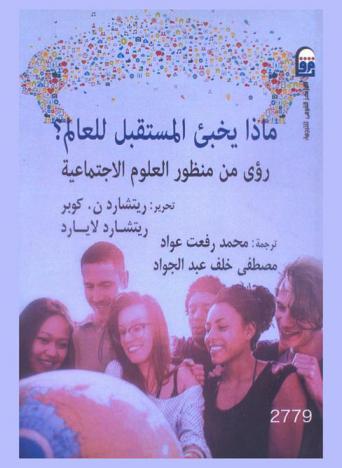
ماذا يخبئ المستقبل للعالم : رؤى من منظور العلوم الاجتماعية
يبحث هذا الكتاب عن الكيفية التي يمكننا من خلالها النظر بذكاء إلى المستقبل مع الوضع في الاعتبار المقاربات المنهجية المختلفة والمتنوعة التي يتبنها المنتخصصون في استشراق الستقبل وما سيكون عليه من تطورات ومسارات في الحياة البشرية كما يطرق الكتاب عددا من الأسئلة المهمة من قبيل وهي كم سيصبح عدد البشر في المستقبل وما هي أنماط العمل التي ستوجد وكيف ستعمل الحكومات على المستويات الإقليمية والمحلية والعالمية وهل سيبقى التضخم تحت السيطرة.
Book

Genome-Wide Association Scan Shows Genetic Variants in the FTO Gene Are Associated with Obesity-Related Traits
The obesity epidemic is responsible for a substantial economic burden in developed countries and is a major risk factor for type 2 diabetes and cardiovascular disease. The disease is the result not only of several environmental risk factors, but also of genetic predisposition. To take advantage of recent advances in gene-mapping technology, we executed a genome-wide association scan to identify genetic variants associated with obesity-related quantitative traits in the genetically isolated population of Sardinia. Initial analysis suggested that several SNPs in the FTO and PFKP genes were associated with increased BMI, hip circumference, and weight. Within the FTO gene, rs9930506 showed the strongest association with BMI (p = 8.6 x10(-7)), hip circumference (p = 3.4 x 10(-8)), and weight (p = 9.1 x 10(-7)). In Sardinia, homozygotes for the rare \"G\" allele of this SNP (minor allele frequency = 0.46) were 1.3 BMI units heavier than homozygotes for the common \"A\" allele. Within the PFKP gene, rs6602024 showed very strong association with BMI (p = 4.9 x 10(-6)). Homozygotes for the rare \"A\" allele of this SNP (minor allele frequency = 0.12) were 1.8 BMI units heavier than homozygotes for the common \"G\" allele. To replicate our findings, we genotyped these two SNPs in the GenNet study. In European Americans (N = 1,496) and in Hispanic Americans (N = 839), we replicated significant association between rs9930506 in the FTO gene and BMI (p-value for meta-analysis of European American and Hispanic American follow-up samples, p = 0.001), weight (p = 0.001), and hip circumference (p = 0.0005). We did not replicate association between rs6602024 and obesity-related traits in the GenNet sample, although we found that in European Americans, Hispanic Americans, and African Americans, homozygotes for the rare \"A\" allele were, on average, 1.0-3.0 BMI units heavier than homozygotes for the more common \"G\" allele. In summary, we have completed a whole genome-association scan for three obesity-related quantitative traits and report that common genetic variants in the FTO gene are associated with substantial changes in BMI, hip circumference, and body weight. These changes could have a significant impact on the risk of obesity-related morbidity in the general population.
Journal Article


Complications associated with the use of the GlideScope® videolaryngoscope
Two cases are presented wherein the GlideScope videolaryngoscope (GVL) facilitated laryngeal exposure and successful endotracheal intubation, but resulted in pharyngeal injury.
GlideScope videolaryngoscopy was performed in two female patients, whose airways were anticipated to present difficulties for direct laryngoscopy. In the first case, following induction of anesthesia, moderate difficulty was encountered in directing the endotracheal tube (ETT) into the patient's larynx. In the second case, minimal difficulty with the GVL was experienced, and no problems were identified with airway instrumentation until the drapes covering the patient's face were removed. In both instances, the ETT had passed through the right palatopharyngeal arch, requiring suturing in the first patient, and electrocautery in the second patient.
There have been no previously published reports of injuries related to GlideScope laryngoscopy, but perforation of the palatopharyngeal arch occurring in two patients demonstrates a rare but potentially important complication of the GVL. Strategies to minimize this complication are considered.
Journal Article