
Catalogue Search | MBRL


Are you sure you want to remove the book from the shelf?

{{itemTitle}}
61
result(s) for
"Cotlar, Seth"
Sort by:


Historian in Chief
Presidents shape not only the course of history but also how Americans remember and retell that history. From the Oval Office they instruct us what to respect and what to reject in our past. They regale us with stories about who we are as a people, and tell us whom in the pantheon of greats we should revere and whom we should revile. The president of the United States, in short, is not just the nation's chief legislator, the head of a political party, or the commander in chief of the armed forces, but also, crucially, the nation's historian in chief.
In this engaging and insightful volume, Seth Cotlar and Richard Ellis bring together top historians and political scientists to explore how eleven American presidents deployed their power to shape the nation's collective memory and its political future. Contending that the nation's historians in chief should be evaluated not only on the basis of how effective they are in persuading others,Historian in Chiefargues they should also be judged on the veracity of the history they tell.
eBook
Tom Paine's America
Tom Paine's Americaexplores the vibrant, transatlantic traffic in people, ideas, and texts that profoundly shaped American political debate in the 1790s. In 1789, when the Federal Constitution was ratified, \"democracy\" was a controversial term that very few Americans used to describe their new political system. That changed when the French Revolution-and the wave of democratic radicalism that it touched off around the Atlantic World-inspired a growing number of Americans to imagine and advocate for a wide range of political and social reforms that they proudly called \"democratic.\"
One of the figureheads of this new international movement was Tom Paine, the author of Common Sense. Although Paine spent the 1790s in Europe, his increasingly radical political writings from that decade were wildly popular in America. A cohort of democratic printers, newspaper editors, and booksellers stoked the fires of American politics by importing a flood of information and ideas from revolutionary Europe. Inspired by what they were learning from their contemporaries around the world, the evolving democratic opposition in America pushed their fellow citizens to consider a wide range of radical ideas regarding racial equality, economic justice, cosmopolitan conceptions of citizenship, and the construction of more literally democratic polities.
In Europe such ideas quickly fell victim to a counter-Revolutionary backlash that defined Painite democracy as dangerous Jacobinism, and the story was much the same in America's late 1790s. The Democratic Party that won the national election of 1800 was, ironically, the beneficiary of this backlash; for they were able to position themselves as the advocates of a more moderate, safe vision of democracy that differentiated itself from the supposedly aristocratic Federalists to their right and the dangerously democratic Painite Jacobins to their left.
eBook


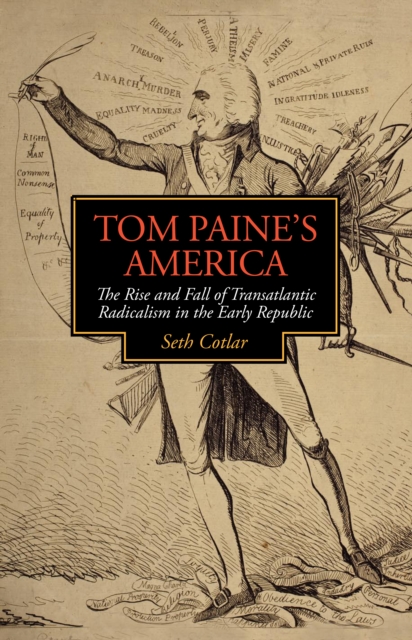
Tom Paine's America: the rise and fall of Trans-Atlantic radicalism in the early republic
Tom Paine's America explores the vibrant,transatlantic traffic in people, ideas, and texts that profoundly shaped American political debatein the 1790s. In 1789, when the Federal Constitution was ratified, \"democracy\" was acontroversial term that very few Americans used to describe their new political system. That changedwhen the French Revolution-and the wave of democratic radicalism that it touched off aroundthe Atlantic World-inspired a growing number of Americans to imagine and advocate for a widerange of political and social reforms that they proudly called\"democratic.\"One of the figureheads of this new international movementwas Tom Paine, the author of Common Sense. Although Paine spent the 1790s in Europe, hisincreasingly radical political writings from that decade were wildly popular in America. A cohort ofdemocratic printers, newspaper editors, and booksellers stoked the fires of American politics byimporting a flood of information and ideas from revolutionary Europe. Inspired by what they werelearning from their contemporaries around the world, the evolving democratic opposition in Americapushed their fellow citizens to consider a wide range of radical ideas regarding racial equality,economic justice, cosmopolitan conceptions of citizenship, and the construction of more literallydemocratic polities.In Europe such ideas quickly fell victim to acounter-Revolutionary backlash that defined Painite democracy as dangerous Jacobinism, and thestory was much the same in America's late 1790s. The Democratic Party that won the nationalelection of 1800 was, ironically, the beneficiary of this backlash; for they were able to positionthemselves as the advocates of a more moderate, safe vision of democracy that differentiated itselffrom the supposedly aristocratic Federalists to their right and the dangerously democratic PainiteJacobins to their left.
eBook

Tom Paine's America
Traces the brief but highly significant efflorescence of cosmopolitan, democratic radicalism, associated with Thomas Paine, in the U.S. in the wake of the French Revolution. This democratic moment--regarding race, economic justice, citizenship, and a more truly democratic politics--ended when Federalists and Jeffersonian Republicans alike associated these cosmopolitan democrats with Jacobinism and the Terror.
eBook
The General Will Is Always Good . . . But by What Sign Shall We Know It?
The general will is always good . . . but by what sign shall we know it?”¹ This question’s radical Enlightenment utopianism rings rather hollow for contemporary observers. Since 1797, the year in which the man who referred to himself as Citizen Richard Lee, first asked this question in his Philadelphia magazine, such appeals to the general will have rarely evoked visions of a more democratic future. Dictators from Napoleon to Pinochet have claimed to act on behalf of the general will, just as less insidious but equally cynical modern politicians have defended their every decision as the will of
Book Chapter
Imagining a Nation of Politicians
Virtually every European traveler in 1790’ s America was struck by two unusual features of the new nation’s culture: Americans were obsessive newspaper readers, and politics was all they wanted to talk about. From our twenty-first-century vantage point, such a state of affairs might look idyllic, but most eighteenth-century visitors were more annoyed than impressed by what the English aristocrat John Davis disdainfully referred to as the “loquacious imbecility” with which “the American talks of his government.”¹ The transplanted Frenchman Moreau de Saint-Méry, for example, found it infuriating that his American servants would “drop whatever [they were] doing to talk
Book Chapter