
Catalogue Search | MBRL


Are you sure you want to remove the book from the shelf?

{{itemTitle}}
186
result(s) for
"Cowan, Steven"
Sort by:

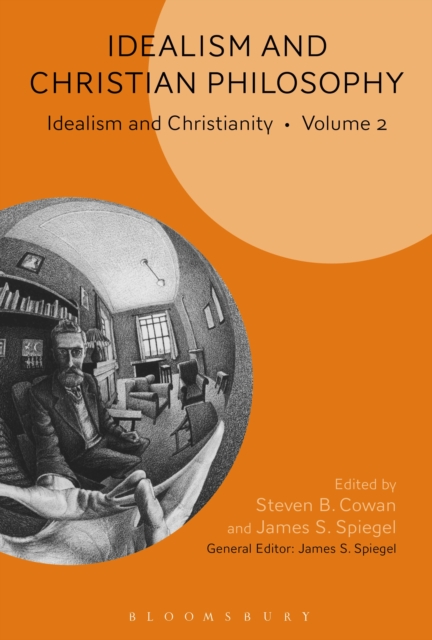
Idealism and Christian philosophy
When it comes to contemporary philosophical problems, metaphysical idealism-or Berkeleyan immaterialism-is not taken seriously by most philosophers, not to mention the typical Christian layperson. This state of affairs deserves some attempt at rectification, since Idealism has considerable explanatory power as a metaphysical thesis and provides numerous practical and theoretical benefits. Such thinkers as George Berkeley and Jonathan Edwards believed that Idealism is especially amenable to a Christian perspective, both because it provides a plausible way of conceptualizing the world from a theistic standpoint and because it effectively addresses skeptical challenges to the Christian faith. The contributors to this volume explore a variety of ways in which the case can be made for this claim, including potential solutions to philosophical problems related to the nature of time, the ontology of physical objects, the mind-body problem, and the nature of science.
eBook
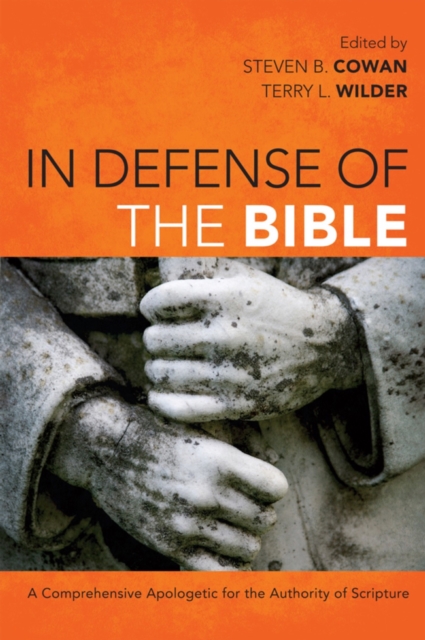
In Defense of the Bible
In Defense of the Bible gathers exceptional articles by accomplished scholars (Paul Copan, William A. Dembski, Mary Jo Sharp, Darrell L. Bock, etc.), addressing and responding to all of the major contemporary challenges to the divine inspiration and authority of Scripture.
eBook


Raising the participation age in historical perspective: policy learning from the past?
The raising of the participation age (RPA) to 17 in 2013 and 18 in 2015 marks a historic expansion of compulsory education. Despite the tendency of New Labour governments to eschew historical understanding and explanation, RPA was conceived with the benefit of an analysis of previous attempts to extend compulsion in schooling. This paper assesses the value of a historical understanding of education policy. The period from inception to the projected implementation of RPA is an extended one which has crossed over the change of government, from Labour to Coalition, in 2010. The shifting emphases and meanings of RPA are not simply technical issues but connect to profound historical and social changes. An analysis of the history of the raising of the school leaving age reveals many points of comparison with the contemporary situation. In a number of key areas it is possible to gain insights into the ways in which the study of the past can help to comprehend the present: the role of human capital, the structures of education, in curriculum development and in terms of preparations for change.
Journal Article

Democratic Governance for Inclusion: a Case Study of a Greek Primary School Welcoming Roma Pupils
The focus of this paper is how changes in school governance in one state primary school in a city in central Greece have resulted in a significant degree of inclusion for Roma children. This inclusivity runs counter to the disturbing occurrence of the social and ethnic segregation of a group of locally resident Roma children within schools. This paper reports from a case study that took place in one primary school with a large number of Roma pupils in a city in Greece. We argue for the importance of democratic governance as a pedagogic approach and as a method for the inclusion and empowerment of disadvantaged groups within educational settings. We initially define democratic governance by highlighting the human rights framework that underpins it. We describe the historical and social context of the research field before discussing the school routine and the methods the teachers adopt so as to contribute to Roma inclusivity in the classroom. Our account is informed by an interview conducted with the school's head teacher and various stakeholders' narratives. This paper suggests that positive educational initiatives designed to include the parents and children of disadvantaged groups like Roma communities can succeed. We argue that when core principles of democratic governance extend beyond the school and into other community political structures, progress towards inclusion is possible.
Journal Article


Cross-Cultural Approaches to the Study of “Inclusive” and “Special Needs” Education
Abstract
This chapter explores some of the complexities involved when undertaking research at an international level in the area of “inclusive” education and “special needs” education. The complexities encountered by researchers working in these fields, mirror many of the challenges that comparativists in education studies find themselves addressing. Drawing from earlier investigations and from reports by international organizations, this chapter highlights some of the dilemmas and challenges that researchers face when considering inclusion and special needs education in different countries. Differing interpretations of “inclusion” are discussed and then contrasted with thinking around “special needs” practices. The chapter moves forward to analyze how the adoption of differing theoretical frameworks can influence the way that “disability” is conceptualized and therefore how inclusive and special needs education are interpreted and then put into practice. The chapter argues that cross-cultural work opens up opportunities for further development and learning in this field. We further argue that such cross-cultural work can become a mechanism to instigate fundamental change in education.
Book Chapter

Idealism and Christian Philosophy
When it comes to contemporary philosophical problems, metaphysical idealism—or Berkeleyan immaterialism—is not taken seriously by most philosophers, not to mention the typical Christian layperson. This state of affairs deserves some attempt at rectification, since Idealism has considerable explanatory power as a metaphysical thesis and provides numerous practical and theoretical benefits. Such thinkers as George Berkeley and Jonathan Edwards believed that Idealism is especially amenable to a Christian perspective, both because it provides a plausible way of conceptualizing the world from a theistic standpoint and because it effectively addresses skeptical challenges to the Christian faith. The contributors to this volume explore a variety of ways in which the case can be made for this claim, including potential solutions to philosophical problems related to the nature of time, the ontology of physical objects, the mind-body problem, and the nature of science.
eBook