
Catalogue Search | MBRL


Are you sure you want to remove the book from the shelf?

{{itemTitle}}
172
result(s) for
"Cox, Jennifer K."
Sort by:

From Stage to Page
Neil Gaiman and Dave McKean perform a radical adaptation of both mythical form and magical content by translating the Punch and Judy show’s lengthy folkloric tradition of puppetry into graphic novel format in The Tragical Comedy or Comical Tragedy of Mr. Punch (1994). This collaboration reframes archaic story elements with contemporary contexts to help adapt the mythical source material as well as readers themselves. In this way, the story form acts as a literary adapter, similar to a travel adapter for electronics: it allows readers to “plug in” to access tales from distant cultures and historical eras. Filtering the puppet show’s content through the narrator’s childhood memories preserves a childlike perception of magic, but updates Punch’s story with an added layer of adult understanding. This kind of storytelling, called a memorate, allows Gaiman’s narrator to ventriloquize repressed traumas by retelling them as uncanny encounters with a murderous Mr. Punch.
Journal Article
Judges : a commentary
Susan Niditch's commentary on the book of Judges pays careful attention to the literary and narrative techniques of the text and yields fresh readings of the book's difficult passages: stories of violence, ethnic conflict, and gender issues. Niditch aptly and richly conveys the theological impact and enduring significance of these stories.
The Old Testament Library provides fresh and authoritative treatments of important aspects of Old Testament study through commentaries and general surveys. The contributors are scholars of international standing.
eBook

Deuteronomy
This volume, a part of the Old Testament Library series, explores the book of Deuteronomy.
The Old Testament Library provides fresh and authoritative treatments of important aspects of Old Testament study through commentaries and general surveys. The contributors are scholars of international standing.
eBook
Paul and the anatomy of apostolic authority
John Howard Schutz's milestone analysis of Paul's authority shaped a generation of thought about Paul.This insightful work continues to be relevant to Pauline scholarship.The New Testament Library offers authoritative commentary on every book and major aspect of the New Testament, as well as classic volumes of scholarship.
eBook
Mark : a commentary
The first New Testament Library volume to focus on a Gospel, this commentary offers a careful reading of the book of Mark. Internationally respected interpreter M. Eugene Boring brings a lifetime of research into the Gospels and Jesus into this lively discussion of the first Gospel.
The New Testament Library offers authoritative commentary on every book and major aspect of the New Testament, as well as classic volumes of scholarship. The commentaries in this series provide fresh translations based on the best available ancient manuscripts, offer critical portrayals of the historical world in which the books were created, pay careful attention to their literary design, and present a theologically perceptive exposition of the text.
eBook
Colossians : a commentary
The letter to the Colossians offers great insight into the faith, life, and problems of an early Christian church.Understanding this letter to be one of Paul's prison epistles but aware of the differences between this and his other writings, Jerry Sumney shows how the church struggled with expressing its new faith in the diverse settings.
eBook
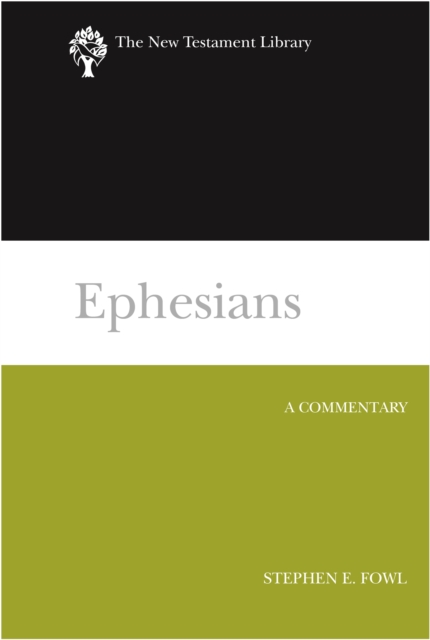
Ephesians : a commentary
Even though it was written some two millennia ago, Ephesians still speaks to Christians today in themes quite familiar to the modern reader. In a context where the church had become overwhelmingly, if not exclusively, Gentile, the Christian community needed to be reminded of the priority of Israel and the astonishing work of reconciliation that God willed to accomplish in the life, death, and resurrection of Jesus Christ. Now available as a casebound, this volume in the highly acclaimed New Testament Library series reveals the great theological promises of Ephesians while discussing issues of context, authorship, and style.
eBook

Illuminating the Dark Carnival in American Fantasy
Over the last century, popular US culture has produced multiple variations on a story about a mysterious traveling carnival that arrives in a small, rural town and disrupts normal ways of living. A lack of clear scholarship on the concept, combined with its frequent recurrence, presents a deficit in understanding “the Dark Carnival” as a discrete, recognizable literary concept. This dissertation strives to fill that lacuna by describing the Dark Carnival as a category of American fantasy stories that offer cohesive narrative explanations in times of social upheaval. Identified by a specific ambience, or narrative affect, of wonder and dread, Dark Carnival stories employ a portmotif (i.e., portmanteau + motif) to transport composite carnivalesque structures and content (e.g. settings, characters, objects, and themes) across genres and modes that work to invert and pervert social norms. This storytelling tradition incorporates and reframes the Midwestern pastoral mythology to thwart happy endings as a social critique; protagonists struggle with invasive magical forces in texts that resist, revise, or reinforce dominant discourses and interrogate concepts such as “home,” “family,” and “Americanness.” I employ George Lakoff’s cognitive-based categories in Women, Fire, and Dangerous Things (1987) to evaluate Dark Carnival stories based on their similarity to central prototype texts, or best examples (e.g. Ray Bradbury’s Something Wicked This Way Comes [1962]). As a radial structure, the prototype is positioned at the category’s center and surrounded by linked extensions, or deviations, chaining out from the central case. In this study, Stephen King’s The Shining (1977), represents a metaphoric extension of the Dark Carnival prototype, and Neil Gaiman’s American Gods (1999) exemplifies a metonymic extension, but all remain linked to Bradbury’s prototype by Wittgenstein’s concept of “family resemblances.” This analysis offers a non-hierarchical framework for understanding textual variations and adaptations in contemporary popular cultural, and how they relate or react to inverted social energies.
Dissertation
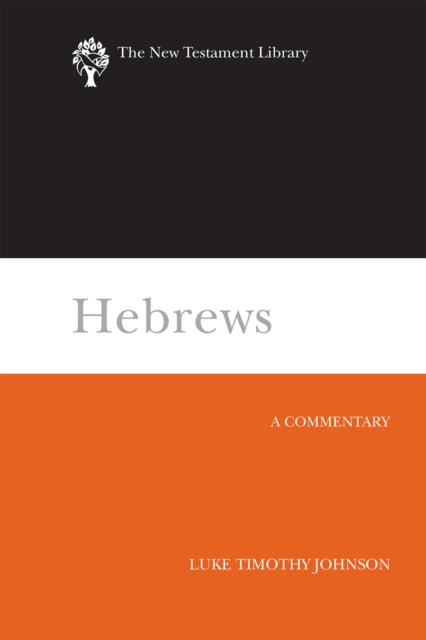
Hebrews : a commentary
This volume of the New Testament Library offers a thorough and careful commentary on the complicated book of Hebrews, showing its meaning within the context of ancient culture and the theological development of the early church. Written by one of the leading New Testament scholars of the present generation, this commentary offers remarkable insights into the Hellenistic, Roman, and Jewish contexts of the book of Hebrews.
The New Testament Library offers authoritative commentary on every book and major aspect of the New Testament, as well as classic volumes of scholarship. The commentaries in this series provide fresh translations based on the best available ancient manuscripts, offer critical portrayals of the historical world in which the books were created, pay careful attention to their literary design, and present a theologically perceptive exposition of the text.
eBook
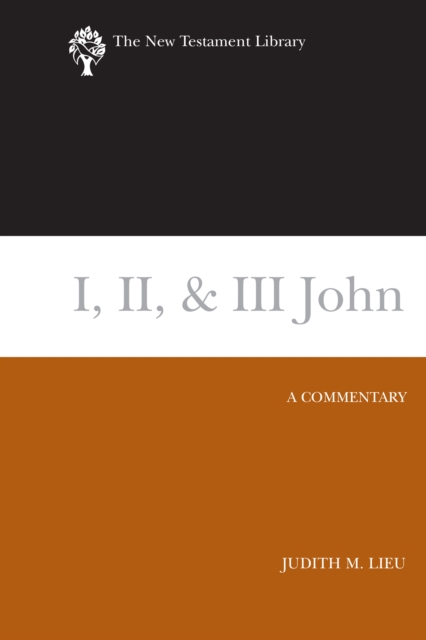
I, II & III John : a commentary
The New Testament's three letters attributed to John have always provided remarkable theological riches for the Christian tradition, including the assertion \"God is love.\" Each letter shows how an early Christian author responded to threats against authority by recourse to the correct teachings of the faith and a proper understanding.
eBook