
Catalogue Search | MBRL


Are you sure you want to remove the book from the shelf?

{{itemTitle}}
559
result(s) for
"Cox, Margaret"
Sort by:

The scientific investigation of mass graves : towards protocols and standard operating procedures
This book describes the detailed processes and techniques for the scientific investigation of atrocity crimes. The text includes methods for the location, evaluation, excavation, recovery, and recording of mass graves and the analysis of human remains to establish the identity of victims.
Book

A K-6 Computational Thinking Curriculum Framework: Implications for Teacher Knowledge
Adding computer science as a separate school subject to the core K-6 curriculum is a complex issue with educational challenges. The authors herein address two of these challenges: (1) the design of the curriculum based on a generic computational thinking framework, and (2) the knowledge teachers need to teach the curriculum. The first issue is discussed within a perspective of designing an authentic computational thinking curriculum with a focus on real-world problems. The second issue is addressed within the framework of technological pedagogical content knowledge explicating in detail the body of knowledge that teachers need to have to be able to teach computational thinking in a K-6 environment. An example of how these ideas can be applied in practice is also given. While it is recognized there is a lack of adequate empirical evidence in terms of the effectiveness of the frameworks proposed herein, it is expected that our knowledge and research base will dramatically increase over the next several years, as more countries around the world add computer science as a separate school subject to their K-6 curriculum.
Journal Article

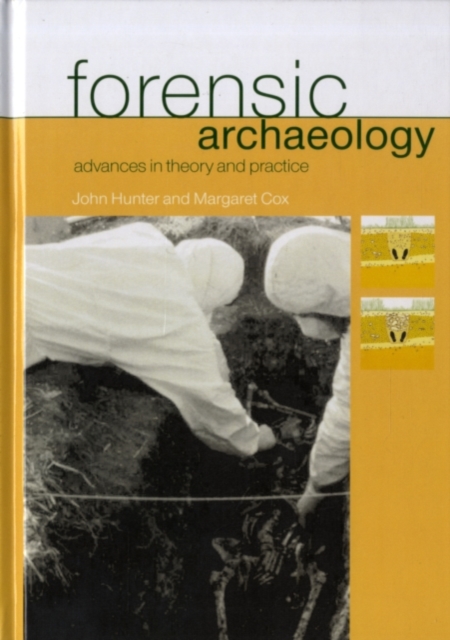
Forensic Archaeology
This updated edition of a textbook universally hailed as an indispensable guide, is a complete introduction to the methods and means of forensic archaeology.
Incorporating new advances in the field, new case studies, and charting the growth and development of the subject, Forensic Archaeology examines the four main fields of recovery, search, skeletal analysis and analytical science, and how the concepts and methods of traditional archaeology can by utilized within criminal investigations.
The authors provide in-depth chapters that discuss:
search and location
the various constraints and issues posed by an increasingly complex legal environment
the archaeology of individual and mass graves
how the subject has evolved to include international investigations of human rights
links with forensic anthropology
forensic geophysical survey.
This is an invaluable resource that will provide students, researchers, academics and the general reader alike with a fascinating introduction to this complex and crucial subject.
1. Introduction 2. Search and Location 3. Forensic Geophysical Survey 4. The Recovery of Forensic Evidence from Individual Graves 5. The Archaeology of Mass Graves 6. Anthropology in a Forensic Context 7. Legal Matters 8. Social and Intellectual Frameworks
eBook

Learning Clinical Skills Using Haptic vs. Phantom Head Dental Chair Simulators in Removal of Artificial Caries: Cluster-Randomized Trials with Two Cohorts’ Cavity Preparation
Dental task trainer simulators using haptics (virtual touch) offers a cost-effective method of teaching certain clinical skills. The purpose of this study is to evaluate students’ performance in removing artificial caries after training with either a haptic dental chair simulator with virtual reality or a traditional dental chair simulator with a mannequin head. Cluster Randomized Controlled Trials in two cohorts, both Year 1 dental students. Students taught using traditional dental chair simulators were compared with students taught using haptic-based simulators on their ability to cut a cavity in a plastic tooth following training. Across both cohorts, there was no difference in the quality of cavity cut, though students’ technique differed across the two simulator groups in some respects. No difference was seen across both cohorts in the quality of cavity cut for a simple preparation, though students in the haptic condition performed less well in the more demanding task. Moreover, students in the haptic group were also less likely to be perceived to be ‘holding the instrument appropriately’. These findings suggest further investigation is needed into the differences in handling of instruments and level of clinical task difficulty between the simulators.
Journal Article

Sustainability and Scalability in Educational Technology Initiatives: Research-Informed Practice
Although a positive impact of technology interventions on educational practice and student outcomes has been shown in many previous research settings, the use of technology in classrooms and schools is still often superficial and not meeting the potential of technology as envisioned by education reformers and researchers in the field. However, when technology projects have been implemented successfully in educational practice and shown valuable impacts, sustainability within similar contexts is not guaranteed—let alone scaling the initiative to other broader contexts. This article builds on the discussions of the EDUsummIT 2017 Thematic Working Group 9 (TWG9) and the summary report that captured the outcome of those discussions. The goal of TWG9 was to help inform policy and practice by providing insights into key factors that contribute to scalability and sustainability of educational technology integration and impact.
Journal Article
Arguing for Computer Science in the School Curriculum
Computer science has been a discipline for some years, and its position in the school curriculum has been contested differently in several countries. This paper looks at its role in three countries to illustrate these differences. A reconsideration of computer science as a separate subject both in primary and secondary education is suggested. At EDUsummIT 2015 it was argued that the major rationales for including computer science as a subject in the K-12 curriculum are economic, social and cultural. The paper explores these three rationales and also a beneficence matrix to assist curriculum designers. It also argues computer science is rapidly becoming critical for generating new knowledge, and should be taught as a distinct subject or content area, especially in secondary schools. The paper concludes by looking at some of the key questions to be considered when implementing computer science in the school curriculum, and at ways its role might change in the future.
Journal Article

Effects of ICT: Do we know what we should know?
Many decades after the introduction of ICT into classrooms there are still unanswered questions about the impact of technology in the long and short term on students’ learning, and how it has affected simple and complex learning tasks. These are important for (a) forming government policies; (b) directing teacher education programmes: (c) advancing national curricula; (d); designing or reforming classroom implementation and (e) analysing costs and benefits. While a plethora of studies has been conducted on the effects of ICT in education, major policy and methodological problems have precluded an unambiguous answer to such questions as:—“Does the way in which ICT is implemented have a major/minor impact on students’ knowledge and understanding?” and “Does the impact affect the surface or deep structure of students’ thinking and acting?” To date we have had no large-scale longitudinal studies of ICT’s impact in education such as we have in the form of studies of earlier major curriculum development projects. Nor have we had many comprehensive studies of the complex interactions between various types of ICT implementation and the effects of other factors such as school-based interventions, socio-economic status and school expenditures which have been shown to have a greater impact on education compared with other previous innovations in education. Furthermore we do not know if previous research studies have used research methods that matched learning objectives to instruments/procedures. Many previous studies are vague as to the actual measures used but we can infer that standardized tests were a frequent measure. In other instances, ad hoc analyses, with criteria that may have varied from analyst to analyst and were not “blind” analyses were certainly used to measure “success.” All of these limitations and uncertainties and many more point to the need for a thorough, rigorous, and multifaceted approach to analysing the impact of ICT on students’ learning. This paper draws on previous research evidence to identify relevant research strategies to address the gaps in our knowledge about ICT and students’ learning explained above.
Journal Article
Clinical Skills Acquisition: Rethinking Assessment Using a Virtual Haptic Simulator
This study was the fourth study (Study 4) of four consecutive cohort studies (2007/2008, 2008/2009, 2009/2010 and 2010/2011) of over 520 dental undergraduate first year students at King’s College London as part of their 5-year undergraduate programme. The study reported in this paper is a 2-year longitudinal investigation of 140 first year students (and subsequent second year) who were being trained to develop their clinical dental skills. In this study students used both the traditional Phantom-head laboratory and a haptically simulated virtual reality systems (HapTEL) laboratory to develop their basic clinical skills. Pre- and post-psychometric tests were used to measure their spatial reasoning and manipulation skills. The test scores and traditional clinical examinations results showed significant improvement in their psychomotor skills especially in the area of spatial awareness within a 3-months period (one term) of pre-clinical training. The results showed that using psychometric tests can reveal specific skill development amongst students not identified by traditional assessment methods. This study complements the previous studies in showing the development of psychomotor skills by practising virtual reality simulators can be monitored and measured through stages of skill acquisition more accurately and objectively. These results confirmed the consistency of skill improvement through the three phases of skill acquisition although more analysis is needed of the specific types of tests which reliably measured these skill phases. The result of this research could therefore inform the development of formative and summative dental clinical skills’ assessment to measure and monitor the student’s psychomotor training with more regular and instant feedback in an objective way using computers along with the traditional Phantom-head mannequin.
Journal Article

Caribbean \islands of the mind\: Reshaping the ocularity of the self
This dissertation applies my coined concept, “the ocularity of the self,” which refers to how individuals constantly reconfigure their “lens” to the extent that the restructuring of their image results in acceptance of societal ocular dominance. Hence, the privileging of society’s metaphorical eye over the individual’s metaphorical eye, skews the acuity and validity of his or her self-image. I examine how the fiction and non-fiction prose narratives of Caribbean women authors Michelle Cliff, Oonya Kempadoo, Patricia Powell, and Kerry Young address sociolinguistics and creolity, the causes and effects of self-commodification, and the unmasking and unsexing of gender and sexuality. I show how these issues are influenced by constructed Caribbean “islands of the mind” that need to be replaced with self-determined mindsets as there is an effort to reshape the “ocularity of the self.”
Dissertation
Forensic Archaeology, Anthropology and the Investigation of Mass Graves
This updated edition of a textbook universally hailed as an indispensable guide, is a complete introduction to the methods and means of forensic archaeology. Incorporating new advances in the field, new case studies, and charting the growth and development of the subject, Forensic Archaeologyexamines the four main fields of recovery, search, skeletal analysis and analytical science, and how the concepts and methods of traditional archaeology can by utilized within criminal investigations. The authors provide in-depth chapters that discuss: search and location the various constraints and issues posed by an increasingly complex legal environment the archaeology of individual and mass graves how the subject has evolved to include international investigations of human rights links with forensic anthropology forensic geophysical survey. This is an invaluable resource that will provide students, researchers, academics and the general reader alike with a fascinating introduction to this complex and crucial subject.
eBook