
Catalogue Search | MBRL


Are you sure you want to remove the book from the shelf?

{{itemTitle}}
50
result(s) for
"Criss, Bilge"
Sort by:

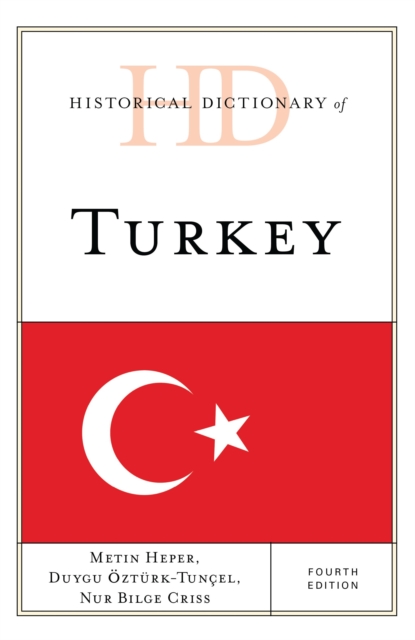
Historical dictionary of Turkey
The fourth edition of Historical Dictionary of Turkey covers Ottoman Empire and the Republic of Turkey through a time span of more than six centuries. It presents the basic characteristics of the two periods and traces the developments from an empire to a state-nation, from tradition to modernity, from a sultanate to a republic, and from modest country to a country that is already a regional power and further aspiring becoming a country to be reckoned with. This is done through a chronology, an introduction, appendixes, and an extensive bibliography. The dictionary section has over 900 cross-referenced entries on important personalities, politics, economy, foreign relations, religion, and culture. This book is an excellent resource for students, researchers, and anyone wanting to know more about Turkey.
eBook

Historical dictionary of Turkey
\"Contains a chronology, an introduction, appendixes, an extensive bibliography, and a dictionary section with more than 900 cross-referenced entries on Turkey.\"--Provided by publisher.
Book
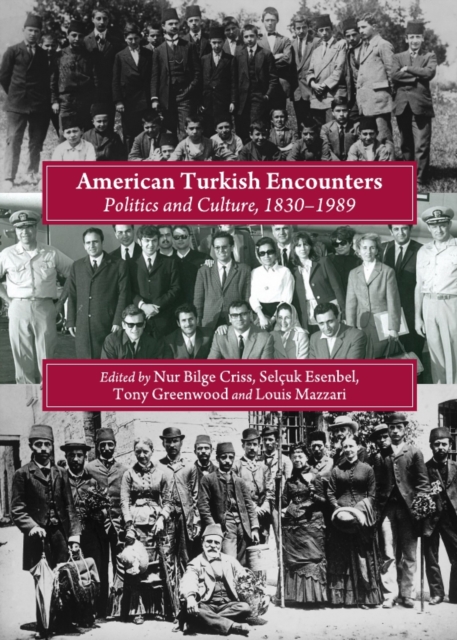
American Turkish encounters : politics and culture, 1830-1989
Turkey and the United States have been critically important to each other since the beginning of the Cold War. The history of Turkish-American relations includes not only strategic, but also political, social, cultural and intellectual dimensions. While critical to understanding Turkish-American relations, these dimensions rarely surface in today's discourse, which reduces bilateral relations to issues currently being contested. In reality, the encounter between East and West embodied in Turkish-American interactions ranges from the official and diplomatic, to unofficial and informal exchanges at the social and individual level; while often compatible and friendly, such interactions occasionally have been less so. Authors from both countries developed a variety of perspectives on their interactions through original research that will enable both specialists and general readers to appreciate its many facets.Most scholarly works on the two nations have been limited to the analysis of US-Turkish relations in the context of Cold War politics. The editors intend that this volume will begin to fill a serious gap and encourage others to study American-Turkish relations from as many aspects as possible. This book shows that when seen in a historical framework, the American Turkish encounter took place beyond the level of formal political and military ties during the Cold War period and has enduringly interacted at the level of educational, social, and cultural realms.
eBook

Turkey's NATO alliance: a historical perspective
This study offers a historical perspective on Turkey's consistent policies to become a member of western political and security systems, both institutionally and legally, by utilizing the learning theory concept. Drawing lessons from the past as well as Turkey's quest to place itself within the international system, takes the subject back to the 19th century. Consequently, when approached as a matter of belonging to a system from a historical perspective, a broader picture may shed new light on the question, `why NATO?' Another aim of the paper is to carry Turkey's NATO membership beyond the confines of `Soviet threat', `westernization', and `ideological warfare' categories. It has been a consistent policy in Turkey to adapt to the world conjuncture/systems and eschew isolation. That this quest was fulfilled in mid 20th century by membership in NATO points to a long but consistent journey.
Journal Article
Turkey's NATO alliance: a historical perspective/ Turkiye-NATO ittifakinin tarihsel boyutu
This study offers a historical perspective on Turkey's consistent policies to become a member of western political and security systems, both institutionally and legally, by utilizing the learning theory concept. Drawing lessons from the past as well as Turkey's quest to place itself within the international system, takes the subject back to the 19th century. Consequently, when approached as a matter of belonging to a system from a historical perspective, a broader picture may shed new light on the question, \"why NATO?\" Another aim of the paper is to carry Turkey's NATO membership beyond the confines of \"Soviet threat\", \"westernization\", and \"ideological warfare\" categories. It has been a consistent policy in Turkey to adapt to the world conjuncture/systems and eschew isolation. That this quest was fulfilled in mid 20th century by membership in NATO points to a long but consistent journey.
Journal Article
Historical dictionary of Turkey, fourth edition
The fourth edition of Historical Dictionary of Turkey covers Ottoman Empire and the Republic of Turkey through a time span of more than six centuries. It presents the basic characteristics of the two periods and traces the developments from an empire to a state-nation, from tradition to modernity, from a sultanate to a republic, and from modest country to a country that is already a regional power and further aspiring becoming a country to be reckoned with. This is done through a chronology, an introduction, appendixes, and an extensive bibliography. The dictionary section has over 900 cross-referenced entries on important personalities, politics, economy, foreign relations, religion, and culture. This book is an excellent resource for students, researchers, and anyone wanting to know more about Turkey.
eBook

Parameters of Turkish Foreign Policy under the AKP Governments
Este estudio emplea un acercamiento crítico a los parámetros de la política exterior turca bajo los gobiernos del AKP. Habiendo abandonado toda experiencia aprendida del pasado, el AKP intenta marcar puntos en su política exterior a través del populismo. Una actividad frenética en el exterior no apunta a una política exterior activa o novedosa, sino más bien a una pérdida de intereses. La retórica de la política exterior es llevada a cabo por el primer ministro, el presidente y el ministro de exteriores, quienes en ocasiones se contradicen los unos a los otros. Contrastando estos nuevos criterios de populismo injertados dentro del arte de la política exterior de corte tradicional, este estudio concluye que todas las iniciativas recientemente tomadas por el gobierno pueden ser nobles en sus motivaciones, pero carentes de sofisticación y de buena gestión.
Journal Article
PARAMETERS OF TURKISH FOREIGN POLICY UNDER THE AKP GOVERNMENTS
The study employs a critical approach to the parameters of Turkey's foreign policy under the AKP governments. Having abandoned all learning experience from the past, AKP tries to score points in foreign policy through sheer populism. Frenzied activity abroad points not to active or new foreign policy, but to loss of priorities. Foreign policy rhetoric is carried out by the Prime Minister, President, and the Foreign Minister, who sometimes contradict each other. Contrasting the new populist criteria injected into the art and science of traditional foreign policy, the study concludes that all the recent initiatives taken by the government may be noble in spirit, but lacking of sophistication and managerial acumen. [PUBLICATION ABSTRACT]
Journal Article
