
Catalogue Search | MBRL


Are you sure you want to remove the book from the shelf?

{{itemTitle}}
6
result(s) for
"Cuban, Larry, author"
Sort by:

The flight of a butterfly or the path of a bullet? : using technology to transform teaching and learning
Larry Cuban returns with fresh energy and insight to one of his perennial topics: the uses and effects of digital technologies in K-12 classrooms. Cuban has an extensive track record as a skeptic about the educational consequences of those technologies. In this book, he returns to this topic by exploring the uses of these technologies in notably ambitious classrooms, all of them in schools in the heart of Silicon Valley. The book looks carefully at 41 classrooms in all, located in twelve schools in six different districts. All have devoted special attention and resources to integrating digital technologies in their education practices. Cuban observed all of these classrooms and interviewed all of the teachers in an effort to answer several straightforward, if also elusive, questions: has technology integration been fully implemented and put into practice in these classrooms? And has this integration and implementation resulted in altered teaching practices? Ultimately, Cuban asks if the use of digital technologies has resulted in transformed teaching and learning in these classrooms. The answers to these questions reflect both Cuban's nuanced understanding not only of digital technologies and their uses, but of the complex interrelations of policy and practice, and of the many, often unintended, consequences of reforms and initiatives in the education world. Similarly, his answers reflect his subtle understanding of change and continuity in education practice, and of the varying ways in which different actors in the education world--policy makers, school leaders, teachers, and others--understand, and sometimes misinterpret, those changes. -- Provided by publisher.
BOOK
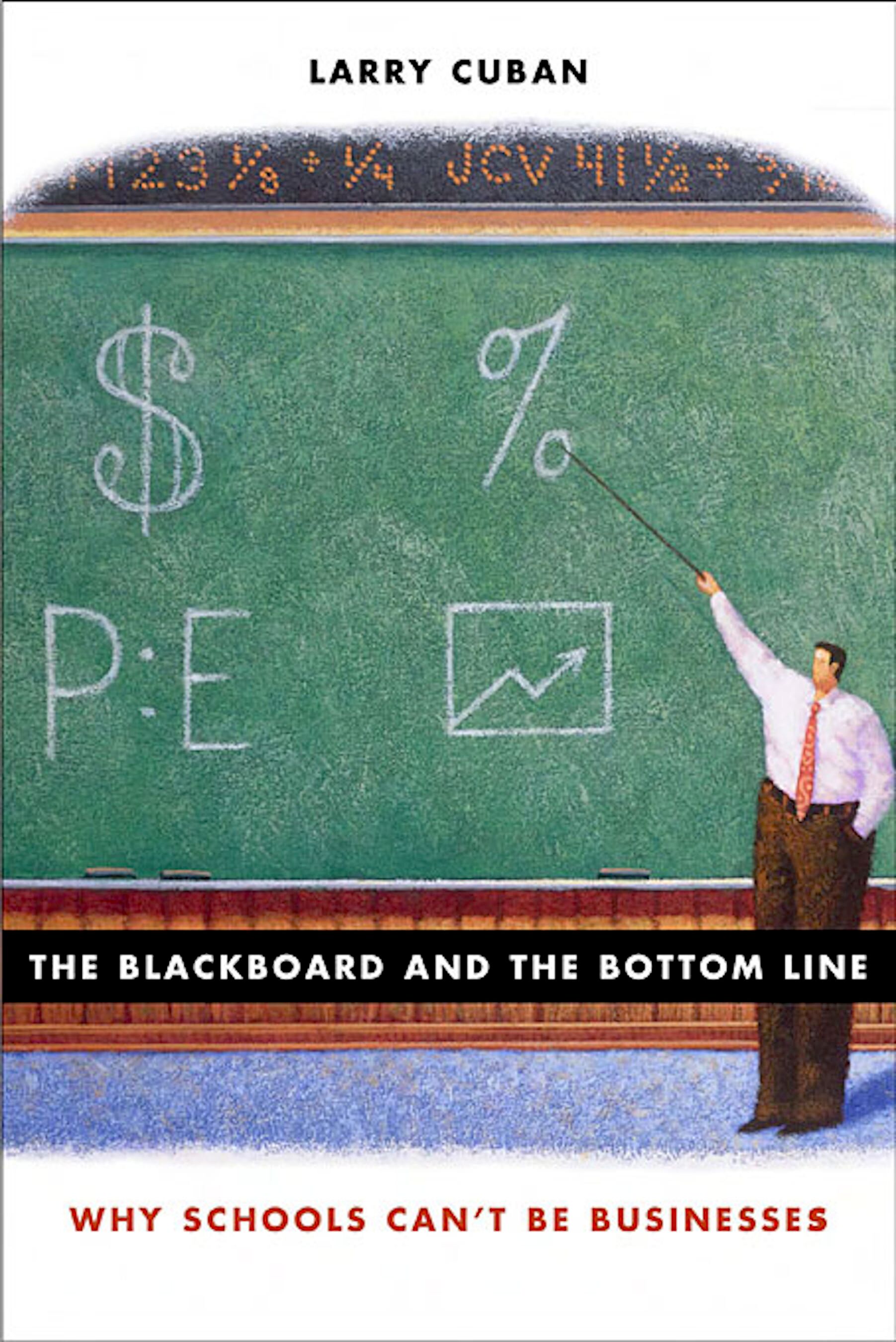
The blackboard and the bottom line
\"Ford Motor Company would not have survived the competition had it not been for an emphasis on results. We must view education the same way,\" the U.S. Secretary of Education declared in 2003. But is he right? In this provocative new book, Larry Cuban takes aim at the alluring cliché that schools should be more businesslike, and shows that in its long history in business-minded America, no one has shown that a business model can be successfully applied to education.
In this straight-talking book, one of the most distinguished scholars in education charts the Gilded Age beginnings of the influential view that American schools should be organized to meet the needs of American businesses, and run according to principles of cost-efficiency, bottom-line thinking, and customer satisfaction.
Not only are schools by their nature not businesslike, Cuban argues, but the attempt to run them along business lines leads to dangerous over-standardization--of tests, and of goals for our children. Why should we think that there is such a thing as one best school? Is \"college for all\" achievable--or even desirable? Even if it were possible, do we really want schools to operate as bootcamps for a workforce? Cuban suggests that the best business-inspired improvement for American education would be more consistent and sustained on-the-job worker training, tailored for the job to be done, and business leaders' encouragement--and adoption--of an ethic of civic engagement and public service.
eBook


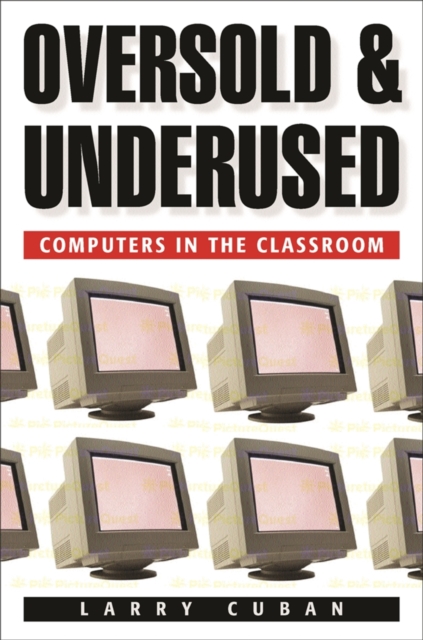
Oversold and underused
One of the most respected voices in American education demonstrates that when teachers are not given a say in how new technology might reshape schools, students and teachers use that technology far less in the classroom than they do at home, and that teachers who use computers for instruction do so infrequently and unimaginatively.
eBook

Tinkering toward Utopia
This book documents the tension between Americans' faith in education as a panacea and the moderate pace of change in educational practices. The authors suggest that reformers need to focus on ways to help teachers improve instruction from the inside out instead of decreeing change by remote control.
eBook