
Catalogue Search | MBRL


Are you sure you want to remove the book from the shelf?

{{itemTitle}}
145
result(s) for
"Cuff, Paul"
Sort by:

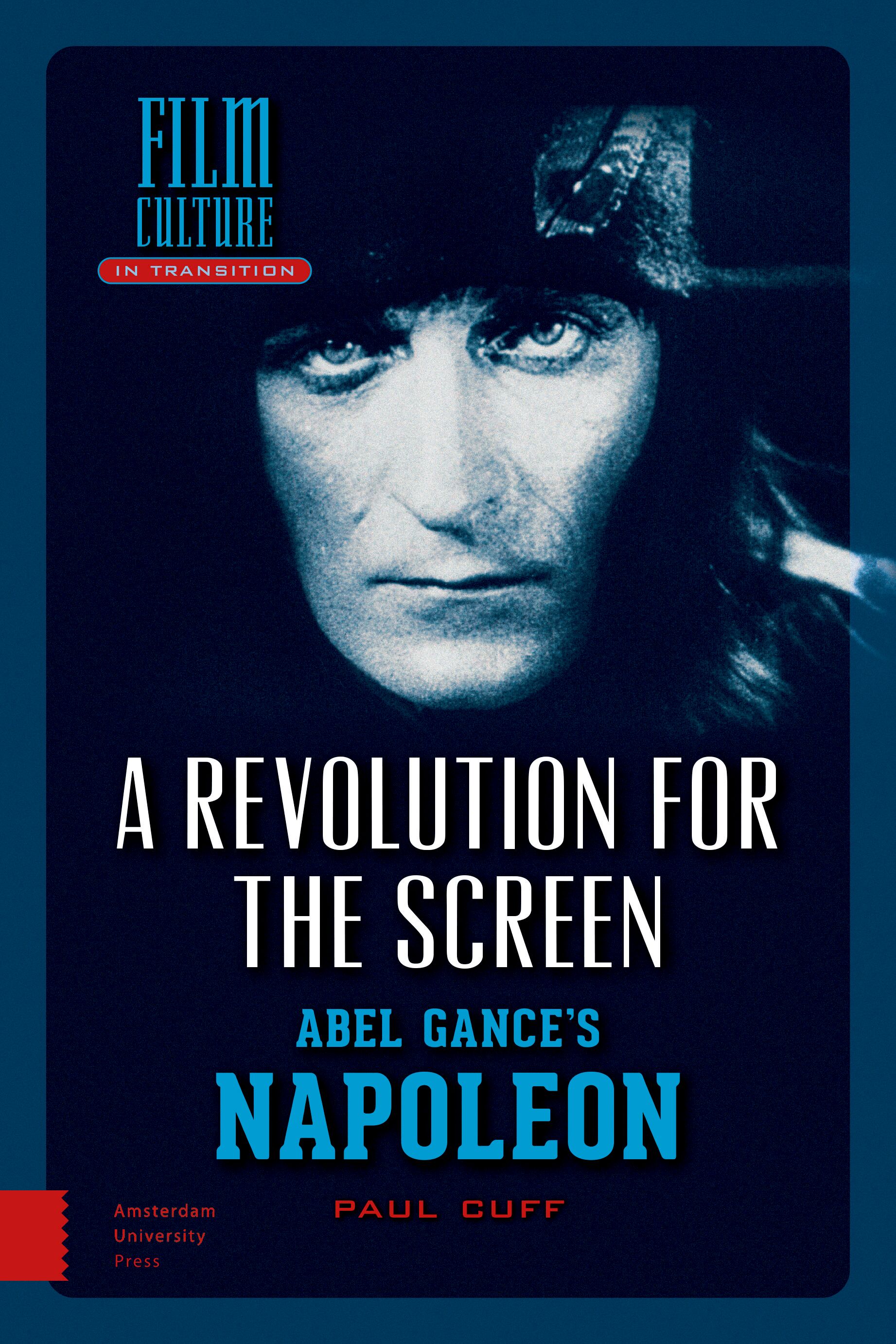
A Revolution for the Screen
Abel Gance's silent masterpiece,Napoleon, was given a limited run on its debut in 1927, but soon afterwards distributors in France and America, unwilling to deal with its nine-hour running time, subjected it to savage cuts-with devastating results for the movie and for film history. The struggle across ensuing decades to restore and reintegrate Gance's film has formed a backdrop to an array of formal, contextual, and ideological battles. In this book, Paul Cuff takes account of those battles and challenges received opinion on Gance's view of both his film and its subject.
eBook
A revolution for the screen: Abel Gance's Napoleon
Abel Gance's silent masterpiece, Napoleon, was given a limited run on its debut in 1927, but soon afterwards distributors in France and America, unwilling to deal with its nine-hour running time, subjected it to savage cuts - with devastating results for the movie and for film history. The struggle across ensuing decades to restore and reintegrate Gance's film has formed a backdrop to an array of formal, contextual, and ideological battles. In this book, Paul Cuff takes account of those battles and challenges received opinion on Gance's view of both his film and its subject.
eBook

A Forward-Reverse Brascamp-Lieb Inequality: Entropic Duality and Gaussian Optimality
Inspired by the forward and the reverse channels from the image-size characterization problem in network information theory, we introduce a functional inequality that unifies both the Brascamp-Lieb inequality and Barthe’s inequality, which is a reverse form of the Brascamp-Lieb inequality. For Polish spaces, we prove its equivalent entropic formulation using the Legendre-Fenchel duality theory. Capitalizing on the entropic formulation, we elaborate on a “doubling trick” used by Lieb and Geng-Nair to prove the Gaussian optimality in this inequality for the case of Gaussian reference measures.
Journal Article

Encountering sound: the musical dimensions of silent cinema
This article identifies silent film soundtracks as evidence of the tensions between old and new audiovisual cultures, and examines the distinctions between our experience of live and mediated cinema through contemporary modes of presentation. My primary interest is in the aesthetic and cultural dimensions of film sound, and the ways in which digital technology influences the creation, performance, and recording of music for silent cinema. Parallel to this subject, I address the relationship between scholars and their object of study. I analyse how different audiovisual environments (rehearsal and concert spaces, recording studios, theatrical and domestic spaces) shape the aesthetics of film sound and the culture of its reception. More generally, this article seeks to engage film studies with media and performance studies, arguing that a reflective and interdisciplinary approach is needed to evaluate our ever-changing encounters with live and recorded film sound.
Journal Article

A Revolution for the Screen
Abel Gance's silent masterpiece, Napoleon, was given a limited run on its debut in 1927, but soon afterwards distributors in France and America, unwilling to deal with its nine-hour running time, subjected it to savage cuts - with devastating results for the movie and for film history. The struggle across ensuing decades to restore and reintegrate Gance's film has formed a backdrop to an array of formal, contextual, and ideological battles. In this book, Paul Cuff takes account of those battles and challenges received opinion on Gance's view of both his film and its subject.|Paul Cuff takes account of the struggle across decades to restore and reintegrate Gance's film Napoleon and challenges received opinion on this work.
eBook

A Revolution for the Screen
Abel Gance’s silent masterpiece, Napoleon , was given a limited run on its debut in 1927, but soon afterwards distributors in France and America, unwilling to deal with its nine-hour running time, subjected it to savage cuts—with devastating results for the movie and for film history. The struggle across ensuing decades to restore and reintegrate Gance’s film has formed a backdrop to an array of formal, contextual, and ideological battles. In this book, Paul Cuff takes account of those battles and challenges received opinion on Gance’s view of both his film and its subject.
eBook


Interpretation and Restoration: Abel Gance'sLa Roue(1922)
This essay aims to show the difficulties of restoring and interpreting Abel Gance'sLa Roue(1922). It provides details of the film's evolution from script to screen and the history of its various release versions, including modern attempts at restoration. Aiming to solve some of the difficulties many critics have had when examining Gance's film, it offers an analysis of key aspects of the film, negotiating a balance between its innovative form and dramatic content.
Journal Article