
Catalogue Search | MBRL


Are you sure you want to remove the book from the shelf?

{{itemTitle}}
637
result(s) for
"Cunningham, Ian"
Sort by:

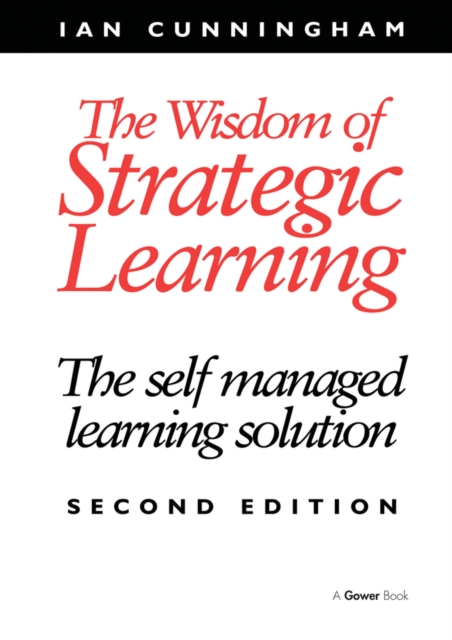
The Wisdom of Strategic Learning
The Wisdom of Strategic Learning has enabled many organizations to develop a strategic approach to learning and development. Its premise that learning must be integrated with the strategic direction of the organization has been validated by numerous successful businesses which have implemented its tried and tested approaches. This second edition of Ian Cunningham's book updates and expands material on the importance of the self managed learning approach to create focused, active and committed employees. A new chapter on the role and development of staff in SML programmes has been added, along with new appendices, for example on selling the approach. With new case material including the use of online groups on the Internet, this practical, thought-provoking book shows how the ideas behind the learning organization can be applied for strategic advantage.
Ian Cunningham is Chair of Strategic Developments International Limited and the Centre for Self Managed Learning Limited. He is also on the Adjunct Faculty of the Fielding Institute in California and a Visiting Professor at Middlesex University. Ian works with organizations worldwide in areas such as team and people development, and large scale organizational change.
Contents: Part One Introduction: Introduction: some basics. Part Two Big Picture: Strategic learning; A learning business. Part Three Good Learning: Capability and wisdom; Holism. Part Four Self Managed Learning: Principles; Strategy and designs; Tactics and practice. Part Five Practice: Roles in learning and change; Developmental roles in practice; The learner in context; Conclusions and directions. Appendix I Research into SML; Appendix II Selling SML; Appendix III The Fielding Institute MA; Index.
eBook

Non-profits and the ‘hollowed out’ state
This article explores the impact of state reforms to increase customer authority in social care at a time of public sector austerity in Scotland. The article focuses on the implications of these reforms for state–non-profit relations and the latter’s employment policies. The study proposes a theoretical framework to explore these themes using insights from the ‘hollowing out’ thesis and the customer-orientated bureaucracy concept. Non-profits respond to increased customer authority from personalization and public expenditure cuts by adopting more competitive relations with each other. They also introduce contradictory ‘soft’ and ‘hard’ Human Resource Management (HRM) reforms. Workers face multiple demands to be more flexible and exhibit commitment to ‘fit’ with customer needs. Despite some increases in skills, the increasing influence of customer authority and efficiency savings mean employees experience multiple degradations in employment conditions affecting pay, job security, skills and work intensification.
Journal Article

Participation and power dynamics between international non-governmental organisations and local partners: A rural water case study in Indonesia
Community-Based Management (CBM) is an important part of Indonesia’s goal of universal access to water. However, approaches to CBM tend to neglect the impact of power relationships between community-based organisations (CBOs) and their external donor partners on CBO management capacity. This paper explores the power dynamics between a CBO and their donor partner, the international NGO Engineers Without Borders Australia (EWB), in a rural water supply project in Tenganan, Indonesia. A diffracted power frame was used to analyse the response of CBO power to EWB’s participatory approach. The approach was sensitised to power, gave primacy to the CBO’s vision, used local assets, and had a flexible timeline. The CBO’s power was evident in the strength of its vision, its resistance to government involvement, the occasional rejection of technical advice from EWB, and its increased confidence in its capacity to manage Tenganan’s water supply. The findings reinforce the political nature of participation, with implications for approaches to establishing CBM in Indonesia and elsewhere. Strengthened outcomes in rural water supply are likely to result from greater self-reflection by external partners regarding their own positionality, coupled with a focus on strategies for maintaining and enhancing the power of CBOs.
Journal Article


468 Effects of butyrate supplementation in modulation of gut microbiome and its metabolites in new-onset rheumatoid arthritis
Objectives/Goals: The gut microbiome and its metabolites, such as short-chain fatty acids (SCFA), are dysregulated in rheumatoid arthritis (RA); however, the significance of this observation and its implications in pathogenesis and therapeutics is unclear. Here, we explore the role of the SCFA, butyrate, in treatment efficacy in new-onset rheumatoid arthritis. Methods/Study Population: We designed a proof-of-principle study to determine the effects of butyrate supplementation in new-onset RA (NORA) patients that fulfilled 2010 ACR/EULAR RA criteria. We evaluated the effects of methotrexate (MTX) plus butyrate in NORA (n = 17; 1 gm butyrate, 3 times daily) compared to MTX alone (n = 19) over 4 months. MTX responders were defined by a change in disease activity score (DAS)-28 ESR of > 1.8 at 4 months. Fecal samples were collected at baseline and followed up for 16s rRNA sequencing and metabolite quantification by 1H NMR spectroscopy. Unpaired-t, paired-t, Wilcox and Fisher’s exact test were performed as appropriate. Results/Anticipated Results: MTX responders in the MTX-only group had a higher concentration of fecal butyrate than nonresponders at baseline (p = 0.045). Fecal butyrate concentration decreased over time in treatment responders in MTX group (p = 0.05), whereas butyrate concentration remained similar in MTX/butyrate group. Prior to treatment, both MTX and MTX/butyrate groups demonstrated similar levels of gut bacterial alpha diversity (Shannon index), yet only the MTX/butyrate group demonstrated a significant increase in alpha diversity by 4 months (p = 0.022). LefSe analysis demonstrated increased abundances of Bacteroides, Clostridium, and Phascolarctobacterium in responders in the MTX/butyrate group by 4 months. Ten (52.6%) patients in MTX and 11 (64.7%) in MTX/butyrate group were considered MTX responders by 4 months (p = 0.516). Discussion/Significance of Impact: Butyrate supplementation increased gut microbial diversity in patients and led to increased abundance of Bacteroides, which has been implicated in efficacy of methotrexate, a first line medication in rheumatoid arthritis. Butyrate may have implications for the maximization of therapeutic effectiveness in rheumatoid arthritis.
Journal Article
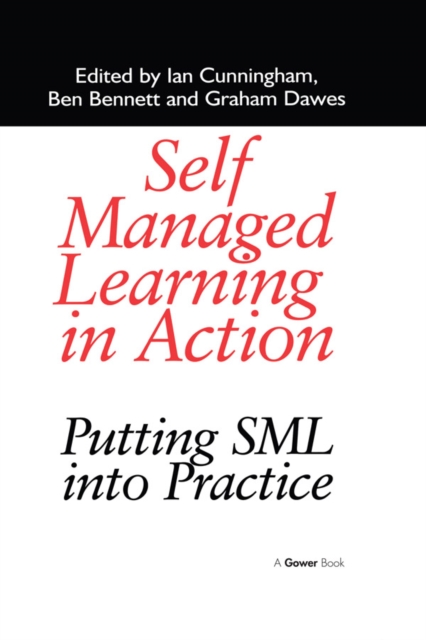
Self Managed Learning in Action
Over the last two decades the importance of Self Managed Learning (SML) has become increasingly recognized. This book shows how it has revolutionized learning in organizations such as Ericsson, PPP Healthcare and Sainsbury’s, and how it has contributed to wider organizational change. The book consists of four Parts. Part I places SML against the backdrop of changing global trends and the organizational responses to them. It examines how these have led to the need for people to be more self managing and provides an overview of an SML programme. Part II shows SML programmes in action by presenting case studies from nine very different organizations which have used this approach. Part III looks at SML methods in more depth by concentrating on strategic learning contracts, learning groups and how SML can be supported. Finally, Part IV concludes and looks to the future. Rigorously researched, Self Managed Learning in Action demonstrates that this important approach can be used in a wide variety of contexts and cultures, in the private sector and in the public sector, and for a wide range of staff.
Ian Cunningham is Chair of Strategic Developments International Limited and the Centre for Self Managed Learning Limited. He is also on the Adjunct Faculty of the Fielding Institute in California and a Visiting Professor at Middlesex University. Ben Bennett is a faculty member at the University of North London Business School. Both he and Graham Dawes are Directors of Strategic Developments International Limited and the Centre for Self Managed Learning Limited. Before joining Strategic Developments International Limited, Graham was a Director of two training and development organizations.
Contents: Part I Setting the Scene: Background and introduction - Ian Cunningham and Graham Dawes; Self Managed Learning in organizations - Ben Bennett. Part II Putting It Into Practice: Self Managed Learning - cases of action - Ben Bennett; Senior manager development - the evaluation of a consortium programme - Ben Bennett; Developing the personnel function using Self Managed Learning - organizational change in a major retail company - Nigel Broome and Judith Evans; Responding to change in local government - Self Managed Learning in Arun District Council - Marcia Fellows; Organizational change through Self Managed Learning - the case of PPP healthcare - Rosie Serpis, Mark Aspinall and Rob Shorrick; Self Managed Learning and qualification programmes - Graham Dawes; Self Managed Learning - experiences from Finland - Tuula Lillia; Lifelong learning and Self Managed Learning in Ericsson - Robert Lines; Self Managed Learning and Continuing Professional Development - Ben Bennett. Part III Making Self Managed Learning Work: Strategic Learning Contracts - Graham Dawes; Learning groups - Ian Cunningham; Supporting Self Managed Learning - Ian Cunningham. Part IV Conclusions: Looking to the future - Ian Cunningham; References; Index.
eBook


A new educational paradigm for the 21st century
Purpose
This paper calls for a New Educational Paradigm in which young people are supported through an educational process that assists them to take charge of their own learning. A process in which they choose what they want to learn and how rather than the current system that requires them to regurgitate facts in order to pass tests/exams.
Design/methodology/approach
A viewpoint based on the author's experience of running the Self Managed Learning College in the UK for the past 20 years and his forthcoming book detailing the research evidence that highlights the need for change.
Findings
Businesses complain that the education system does not currently equip young people with the skills they need to thrive in the ever-changing world of work. The system needs to change and business leaders need to get involved. The College is one example of many around the world where people are deciding to get away from the rigidities, inappropriateness and waste of the current system.
Originality/value
The College is a unique environment which has been successfully operating for 20 years. The operating processes of the College match the outcomes needed in the working world and wider society. It provides an exemplar of how to help young people take responsibility for their own learning in order for them to lead a good life in the future.
Journal Article

Designing for climate change: twenty-five design features to improve sanitation technology resilience in low- and middle- income countries
Climate change is exacerbating events such as floods and droughts, and trends including sea-level rise, leading to failures in sanitation technologies, increased public health risks and environmental pollution. To reduce these risks, it is crucial to incorporate climate resilience into sanitation technology designs. In this study, we reviewed academic and selected grey literature and identified 25 design features that can contribute to the technology’s resilience to an increasingly volatile and extreme climate. Design features that were conceptually similar were collated into seven categories. These categories included: (i) avoid exposure to hazards, (ii) withstand exposure to hazards, (iii) enable flexibility, (iv) contain failures, (v) limit consequences of complete failure, (vi) facilitate fast recovery and (vii) features that provide resilience benefits beyond technological resilience. In this paper we define the categories and design features, and provide examples of each feature in practice. We also outline how the resilience design features can support sanitation designers and implementers to critique the climate resilience of sanitation technology, and prompt more resilient designs of sanitation technology.
Journal Article