
Catalogue Search | MBRL


Are you sure you want to remove the book from the shelf?

{{itemTitle}}
8
result(s) for
"Curtis, Daniel, author"
Sort by:

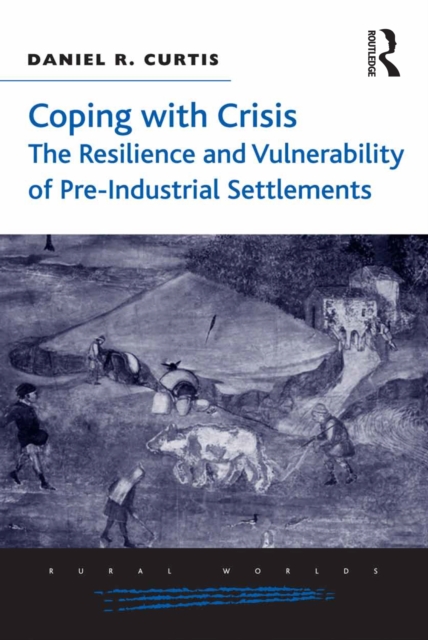
Coping with Crisis
Why in the pre-industrial period were some settlements resilient and stable over the long term while other settlements were vulnerable to crisis? Indeed, what made certain human habitations more prone to decline or even total collapse, than others? All pre-industrial societies had to face certain challenges: exogenous environmental hazards such as earthquakes or plagues, economic or political hazards from 'outside' such as warfare or expropriation of property, or hazards of their own-making such as soil erosion or subsistence crises. How then can we explain why some societies were able to overcome or negate these problems, while other societies proved susceptible to failure, as settlements contracted, stagnated, were abandoned, or even disappeared entirely? This book has been stimulated by the questions and hypotheses put forward by a recent 'disaster studies' literature - in particular, by placing the intrinsic arrangement of societies at the forefront of the explanatory framework. Essentially it is suggested that the resilience or vulnerability of habitation has less to do with exogenous crises themselves, but on endogenous societal responses which dictate: (a) the extent of destruction caused by crises and the capacity for society to protect itself; and (b) the capacity to create a sufficient recovery. By empirically testing the explanatory framework on a number of societies between the Middle Ages and the nineteenth century in England, the Low Countries, and Italy, it is ultimately argued in this book that rather than the protective functions of the state or the market, or the implementation of technological innovation or capital investment, the most resilient human habitations in the pre-industrial period were those than displayed an equitable distribution of property and a well-balanced distribution of power between social interest groups. Equitable distributions of power and property were the underlying conditions in pre-industrial societies that all
eBook


Industrial Strength Bluegrass
In the twentieth century, Appalachian migrants seeking economic
opportunities relocated to southwestern Ohio, bringing their music
with them. Between 1947 and 1989, they created an internationally
renowned capital for the thriving bluegrass music genre, centered
on the industrial region of Cincinnati, Dayton, Hamilton,
Middletown, and Springfield. Fred Bartenstein and Curtis W. Ellison
edit a collection of eyewitness narratives and in-depth analyses
that explore southwestern Ohio's bluegrass musicians, radio
broadcasters, recording studios, record labels, and performance
venues, along with the music's contributions to religious
activities, community development, and public education. As the
bluegrass scene grew, southwestern Ohio's distinctive sounds
reached new fans and influenced those everywhere who continue to
play, produce, and love roots music.
Revelatory and multifaceted, Industrial Strength
Bluegrass shares the inspiring story of a bluegrass hotbed and
the people who created it.
Contributors: Fred Bartenstein, Curtis W. Ellison, Jon Hartley
Fox, Rick Good, Lily Isaacs, Ben Krakauer, Mac McDivitt, Nathan
McGee, Daniel Mullins, Joe Mullins, Larry Nager, Phillip J.
Obermiller, Bobby Osborne, and Neil V. Rosenberg.
eBook

Gender Affirmation
Some people pursue medical interventions as part of the process of expressing their gender, and an increasing number of gender affirmation surgeries are being performed.This book, which provides comprehensive coverage of the subject, is edited by three well-respected and experienced authors with over 20 contributors from around the world.
eBook
The roads to congress 2014
This book provides sensible analysis of overarching themes (performance of the 113th Congress, voting laws, campaign finance, and use of social media) from the 2014 campaign cycle, as well as case studies of important congressional races. Collectively, the concepts and cases give a compelling narrative explanation of America's electoral process and the keys to winning vital elections.
eBook

Natural Disaster and Nuclear Crisis in Japan
The March 2011 earthquake and tsunami in Japan plunged the country into a state of crisis. As the nation struggled to recover from a record breaking magnitude 9 earthquake and a tsunami that was as high as thirty-eight meters in some places, news trickled out that Fukushima had experienced meltdowns in three reactors. These tragic catastrophes claimed some 20,000 lives, initially displacing some 500,000 people and overwhelming Japan's formidable disaster preparedness.
This book brings together the analysis and insights of a group of distinguished experts on Japan to examine what happened, how various institutions and actors responded and what lessons can be drawn from Japan’s disaster. The contributors, many of whom experienced the disaster first hand, assess the wide-ranging repercussions of this catastrophe and how it is already reshaping Japanese culture, politics, energy policy, and urban planning.
'The triple disasters of 11 March 2011 will change the face of Japan and this is the best place to understand how. This timely and excellent publication is packed with important insights into the consequences of these disasters and challenges mainstream media views and misperceptions concerning PM Kan’s disaster management.' - Sven Saaler, Sophia University in Tokyo, Japan
\" One of the most impressive and memorable features of the book edited by Kingston is its tone of immediacy: the various contributors draw on many years of scholarly insight and experience to describe events and scenarios in a style of narrative that aspires beyond common journalistic analysis.\" – Keith Jackson, SOAS, University of London
Jeff Kingston is Professor of History and Director of Asian Studies at Temple University, Japan. He is the author of Japan's Quiet Transformation (2004) and Contemporary Japan (2011).
Introduction, Jeff Kingston Part I. Disaster: Reports from Tohoku 1. Tohoku Diary: Reportage on the Tohoku Disaster, Gerald Curtis 2. Recovery in Tohoku, John F. Morris Part II. Volunteerism, Civil Society and Media 3. From Kobe to Tohoku: The Potential and the Peril of a Volunteer Infrastructure, Simon Avenell 4. Civil Society and the Triple Disasters: Revealed Strengths and Weaknesses, Yuko Kawato, Robert Pekkanen and Yutaka Tsujinaka 5. Social Media in Disaster Japan, David H. Slater, Nishimura Keiko and Love Kindstrand 6. March 11, 2011 Online: Comparing Japanese Newspaper Websites and International News Websites, Leslie M. Tkach-Kawasaki Part III. Energy 7. Networks of Power: Institutions and Local Residents in Post-Tohoku Japan, Daniel P. Aldrich 8. Hard Choices: Japan's Post-Fukushima Energy Policy in the 21st Century, Paul J. Scalise 9. Fukushima and the Political Economy of Power Policy in Japan, Andrew Dewitt, Iida Tetsunari and Masuru Kaneko Part IV. History and Politics 10. Dealing With Disaster, Peter Duus 11. The Politics of Natural Disaster, Nuclear Crisis and Recovery, Jeff Kingston 12. Friends in Need: 'Operation Tomodachi' and the Politics of US Military Disaster Relief in Japan, Chris Ames and Yuiko Koguchi-Ames Part V. Recovery and Reconstruction 13. The Economic Fallout: Japan's Post-3/11 Challenges, Kenneth Neil Cukier 14. Ageing Society, Health Issues and Disaster: Assessing 3/11, Junko Otani 15. Thousand-Year Event: Towards Reconstructing Communities, Riccardo Tossani 16. Can Post-3/11 Japan overcome 20 years of drift? Kazuhiko Togo
eBook
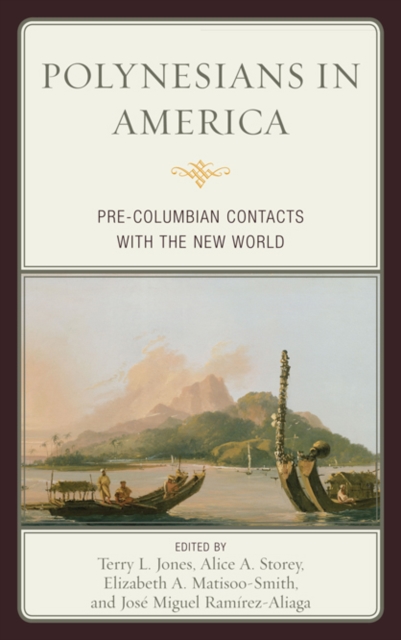
Polynesians in America
The possibility that Polynesian seafarers made landfall and interacted with the native people of the New World before Columbus has been the topic of academic discussion for well over a century, although American archaeologists have considered the idea verboten since the 1970s. Fresh discoveries made with the aid of new technologies along with re-evaluation of longstanding but often-ignored evidence provide a stronger case than ever before for multiple prehistoric Polynesian landfalls. This book reviews the debate, evaluates theoretical trends that have discouraged consideration of trans-oceanic contacts, summarizes the historic evidence and supplements it with recent archaeological, linguistic, botanical, and physical anthropological findings. Written by leading experts in their fields, this is a must-have volume for archaeologists, historians, anthropologists and anyone else interested in the remarkable long-distance voyages made by Polynesians. The combined evidence is used to argue that that Polynesians almost certainly made landfall in southern South America on the coast of Chile, in northern South America in the vicinity of the Gulf of Guayaquil, and on the coast of southern California in North America.
eBook