
Catalogue Search | MBRL


Are you sure you want to remove the book from the shelf?

{{itemTitle}}
3
result(s) for
"Curtis, John, 1946-"
Sort by:

The world of Achaemenid Persia : history, art and society in Iran and the ancient Near East : proceedings of a conference at the British Museum 29th September-1st October 2005
\"A Major Guide To and an explanation of the whole Phenomenon of the Persian Empire, from the acknowledged experts.\" -- Book Jacket.
BOOK

Sing them over again to me : hymns and hymnbooks in America
Hymns and hymnbooks as American historical and cultural icons. This work is a study of the importance of Protestant hymns in defining America and American religion. It explores the underappreciated influence of hymns in shaping many spheres of personal and corporate life as well as the value of hymns for studying religious life. Distinguishing features of this volume are studies of the most popular hymns (“Amazing Grace,” “O, For a Thousand Tongues to Sing,” “All Hail the Power of Jesus’ Name”), with attention to the ability of such hymns to reveal, as they are altered and adapted, shifts in American popular religion. The book also focuses attention on the role hymns play in changing attitudes about race, class, gender, economic life, politics, and society.
eBook
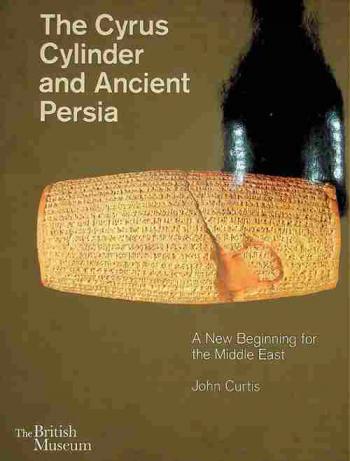
The Cyrus Cylinder and ancient Persia : a new beginning for the Middle East
The Cyrus Cylinder is one of the most famous objects to have survived from the ancient world. The Cylinder was inscribed in Babylonian cuneiform on the orders of the Persian King Cyrus the Great (559-530BC) after he captured Babylon in 539BC. It is often referred to as the first bill of human rights as it appears to permit freedom of worship throughout the Persian Empire and to allow deported people to return to their homelands. It is valued by people all around the world as a symbol of tolerance and respect for different peoples and different faiths, so much so that a copy of the cylinder is on display in the United Nations building in New York. This catalogue is being published in conjunction with the first ever tour of the object to the United States, along with sixteen other objects from the British Museum's collection. The book discusses how these objects demonstrate the innovations initiated by Persian rule in the Ancient Near East (550 BC-331 BC), a prime example being a gold plaque from the Oxus Treasure with the representation of a priest that shows the spread of the Zoroastrian religion. The book offers a new authoritative translation of the Cyrus Cylinder by Irving Finkel and the publication of two fragments of a cuneiform tablet that show how the Cyrus Cylinder was most probably a proclamation and not just a foundation deposit.
BOOK