
Catalogue Search | MBRL


Are you sure you want to remove the book from the shelf?

{{itemTitle}}
7
result(s) for
"Cyril, Saint, Patriarch of Alexandria, approximately 370-444, author"
Sort by:
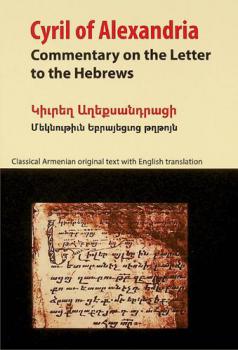

Commentary on the Twelve Prophets
Cyril, Bishop Of Alexandria (412-444), is best known as a protagonist in the christological controversy of the second quarter of the fifth century. Readers may be surprised therefore to find such polemic absent from this early work on the twelve minor prophets of the Old Testament. Another possibly unexpected feature of this Alexandrian commentary is its focus on historical exegesis, which reveals Cyril's serious interest in the fortunes of the people of Israel and Judah in the centuries preceding and following the exile. Unlike his predecessor Didymus the Blind, Cyril abjures an approach that dismisses the historicity of the text (as in his opening defense of Hosea's marriage), and he proceeds to other levels of interpretation, moral and spiritual, only after a preliminary examination of the historical. Indebted to the diverse approaches of Didymus, Jerome, and Theodore, Cyril appears in this work as a balanced commentator, eclectic in his attitude and tolerant of alternative views. Although he displays an occasional uncertainty in his grasp of historical and geographical details, as well as an inclination to verbosity, Cyril has conspicuously influenced the exegesis of his younger contemporary Theodoret of Cyrus, and has made a vital contribution to the development of biblical interpretation in the church.
eBook


Cyril of Alexandria
As a ruler of the church of Alexander and president of the Third Ecumenical Council of 431, Cyril was one of the most powerful men of the fifth century. Not only did he define the concept of christological orthodoxy for the next two centuries, but he is also often regarded as an unscrupulous cleric who was responsible for the murder of the female philosopher Hypatia and for the overthrow of the archbishop Nestorius. Cyril of Alexandria presents key selections of Cyril's writings in order to make his thought accessible to students. The writings are all freshly translated and an extended introduction outlines Cyril's life and times, his scholastic method, his christology, his ecclesiology, his eucharistic doctrine, his spirituality, and his influence on the Christian tradition.
'... Russsell's volume on Cyril of Alexandria is a fitting addition to The Early Church Fathers series ... All-in-all, a well-structured tool, full of sound information ... and translations which convey the quality of his work accurately and with sympathy.' - Wendy Meyer, Journal of Religious History 'A balanced and approachable introduction to the work of a man whose thought was central to the shaping of the theology and piety of Eastern Christianity.' - Studies in World Christianity
Norman Russell is a freelance lecturer and translator. He is the author, with Benedicta Ward, of The Lives of the Desert Fathers: The Historia Monachorum in Aegypto (1980).
eBook

Festal Letters 13-30
Twenty-nine in all, these letters cover all but three of Cyril's years as a bishop.The first twelve were published in 2009 (Fathers of the Church 118).The present volume completes the set.Festal letters were used in Alexandria primarily to announce the beginning of Lent and the date of Easter.
eBook