
Catalogue Search | MBRL


Are you sure you want to remove the book from the shelf?

{{itemTitle}}
18,262
result(s) for
"DONG Lu"
Sort by:

Public Mental Health Crisis during COVID-19 Pandemic, China
The 2019 novel coronavirus disease emerged in China in late 2019-early 2020 and spread rapidly. China has been implementing emergency psychological crisis interventions to reduce the negative psychosocial impact on public mental health, but challenges exist. Public mental health interventions should be formally integrated into public health preparedness and emergency response plans.
Journal Article
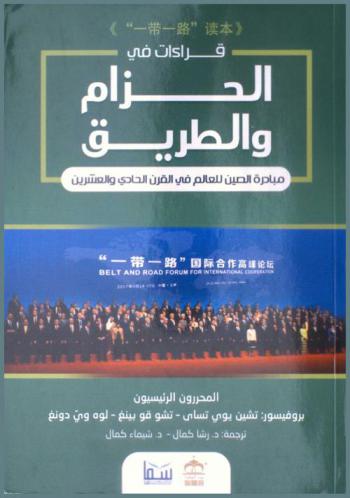
قراءات في الحزام والطريق : مبادرة الصين للعالم في القرن الحادي والعشرين
في العاشر من سبتمبر عام 2013، أعلن الرئيس الصيني شي جين بينغ خلال زيارته لآسيا الوسطى ومنطقة جنوب شرق آسيا، عن المبادرة الكبرى الحزام والطريق \"الحزام الاقتصادي لطريق الحرير وطريق الحرير البحري للقرن الحادي والعشرين\"، لتحظى المبادرة باهتمام كبير على الصعيد الدولي، حيث تعد سياسة استراتيجية دولية كبرى للصين، وقد وضعت بناء على التخطيط الشامل للمشهدين الدولي والمحلي، وتتسم المبادرة باهمية كبيرة، ومغزى بعيد المدى فيما يتعلق بإنشاء آلية اقتصادية ذات طبيعة منفتحة، وتشكيل نمط جديد للانفتاح نحو الخارج بكل الاتجاهات، وفي هذا الكتاب الذي أعده مجموعة من باحثو \"مركز الابتكار التعاوني لمبادرة الحزام والطريق بجامعة تشيجيانغ\"، ليشكفوا عن كل الأسرار المتعلقة بالمبادرة الصينية الكبرى التي قدمتها للعالم في قرنه الحادي والعشرين، وذلك عملا على تعميق معرفة القاريء \"بالحزام والطريق\"، والنشر على مستوى عالمي للمحتوى الثري والمغزى العميق لهذه المبادرة، ويركز أسلوب هذا الكتاب على الشرح والتحليل والمقارنة، فيتطرق إلى الاطر الاستراتيجية للبمادرة وتنافسية الدول الكبرى ومزايا مناطق الصين وربوعها و ثمار التعاون الدولي وغيرها بالتحليل الدقيق، انطلاقا من الموضوعات التي تهم كل مهتم في العالم بمستقبل الصين، وما ستقدمه للعالم.
BOOK

The Indian Ocean Sea Surface Temperature Warming Simulated by CMIP5 Models during the Twentieth Century
The Indian Ocean exhibits a robust basinwide sea surface temperature (SST) warming during the twentieth century that has affected the hydrological cycle, atmospheric circulation, and global climate change. The competing roles of greenhouse gases (GHGs) and anthropogenic aerosols (AAs) with regard to the Indian Ocean warming are investigated by using 17 models from phase 5 of the Coupled Model Intercomparison Project (CMIP5). The increasing GHGs are considered to be one reason for the warming. Here model evidence is provided that the emission of AAs has slowed down the warming rate. With AAs, the warming trend has been slowed down by 0.34 K century−1. However, the cooling effect is weakened when only the direct aerosol effect is considered. GHGs and AAs have competed with each other in forming the basinwide warming pattern as well as the equatorial east–west dipole warming pattern. Both the basinwide warming effect of GHGs and the cooling effect of AAs, mainly through indirect aerosol effect, are established through atmospheric processes via radiative and turbulent fluxes. The positive contributions of surface latent heat flux from atmosphere and surface longwave radiation due to GHGs forcing dominate the basinwide warming, while the reductions of surface shortwave radiation, surface longwave radiation, and latent heat flux from atmosphere associated with AAs induce the basinwide cooling. The positive Indian Ocean dipole warming pattern is seen in association with the surface easterly wind anomaly during 1870–2005 along the equator, which is produced by the increase of GHGs but weakened by AAs via direct aerosol effects.
Journal Article
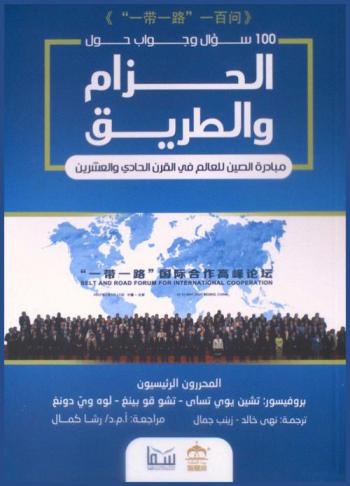
مائة سؤال وجواب حول الحزام والطريق : مبادرة الصين للعالم في القرن الحادي والعشرين
في العاشر من سبتمبر عام 2013، أعلن الرئيس الصيني شي جين بينغ خلال زيارته لآسيا الوسطى ومنطقة جنوب شرق آسيا، عن المبادرة الكبرى الحزام والطريق \"الحزام الاقتصادي لطريق الحرير وطريق الحرير البحري للقرن الحادي والعشرين\"، لتحظى المبادرة باهتمام كبير على الصعيد الدولي، حيث تعد سياسة استراتيجية دولية كبرى للصين، وقد وضعت بناء على التخطيط الشامل للمشهدين الدولي والمحلي، وتتسم المبادرة باهمية كبيرة، ومغزى بعيد المدى فيما يتعلق بإنشاء آلية اقتصادية ذات طبيعة منفتحة، وتشكيل نمط جديد للانفتاح نحو الخارج بكل الاتجاهات، وفي هذا الكتاب الذي أعده مجموعة من باحثو \"مركز الابتكار التعاوني لمبادرة الحزام والطريق بجامعة تشيجيانغ\"، ليشكفوا عن كل الأسرار المتعلقة بالمبادرة الصينية الكبرى التي قدمتها للعالم في قرنه الحادي والعشرين، وذلك عملا على تعميق معرفة القاريء \"بالحزام والطريق\"، والنشر على مستوى عالمي للمحتوى الثري والمغزى العميق لهذه المبادرة، ويعتمد أسلوب هذا الكتاب على السؤال والجواب، انطلاقا من الموضوعات التي تهم كل مهتم في العالم بمستقبل الصين، وما ستقدمه للعالم.
BOOK

BMSC-Derived Exosomal miR-29a Promotes Angiogenesis and Osteogenesis
Angiogenesis and osteogenesis are tightly coupled during bone modeling and remodeling processes. Here we reported that bone marrow mesenchymal stem cell (BMSC)-derived exosomal miR-29a promotes angiogenesis and osteogenesis in vitro and in vivo . BMSC-derived exosomes (BMSCs-Exos) can be taken up by human umbilical vein endothelial cells (HUVECs) and promote the proliferation, migration, and tube formation of HUVECs. MiRNA-29a level was high in BMSCs-Exos and can be transported into HUVECs to regulate angiogenesis. VASH1 was identified as a direct target of miR-29a, mediating the effects of BMSC-derived exosomal miR-29a on angiogenesis. More interestingly, miR29a-loaded exosomes from engineered BMSCs (miR-29a-loaded BMSCs-Exos) showed a robust ability of promoting angiogenesis and osteogenesis in vivo . Taken together, these findings suggest that BMSC-derived exosomal miR-29a regulates angiogenesis and osteogenesis, and miR-29a-loaded BMSCs-Exos may serve as a potential therapeutic target for osteoporosis.
Journal Article

Why Has the Relationship between Indian and Pacific Ocean Decadal Variability Changed in Recent Decades?
Both the Indian and Pacific Oceans exhibit prominent decadal time scale variations in sea surface temperature (SST), linked dynamically via atmospheric and oceanic processes. However, the relationship between SST in these two basins underwent a dramatic transformation beginning around 1985. Prior to that, SST variations associated with the Indian Ocean basin mode (IOB) and the interdecadal Pacific oscillation (IPO) were positively correlated, whereas afterward they were much less clearly synchronized. Evidence is presented from both observations and coupled state-of-the-art climate models that enhanced external forcing, particularly from increased anthropogenic greenhouse gases, was the principal cause of this changed relationship. Using coupled climate model experiments, it is shown that without external forcing, the evolution of the IOB would be strongly forced by variations in the IPO. However, with strong external forcing, the dynamical linkage between the IOB and the IPO weakens so that the negative phase IPO after 2000 is unable to force a negative phase IOB-induced cooling of the Indian Ocean. This changed relationship in the IOB and IPO led to unique SST patterns in the Indo-Pacific region after 2000, which favored exceptionally strong easterly trade winds over the tropical Pacific Ocean and a pronounced global warming hiatus in the first decade of the twenty-first century.
Journal Article

Cellular and molecular features of acute myeloid leukemia investigation based on single-cell RNA sequencing
Acute myeloid leukemia (AML) is defined as a highly heterogeneous clonal malignant disease of immature myeloid hematopoietic stem cells. The objective of this study was to identify the principal cell clusters in AML and their associated hub genes through the analysis of single-cell sequencing data. We present a comprehensive and valuable landscape of 58,717 cells and 27,311 genes derived from bone marrow samples obtained from 5 patients with AML and 3 controls. Then, 9 cell subclusters were identified. The ratios of common myeloid progenitor (CMP), Myelocyte, and Pro-Myelocyte were found to be significantly different between AML and control, as these cells were utilized as differential cells in the present study. A total of 26 differentially expressed genes were identified following the merging and de-weighting of the data. 4 hub genes, ELANE, LTF, S100A12, and SLPI, were selected for further analysis. Homogeneity analysis was conducted on the Myelocyte and Pro-Myelocyte cells, which were subsequently re-clustered into 11 and 8 cell clusters, respectively. In conclusion, we leveraged high-throughput single-cell transcriptomics to parse the cell landscape in the bone marrow from AML patients, 2 key cell types, myelocyte, and pro-myelocyte and related hub genes, ELANE, LTF, S100A12, SLPI were found, and biological functions, regulatory relationships, and developmental status of these key cells, as well as the biological pathways, the molecular regulatory mechanisms, and the related drugs, involved in the hub genes were demonstrated. Our data and findings provide novel insight into AML pathological development and can be inspired in the treatment of AML.
Journal Article

ACSL4 is a predictive biomarker of sorafenib sensitivity in hepatocellular carcinoma
Sorafenib is the first-line treatment of advanced hepatocellular carcinoma (HCC). However, there is a lack of validated biomarkers to predict sorafenib sensitivity. In this study we investigated the role of ACSL4, a positive-activating enzyme of ferroptosis, in sorafenib-induced cell death and HCC patient outcome. We showed that ACSL4 protein expression was negatively associated with IC
50
values of sorafenib in a panel of HCC cell lines (
R
= −0.952,
P
< 0.001). Knockdown of ACSL4 expression by specific siRNA/sgRNA significantly attenuated sorafenib-induced lipid peroxidation and ferroptosis in Huh7 cells, and also rescued sorafenib-induced inhibition of xenograft tumor growth in vivo. We selected 29 HCC patients with surgery as primary treatment and sorafenib as postoperative adjunct therapy from a hospital-based cohort. A high proportion (66.7%) of HCC patients who had complete or partial responses to sorafenib treatment (according to the revised RECIST guideline) had higher ACSL4 expression in the pretreated HCC tissues, compared with those who had stable or progressed tumor growth (23.5%,
P
= 0.029). Since ACSL4 expression was independent of sorafenib treatment, it could serve as a useful predictive biomarker. Taken together, this study demonstrates that ACSL4 is essential for sorafenib-induced ferroptosis and useful for predicting sorafenib sensitivity in HCC. This study may have important translational impacts in precise treatment of HCC.
Journal Article