
Catalogue Search | MBRL


Are you sure you want to remove the book from the shelf?

{{itemTitle}}
932
result(s) for
"Dang, Yi"
Sort by:
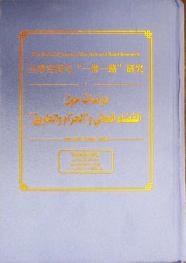
دراسات حول الفضاء العالمي و\الحزام والطريق\ : (مجلد البيئة الإيكولوجية)
إن معظم الدول والمناطق على طول «الحزام والطريق» هي دول نامية، وتعاني جميعا من مشكلات في البيئة الإيكولوجية أكثر أو أقل، كما إنها تواجه تحديات ضخمة في التوازن بين التنمية وحماية البيئة. وتواجه هذه البلدان النامية فرصا غير مسبوقة أتاحها المفهوم الاستراتيجي لمبادرة «الحزام والطريق»، كما أن كيفية التعامل مع التحدي المتمثل في حماية البيئة الإيكولوجية أثناء بناء وتطوير «الحزام والطريق» هي المهمة الأساسية التي تواجهها البلدان النامية بما فيها الصين. ويناقش هذا الكتاب ويلخص الخلفية البيئية الإيكولوجية للبلدان/ المناطق المشاركة في مبادرة \"الحزام والطريق\" والمشكلات الرئيسية في هذا الجانب.
Book

A circRNA–miRNA–mRNA network identification for exploring underlying pathogenesis and therapy strategy of hepatocellular carcinoma
Background
Circular RNAs (circRNAs) have received increasing attention in human tumor research. However, there are still a large number of unknown circRNAs that need to be deciphered. The aim of this study is to unearth novel circRNAs as well as their action mechanisms in hepatocellular carcinoma (HCC).
Methods
A combinative strategy of big data mining, reverse transcription-quantitative polymerase chain reaction (RT-qPCR) and computational biology was employed to dig HCC-related circRNAs and to explore their potential action mechanisms. A connectivity map (CMap) analysis was conducted to identify potential therapeutic agents for HCC.
Results
Six differently expressed circRNAs were obtained from three Gene Expression Omnibus microarray datasets (GSE78520, GSE94508 and GSE97332) using the RobustRankAggreg method. Following the RT-qPCR corroboration, three circRNAs (hsa_circRNA_102166, hsa_circRNA_100291 and hsa_circRNA_104515) were selected for further analysis. miRNA response elements of the three circRNAs were predicted. Five circRNA–miRNA interactions including two circRNAs (hsa_circRNA_104515 and hsa_circRNA_100291) and five miRNAs (hsa-miR-1303, hsa-miR-142-5p, hsa-miR-877-5p, hsa-miR-583 and hsa-miR-1276) were identified. Then, 1424 target genes of the above five miRNAs and 3278 differently expressed genes (DEGs) on HCC were collected. By intersecting the miRNA target genes and the DEGs, we acquired 172 overlapped genes. A protein–protein interaction network based on the 172 genes was established, with seven hubgenes (JUN, MYCN, AR, ESR1, FOXO1, IGF1 and CD34) determined from the network. The Gene Oncology, Kyoto Encyclopedia of Genes and Genomes and Reactome enrichment analyses revealed that the seven hubgenes were linked with some cancer-related biological functions and pathways. Additionally, three bioactive chemicals (decitabine, BW-B70C and gefitinib) based on the seven hubgenes were identified as therapeutic options for HCC by the CMap analysis.
Conclusions
Our study provides a novel insight into the pathogenesis and therapy of HCC from the circRNA–miRNA–mRNA network view.
Journal Article

بيان الدورة العامة الحادية عشرة للجنة المركزية المنبثقة عن المؤتمر الوطني الثامن للحزب الشيوعي الصيني : (أقر في 12 أغسطس-آب-عام 1966)
عقدت الدورة العامة الحادية عشرة للجنة المركزية المنبثقة عن المؤتمر الوطني الثامن للحزب الشيوعي الصيني في بكين من 1 الى 12 أغسطس (آب) عام 1966، وقد ترأس الدورة العامة الحادية عشرة الرفيق ماو تسي تونغ، وحضرها أعضاء اللجنة المركزية وأعضاؤها المرشحون : وحضرها كذلك الرفاق من مختلف المكاتب الاقليمية للجنة المركزية ومن لجان الحزب في المقاطعات والبلديات والمناطق ذات الحكم الذاتي وأعضاء فرقة الثورة الثقافية للجنة المركزية والرفاق في الدوائر المعنية للجنة المركزية وممثلو المدرسين والطلاب الثوريين في الجامعات والمعاهد العليا بالعاصمة . وقد أقرت الدورة العامة الحادية عشرة بعد المناقشة « قرار اللجنة المركزية للحزب الشيوعي الصيني حول الثورة الثقافية البروليتارية الكبرى » . كما صادقت الدورة العامة بعد النقاش على القرارات السياسية المهمة والاجراءات المهمة فيما يختص بالمسائل الداخلية والخارجية التي أجازها المكتب السياسي للجنة المركزية منذ الدورة العامة العاشرة للجنة المركزية المنبثقة عن المؤتمر الوطني الثامن التي عقدت في سبتمبر (أيلول) عام 1962.
Book

Ten-Day Vonoprazan-Amoxicillin Dual Therapy as a First-Line Treatment of Helicobacter pylori Infection Compared With Bismuth-Containing Quadruple Therapy
No study has investigated the efficacy and safety of vonoprazan-amoxicillin dual therapy compared with bismuth quadruple therapy (B-quadruple). This study aimed to evaluate the efficacy and safety of 10-day vonoprazan-amoxicillin dual therapy as a first-line treatment of Helicobacter pylori infection compared with B-quadruple and to explore the optimal dosage of amoxicillin in the dual therapy.
A total of 375 treatment-naive, H. pylori -infected subjects were randomly assigned in a 1:1:1 ratio into 3 regimen groups including VHA-dual (vonoprazan 20 mg twice/day + amoxicillin 750 mg 4 times/day), VA-dual (vonoprazan 20 mg + amoxicillin 1,000 mg twice/day), and B-quadruple (esomeprazole 20 mg + bismuth 200 mg + amoxicillin 1,000 mg + clarithromycin 500 mg twice/day). Eradication rates, adverse events (AEs), and compliance were compared between 3 groups.
The eradication rates of B-quadruple, VHA-dual, and VA-dual were 90.9%, 93.4%, and 85.1%, respectively, by per-protocol analysis; 89.4%, 92.7%, and 84.4%, respectively, by modified intention-to-treat analysis; 88.0%, 91.2%, and 82.4%, respectively, by intention-to-treat analysis. The efficacy of the VHA-dual group was not inferior to the B-quadruple group ( P < 0.001), but VA-dual did not reach a noninferiority margin of -10%. The AEs rates of the B-quadruple group were significantly higher than those of the VHA-dual ( P = 0.012) and VA-dual ( P = 0.001) groups. There was no significant difference in medication compliance among 3 treatment groups ( P = 0.995).
The 10-day VHA-dual therapy provided satisfactory eradication rates of >90%, lower AEs rates, and similar adherence compared with B-quadruple therapy as a first-line therapy for H. pylori infection. However, the efficacy of VA-dual therapy was not acceptable.
Journal Article


أفكار حول تعميق الإصلاح
يناقش الكتاب سلسلة من الإيضاحات الهامة قدمها الرئيس الصيني والأمين العام للجنة المركزية للحزب الشيوعي الصيني، شي جين بينغ، وتدور حول أفكار الإصلاح وتوسيع الانفتاح على نحو شامل في الصين. يضم الكتاب أكثر من 70 وثيقة هامة على صورة كلمات شي جين بينغ وخطاباته وتعليقاته وتوجيهاته وينقسم الكتاب إلى 12 موضوعا خاصا تتضمن 274 قطعة من مقتطفات الأقوال، نشر بعضها لأول مرة.
Book

LPCAT1 overexpression promotes the progression of hepatocellular carcinoma
Background
Hepatocellular carcinoma (HCC) remains one of the most common malignant neoplasms. Lysophosphatidylcholine acyltransferase 1 (
LPCAT1
) plays a key role in the lipid remodelling and is correlated with various neoplasms. Nonetheless, the biological functions and molecular mechanisms of
LPCAT1
underlying HCC remain obscure.
Methods
In the present study, we investigated the role of
LPCAT1
in the progression of HCC. In-house RT-qPCR, tissue microarrays, and immunohistochemistry were performed to detect the expression levels and the clinical value of
LPCAT1
in HCC. External datasets were downloaded to confirm the results. Proliferation, migration, invasiveness, cell cycle, and apoptosis assays were conducted to reveal the biological effects
LPCAT1
has on SMMC-7721 and Huh7 cells. HCC differentially expressed genes and
LPCAT1
co-expressed genes were identified to explore the molecular mechanisms underlying HCC progression.
Results
LPCAT1
showed upregulated expression in 3715 HCC specimens as opposed to 3105 non-tumour specimens. Additionally,
LPCAT1
might be an independent prognostic factor for HCC.
LPCAT1
-knockout hampered cellular proliferation, migration, and metastasis in SMMC-7721 and Huh7 cells. More importantly, the cell cycle and chemical carcinogenesis were the two most enriched signalling pathways.
Conclusions
The present study demonstrated that increased
LPCAT1
correlated with poor prognosis in HCC patients and fuelled HCC progression by promoting cellular growth, migration, and metastasis.
Journal Article

DNA topoisomerase 1 and 2A function as oncogenes in liver cancer and may be direct targets of nitidine chloride
The aim of the present study was to determine the role of topoisomerase 1 (TOP1) and topoisomerase 2A (TOP2A) in liver cancer (LC), and to investigate the inhibitory effect of nitidine chloride (NC) on these two topoisomerases. Immunohistochemistry (IHC) staining and microarray or RNA sequencing data mining showed markedly higher expression of TOP1 and TOP2A at the protein and mRNA levels in LC tissues compared with that in control non-tumor tissues. The prognostic values of TOP1 and TOP2A expression were also estimated based on data from The Cancer Genome Atlas. The elevated expression levels of TOP1 and TOP2A were closely associated with poorer overall survival and disease-free survival rates. When patients with LC were divided into high- and low-risk groups according to their prognostic index, TOP1 and TOP2A were highly expressed in the high-risk group. Bioinformatics analyses conducted on the co-expressed genes of TOP1 and TOP2A revealed that the topoisomerases were involved in several key cancer-related pathways, including the 'p53 pathway', 'pathway in cancer' and 'apoptosis signaling pathway'. Reverse transcription-quantitative polymerase chain reaction and IHC performed on triplicate tumor tissue samples from LC xenografts in control or NC-treated nude mice showed that NC treatment markedly reduced the protein and mRNA expression of TOP1 and TOP2A in LC tissues. Molecular docking studies further confirmed the direct binding of NC to TOP1 and TOP2A. In conclusion, the present findings indicate that TOP1 and TOP2A are oncogenes in LC and could serve as potential biomarkers for the prediction of the prognosis of patients with LC and for identification of high-risk cases, thereby optimizing individual treatment management. More importantly, the findings support TOP1 and TOP2A as potential drug targets of NC for the treatment of LC.
Journal Article

Organophosphate Esters (OPEs) Flame Retardants in Water: A Review of Photocatalysis, Adsorption, and Biological Degradation
As a substitute for banned brominated flame retardants (BFRs), the use of organophosphate esters (OPEs) increased year by year with the increase in industrial production and living demand. It was inevitable that OPEs would be discharged into wastewater in excess, which posed a great threat to the health of human beings and aquatic organisms. In the past few decades, people used various methods to remove refractory OPEs. This paper reviewed the photocatalysis method, the adsorption method with wide applicability, and the biological method mainly relying on enzymolysis and hydrolysis to degrade OPEs in water. All three of these methods had the advantages of high removal efficiency and environmental protection for various organic pollutants. The degradation efficiency of OPEs, degradation mechanisms, and conversion products of OPEs by three methods were discussed and summarized. Finally, the development prospects and challenges of OPEs’ degradation technology were discussed.
Journal Article