
Catalogue Search | MBRL


Are you sure you want to remove the book from the shelf?

{{itemTitle}}
44
result(s) for
"David, Catherine author"
Sort by:


Epistolary Entanglements in Film, Media and the Visual Arts
This collection departs from the observation that online forms of communication—the email, blog, text message, tweet—are actually haunted by old epistolary forms: the letter and the diary. By examining the omnipresence of writing across a variety of media, the collection adds the category of Epistolary Screens to genres of self-expression, both literary (letters, diaries, auto-biographies) and screenic (romance dramas, intercultural cinema, essay films, artists’ videos and online media). The category Epistolary encapsulates an increasingly paradoxical relation between writing and the self: first, it describes selves that are written in graphic detail via letters, diaries, blogs, texts, emails and tweets; second, it acknowledges that absence complicates communication, bringing people together in an entangled rather than ordered way. The collection concerns itself with the changing visual/textual texture of screen media and examines what is at stake for our understanding of self-expression when it takes Epistolary forms.
eBook

Cryptocurrencies in public and private law
This book examines how cryptocurrencies based on blockchain technologies fit into existing general law categories of public and private law. The book takes the common law systems of the United Kingdom as the centre of its study but extends beyond the UK to show how cryptocurrencies would be accommodated in some Western European and East Asian legal systems outside the common law tradition.0By investigating traditional conceptions of money in public law and private law the work examines the difficulties of fitting cryptocurrencies within those approaches and models. Fundamental questions regarding issues of ownership, transfer, conflict of laws, and taxation are addressed with a view to equipping the reader with the tools to answer common transactional questions about cryptocurrencies. The international contributor team uses the common law systems of the United Kingdom as a basis for the analysis, but also looks comparatively to other systems across the wider common law and civil law world to provide detailed examination of the legal problems encountered.
Book

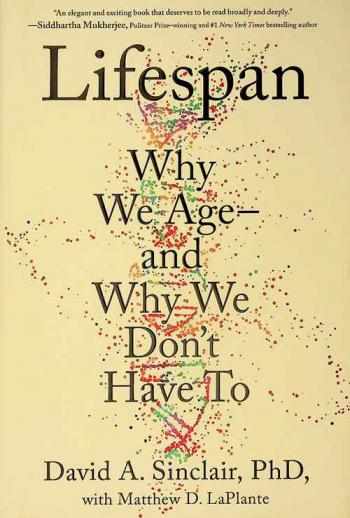
Lifespan : why we age--and why we don't have to
\"From an acclaimed Harvard professor and one of Time's most influential people, this paradigm-shifting book shows how almost everything we think we know about aging is wrong, offers a front-row seat to the amazing global effort to slow, stop, and reverse aging, and calls readers to consider a future where aging can be treated. For decades, experts have believed that we are at the mercy of our genes, and that natural damage to our genes--the kind that inevitably happens as we get older--makes us become sick and grow old. But what if everything you think you know about aging is wrong? What if aging is a disease--and that disease is treatable? In Lifespan, one of the world's foremost experts on aging and genetics reveals a groundbreaking new theory that will forever change the way we think about why we age and what we can do about it. Aging isn't immutable; we can have far more control over it than we realize. This eye-opening and provocative work takes us to the frontlines of research that is pushing the boundaries on our perceived scientific limitations, revealing incredible breakthroughs--many from Dr. David Sinclair's own lab--that demonstrate how we can slow down, or even reverse, the genetic clock. The key is activating newly discovered vitality genes--the decedents of an ancient survival circuit that is both the cause of aging and the key to reversing it. Dr. Sinclair shares the emerging technologies and simple lifestyle changes--such as intermittent fasting, cold exposure, and exercising with the right intensity--that have been shown to help lead to longer lives. Lifespan provides a roadmap for taking charge of our own health destiny and a bold new vision for the future when humankind is able to live to be 100 years young\"-- Provided by publisher.

Implicit and Explicit Knowledge in Second Language Learning, Testing and Teaching
The implicit/explicit distinction is central to our understanding of the nature of L2 acquisition. This book begins with an account of how this distinction applies to L2 learning, knowledge and instruction. It then reports a series of studies describing the development of a battery of tests providing relatively discrete measurements of L2 explicit/ implicit knowledge. These tests were then utilized to examine a number of key issues in SLA - the learning difficulty of different grammatical structures, the role of L2 implicit/ explicit knowledge in language proficiency, the relationship between.
eBook


Catalysis by gold
Gold has traditionally been regarded as inactive as a catalytic metal. However, the advent of nanoparticulate gold on high surface area oxide supports has demonstrated its high catalytic activity in many chemical reactions. Gold is active as a heterogeneous catalyst in both gas and liquid phases, and complexes catalyse reactions homogeneously in solution. Many of the reactions being studied will lead to new application areas for catalysis by gold in pollution control, chemical processing, sensors and fuel cell technology. This book describes the properties of gold, the methods for preparing gold catalysts and ways to characterise and use them effectively in reactions. The reaction mechanisms and reasons for the high activities are discussed and the applications for gold catalysis considered.
eBook
Experimental Research Methods in Orthopedics and Trauma
Covering all state-of-the-art experimental research methods in orthopedic surgery and trauma
From bioinformatics to nanotechnology, advances in basic research ultimately drive advances in clinical care. This book provides a comprehensive summary of all current research methodologies for translational and pre-clinical studies in biomechanics and orthopedic trauma surgery. With this \"roadmap\" at hand, specialists and trainees will have the tools to conduct high-quality experimental research in any area of musculoskeletal science, with a solid understanding of how the findings can be applied in patient care.
Special Features:
* Utilizes the principles and methodology of modern, evidence-based medicine in pre-clinical musculoskeletal research
* Offers a comprehensive analysis of in vivo models for studying different components of the musculoskeletal system
* Demonstrates how principles of structural, functional, and numerical biomechanics can be utilized in well-defined experimental research studies – spanning topics from fracture fixation to gait analysis to bone remodeling
* Covers the role of new macroscopic CT and ultrasound imaging techniques for assessing bone and cartilage function
* Explores cutting-edge developments in cell culture research, molecular testing, and tissue engineering
* Provides practical advice, a glossary of key terminology, and hundreds of illustrations to familiarize clinicians with every aspect of designing and interpreting an effective research study
With 54 state-of-the-art chapters by orthopedic surgeons, musculoskeletal physicians, biologists, engineers, physicists, and mathematicians, Experimental Research Methods in Orthopedics and Trauma is the authoritative reference on the topic. It is essential for clinicians, basic researchers, and orthopedic surgical trainees who need to understand experimental research methodology, apply its findings, and participate fully in research activities.
eBook