
Catalogue Search | MBRL


Are you sure you want to remove the book from the shelf?

{{itemTitle}}
5,020
result(s) for
"David Roman"
Sort by:

Liberalism and democracy in Myanmar
Historic Myanmar elections in November 2015 paved the way for an NLD government led by Aung San Suu Kyi to take office in March 2016, and saw the country deepen its graduated transition away from authoritarian rule. Nevertheless, military forces that for decades dominated national politics remain privileged in a constitutional framework designed to deliver 'discipline-flourishing democracy'. In August 2017, the military intensified its campaign of ethnic cleansing of Myanmar's Rohingya Muslim minority, and more than 750,000 refugees fled to neighbouring Bangladesh. One critical question that now confronts the fifty million people of this Southeast Asian nation is whether their push for greater democracy is strong enough to prevail over the resistance of a powerful military machine and swelling undercurrents of intolerance. What are the prospects for liberal democracy in Myanmar?0This book addresses this question by examining historical conditions, constitutionalism, popular support for democracy, major political actors, group relations and tolerance, and transitional justice. To probe the meaning and purchase of key concepts it presents a rich array of evidence, including eighty-eight in-depth interviews and three waves of surveys and survey experiments conducted by the authors between 2014 and 2018, all of which are triangulated with constitutional and legal texts and reports issued locally and globally. The analysis culminates in the concept of limited liberalism, which reflects an at times puzzling blend of liberal and illiberal attitudes. The book concludes that a weakening of liberal commitments among politicians and citizens alike, allied with spreading limited liberal attitudes, casts doubt on the prospects for liberal democracy in Myanmar.
Book

Generative Artificial Intelligence for Synthetic Spectral Data Augmentation in Sensor-Based Plastic Recycling
The reliance on deep learning models for sensor-based material classification amplifies the demand for labeled training data. However, acquiring large-scale, annotated spectral data for applications such as near-infrared (NIR) reflectance spectroscopy in plastic sorting remains a significant challenge due to high acquisition costs and environmental variability. This paper investigates the potential of large language models (LLMs) in synthetic spectral data generation. Specifically, it examines whether LLMs have acquired sufficient implicit knowledge to assist in generating spectral data and introduce meaningful variations that enhance model performance when used for data augmentation. Classification accuracy is reported exclusively as a proxy for structural plausibility of the augmented spectra; maximizing augmentation performance itself is not the study’s goal. From as little as one empirical mean spectrum per class, LLM-guided simulation produced data that enabled up to 86% accuracy, evidence that the generated variation preserves class-distinguishing information. While the approach performs best for spectral distinct polymers, overlapping classes remain challenging. Additionally, the transfer of optimized augmentation parameters to unseen classes indicates potential for generalization across material types. While plastic sorting serves as a case study, the methodology may be applicable to other domains such as agriculture or food quality assessment, where spectral data are limited. The study outlines a novel path toward scalable, AI-supported data augmentation in spectroscopy-based classification systems.
Journal Article


Dynamic pricing of perishable food as a sustainable business model
PurposeThe purpose of this paper is to (1) investigate the effect of freshness on consumers' willingness to pay, (2) derive static and dynamic pricing strategies and (3) compare the effect of these pricing strategies on a retailer's revenue and food waste. This investigation helps to reveal the potentials of dynamic pricing strategies for building more sustainable business models.Design/methodology/approachThe authors conduct an online experiment to measure consumers' willingness to pay for fresh and three-days’ old strawberries. The impact of freshness on willingness to pay is analysed using univariate tests and regression analysis. Pricing strategies are compared using a Monte Carlo simulation.FindingsThe results of this study show that freshness largely determines consumers' willingness to pay and price sensitivity. This renders dynamic pricing a promising strategy from an economic point of view. The results of the simulation study show that food waste can be reduced by up to 53.6% with a dynamic pricing instead of a static pricing strategy in the case that there are as many consumers as strawberry packages in the inventory. Revenue can be increased by up to 10% compared to a static pricing strategy based on fresh strawberries.Practical implicationsThis study suggests that food retailers can improve their revenue when switching from static to dynamic pricing. Furthermore, in most cases, food retailers can reduce food waste with a dynamic instead of a static-pricing strategy, which might help to improve their image through a more sustainable business model and attract additional consumers.Originality/valueThis study is the first to analyse the possibility of using food freshness to design a dynamic pricing strategy and to analyse the impact of such a pricing strategy on both, a retailer's revenue and a retailer's food waste.
Journal Article

Detection of Plastic Granules and Their Mixtures
Chemically pure plastic granulate is used as the starting material in the production of plastic parts. Extrusion machines rely on purity, otherwise resources are lost, and waste is produced. To avoid losses, the machines need to analyze the raw material. Spectroscopy in the visible and near-infrared range and machine learning can be used as analyzers. We present an approach using two spectrometers with a spectral range of 400–1700 nm and a fusion model comprising classification, regression, and validation to detect 25 materials and proportions of their binary mixtures. one dimensional convolutional neural network is used for classification and partial least squares regression for the estimation of proportions. The classification is validated by reconstructing the sample spectrum using the component spectra in linear least squares fitting. To save time and effort, the fusion model is trained on semi-empirical spectral data. The component spectra are acquired empirically and the binary mixture spectra are computed as linear combinations. The fusion model achieves very a high accuracy on visible and near-infrared spectral data. Even in a smaller spectral range from 400–1100 nm, the accuracy is high. The visible and near-infrared spectroscopy and the presented fusion model can be used as a concept for building an analyzer. Inexpensive silicon sensor-based spectrometers can be used.
Journal Article
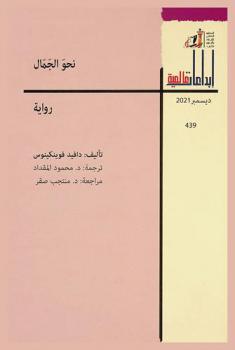
نحو الجمال : رواية
تطرح الرواية تساؤلها حول نسبية الجمال، وما إذ كان ذاتيا أو موضوعيا، كأن اكتشاف الجمال لا يحتاج إلى واسطة لأنه يكشف ذاته ولا يمكن حجبه، ولكن يتجلى الاختلاف في نسبية تلقي هذا الجمال، ولعل هذا الاختلاف ظل موضع نظريات فلسفية عدة في القرون الماضية، لكن الرواية تغوص أكثر في تناول تأثير الجمال على الرائي، تجسد هذه الرواية المأزق الوجودي الداخلي للفنان عبر شخصية \"كاميليا\"، والمنشغل بالفن عبر البطل \"أنطوان\"، الذي تتأجج في داخله الرغبة بالصمت والعزلة والانسلاخ تماما عن المجتمع لأنه يراه قبيحا، ويعبر هذا الموقف عن عالمه الداخلي المحتشد بآلام شتى أدت به إلى فقدان التوازن، والنكوص إلى الداخل، وهذا لم يحدث بشكل مفاجئ أو بلا أسباب جوهرية، حيث تكشف الأحداث عن مأزق أنطوان العائلي في تخلي زوجته لويزا عنه، وشكه في وقوعها بغرام رجل آخر، هناك أيضا قصته مع \"كاميليا\" الفنانة الشابة التي ترسم نفسها بموهبة كبيرة وأصالة، تتقاطع مصائرهما ويتكشف مدى الهشاشة الوجودية التي تتحكم بهما، لكن كاميليا تنتهي حياتها بشكل تراجيدي، ويتوهم أنطوان أنه من تسبب في هذه النهاية لتلميذته، ثم يتضح عبث هذا الظن في الجزء الرابع مع اكتشاف عشرات اللوحات الرائعة الموجودة داخل صندوق في غرفتها ببيت أسرتها.
BOOK

Data-Efficient Polymer Classification Using Spectra Simulation and Bayesian Optimization
Plastic recycling represents an essential element of strategies aimed at lowering global carbon emissions while supporting a circular plastics economy. However, the effectiveness of current plastic sorting systems remains limited by data scarcity, spectral variability, and the complexity of real world waste streams. This study introduces a CNN-based polymer classification framework that integrates physics-informed spectral simulation, adaptive data augmentation, and Bayesian hyperparameter optimization to enable robust classification under data limited conditions. Our framework combines near-infrared (NIR) spectral data from technical scale measurements with synthetically generated spectra. With only 100 measured spectra per polymer, the proposed framework achieves average balanced accuracies of 0.9739 in multi-target polymer classification tasks. By using technical scale spectral data, this study bridges the gap between laboratory model development and real sorting conditions.
Journal Article

The displaced : refugee writers on refugee lives
\"Brings together writers originally from Mexico, Bosnia, Iran, Afghanistan, Soviet Ukraine, Hungary, Chile, Ethiopia, and others to make their stories heard ... Their 17 contributions are as diverse as their own lives have been, and yet hold just as many themes in common\"--Amazon.com.
BOOK
OpenVNT: An Open Platform for VIS-NIR Technology
Spectrometers measure diffuse reflectance and create a “molecular fingerprint” of the material under investigation. Ruggedized, small scale devices for “in-field” use cases exist. Such devices might for example be used by companies in the food supply chain for inward inspection of goods. However, their application for the industrial Internet of Things workflows or scientific research is limited due to their proprietary nature. We propose an open platform for visible and near-infrared technology (OpenVNT), an open platform for capturing, transmitting, and analysing spectral measurements. It is built for use in the field, as it is battery-powered and transmits data wireless. To achieve high accuracy, the OpenVNT instrument contains two spectrometers covering a wavelength range of 400–1700 nm. We conducted a study on white grapes to compare the performance of the OpenVNT instrument against the Felix Instruments F750, an established commercial instrument. Using a refractometer as ground truth, we built and validated models to estimate the Brix value. As a quality measure, we used coefficient of determination of the cross-validation (R2CV) between the instrument estimation and ground truth. With 0.94 for the OpenVNT and 0.97 for the F750, a comparable R2CV was achieved for both instruments. OpenVNT matches the performance of commercially available instruments at one tenth of the price. We provide an open bill of materials, building instructions, firmware, and analysis software to enable research and industrial IOT solutions without the limitations of walled garden platforms.
Journal Article