
Catalogue Search | MBRL


Are you sure you want to remove the book from the shelf?

{{itemTitle}}
4,820
result(s) for
"Davidson, Scott"
Sort by:


On the Dynamical Regimes of Pattern-Accelerated Electroconvection
Recent research has established that electroconvection can enhance ion transport at polarized surfaces such as membranes and electrodes where it would otherwise be limited by diffusion. The onset of such overlimiting transport can be influenced by the surface topology of the ion selective membranes as well as inhomogeneities in their electrochemical properties. However, there is little knowledge regarding the mechanisms through which these surface variations promote transport. We use high-resolution direct numerical simulations to develop a comprehensive analysis of electroconvective flows generated by geometric patterns of impermeable stripes and investigate their potential to regularize electrokinetic instabilities. Counterintuitively, we find that reducing the permeable area of an ion exchange membrane, with appropriate patterning, increases the overall ion transport rate by up to 80%. In addition, we present analysis of nonpatterned membranes and find a novel regime of electroconvection where a multivalued current is possible due to the coexistence of multiple convective states.
Journal Article


The Potential of Peatlands as Nature-Based Climate Solutions
Purpose of Review
Despite covering only 3% of the land surface, peatlands represent the largest terrestrial organic carbon stock on the planet and continue to act as a carbon sink. Managing ecosystems to reduce greenhouse gas (GHG) emissions and protect carbon stocks provide nature-based climate solutions that can play an important role in emission reduction strategies, particularly over the next decade. This review provides an overview of peatland management pathways that can contribute to natural climate solutions and compiles regional and global estimates for the size of potential GHG emission reductions.
Recent Findings
Degraded peatlands may account for 5% of current anthropogenic GHG emissions and therefore reducing emissions through rewetting and restoration offer substantial emission reductions. However, as a majority of peatland remains intact, particularly in boreal and subarctic regions, protection from future development is also an important peatland management pathway. Literature compilation indicates a global potential for peatland nature–based climate solutions of 1.1 to 2.6 Gt CO
2
e year
−1
in 2030.
Summary
Peatland management can play an important role in GHG emission reductions while also providing many additional co-benefits such as biodiversity protection, reduced land subsidence, and fire-severity mitigation. Yet, climate warming will hinder the ability of peatland ecosystems to continue to act as carbon sinks indicating the importance of reducing future warming through rapid decarbonization of the economy to protect these globally significant carbon stocks.
Journal Article
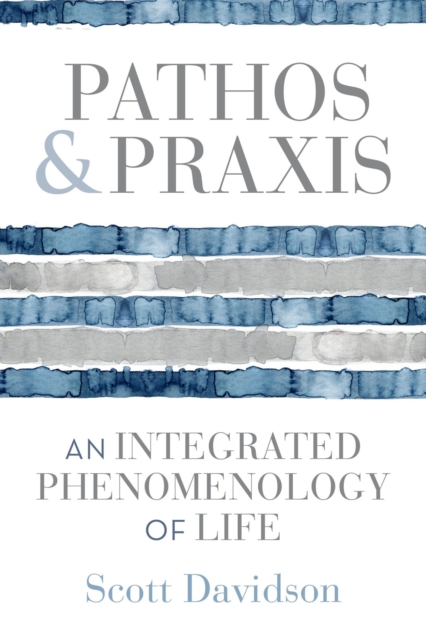
Pathos and Praxis
Pathos and Praxis presents a new and original
framework for an integrated phenomenology of life. It provides
the first comparative study of two influential French
philosophers, Paul Ricoeur and Michel Henry, and shows that
their debates over the interpretation of Sigmund Freud and Karl
Marx signal two rival approaches to the phenomenology of
life.
Author Scott Davidson demonstrates that while Henry reveals
the phenomenological meaning of life through an inward turn to
a pure subjective feeling of being alive, Ricoeur anchors its
significance in the reciprocal interaction between the self and
the world. But these two alternatives are not necessarily
opposed.
Pathos and Praxis proposes an integrated phenomenology
of life to which both Henry and Ricoeur make an important
contribution. To be a self is to suffer the pathos of \"having a
life\" but also to be capable of engaging in the praxis of
\"leading a life.\" By thinking the pathos and praxis of life
together, the integrated approach preserves human agency
against deterministic conceptions of life and at the same time
avoids the meritocratic hubris that depicts one's life solely
as the result of one's own doing. This integration of having
and leading a life reframes our thinking about human
capabilities and vulnerabilities in a way that has important
implications for biopolitics and the ethics of life.
eBook

The essential carbon service provided by northern peatlands
Northern peatlands have cooled the global climate by accumulating large quantities of soil carbon (C) over thousands of years. Maintaining the C sink function of these peatlands and their immense long-term soil C stores is critical for achieving net-zero global carbon dioxide (CO₂) emissions by 2050 to mitigate climate warming. One-quarter of the world’s northern peatlands are in Canada, with these mostly intact ecosystems providing a global C service that is increasingly recognized as a critical part of nature-based solutions to combat climate change. However, land-use change and other disturbances threaten these globally important stores of “irrecoverable C” (that is, soil C lost to disturbance that will take centuries to recover). Inadequate policy safeguards to avoid conversion and degradation, and the limited quantification and reporting of peatland greenhouse-gas emissions and removals, increase the vulnerability of these peatlands. Targeted policies from local to global scales will be needed for improved decision making and incentivizing long-term C management of northern peatlands.
Journal Article

Disturbances in North American boreal forest and Arctic tundra: impacts, interactions, and responses
Ecosystems in the North American Arctic-Boreal Zone (ABZ) experience a diverse set of disturbances associated with wildfire, permafrost dynamics, geomorphic processes, insect outbreaks and pathogens, extreme weather events, and human activity. Climate warming in the ABZ is occurring at over twice the rate of the global average, and as a result the extent, frequency, and severity of these disturbances are increasing rapidly. Disturbances in the ABZ span a wide gradient of spatiotemporal scales and have varying impacts on ecosystem properties and function. However, many ABZ disturbances are relatively understudied and have different sensitivities to climate and trajectories of recovery, resulting in considerable uncertainty in the impacts of climate warming and human land use on ABZ vegetation dynamics and in the interactions between disturbance types. Here we review the current knowledge of ABZ disturbances and their precursors, ecosystem impacts, temporal frequencies, spatial extents, and severity. We also summarize current knowledge of interactions and feedbacks among ABZ disturbances and characterize typical trajectories of vegetation loss and recovery in response to ecosystem disturbance using satellite time-series. We conclude with a summary of critical data and knowledge gaps and identify priorities for future study.
Journal Article

CO2 uptake decreased and CH4 emissions increased in first two years of peatland seismic line restoration
Oil and gas exploration has resulted in over 300,000 km of linear disturbances, known as seismic lines, throughout boreal peatlands across Canada. Sites are left with altered hydrologic and topographic conditions that prevent tree re-establishment. Restoration efforts have concentrated on tree recovery through mechanical mounding to re-create microtopography and support planted tree seedlings to block sightlines and deter the use of lines by wolves, but little is known about the impact of seismic line disturbance or restoration on peatland carbon cycling. This study looked at two mounding treatments and compared summer growing season carbon dioxide and methane fluxes to untreated lines and natural reference areas of a wooded fen in the first two years post-restoration. We found no significant differences in net ecosystem CO2 exchange, but untreated seismic lines were slightly more productive than natural reference areas and mounding treatments. Both restoration treatments increased ecosystem respiration, decreased net productivity by 6–21 g CO2 m−2 d−1, and created areas of increased methane emissions, including an increase in the contribution of ebullition, of up to 2000 mg CH4 m−2 d−1 over natural and untreated lines. Further research on this site to assess the longer-term impacts of restoration, as well as application on other sites with varied conditions, will help determine if these restoration practices are effective at restoring carbon cycling.
Journal Article
Arctic greening associated with lengthening growing seasons in Northern Alaska
Many studies have reported that the Arctic is greening; however, we lack an understanding of the detailed patterns and processes that are leading to this observed greening. The normalized difference vegetation index (NDVI) is used to quantify greening, which has had largely positive trends over the last few decades using low spatial resolution satellite imagery such as AVHRR or MODIS over the pan-Arctic region. However, substantial fine scale spatial heterogeneity in the Arctic makes this large-scale investigation hard to interpret in terms of vegetation and other environmental changes. Here we focus on one area of the northern Alaskan Arctic using high spatial resolution (4 m) multispectral satellite imagery from DigitalGlobe™ to analyze the greening trend near Utqia vik (formerly known as Barrow) over 14 years from 2002 to 2016. We found that tundra vegetation has been greening (τ = 0.65, p = 0.01, NDVI increase of 0.01 yr−1) despite no overall change in vegetation community composition. The greening is most closely correlated to the number of thawing degree days (R2 = 0.77, F = 21.5, p < 0.001) which increased in a similar linear trend over the 14 year study period (1.79 0.50 days per year, p < 0.01, τ = −0.56). This suggests that in this Arctic ecosystem, greening is occurring due to a lengthening growing season that appears to stimulate plant productivity without any significant change in vegetation communities. We found that vegetation communities in wetter locations greened about twice as fast as those found in drier conditions supporting the hypothesis that these communities respond more strongly to warming. We suggest that in Arctic environments, vegetation productivity may continue to rise, particularly in wet areas.
Journal Article
The unrecognized importance of carbon stocks and fluxes from swamps in Canada and the USA
Swamps are a highly significant wetland type in North America both in terms of areal extent and their role in terrestrial carbon cycling. These wetlands, characterized by woody vegetation cover, encompass a diverse suite of ecosystems, including broad-leaved, needle-leaved, mixedwood or shrub/thicket swamps. Uncertainties in the role of swamps in carbon uptake and release continue to be substantial due to insufficient data on variabilities in carbon densities across diverse swamp types and relatively few flux measurements from swamp sites. Robust measurements of rates of vertical accretion of swamp soils and the associated long-term rates of carbon accumulation, alongside measurements of carbon losses from swamps, are needed for emerging frameworks for carbon accounting, and for assessments of the impacts of climate warming and land use change on this important wetland type. Based on data compilation, we present here a comparative analysis from a series of North American swamp sites on carbon dioxide, methane and dissolved organic carbon fluxes, aboveground biomass, net primary productivity (NPP), and soil carbon properties including bulk densities, organic carbon contents, peat depths, rates of vertical accretion, and rates of long-term carbon accumulation. We compare these properties for four major swamp types: needle-leaved, broad-leaved, mixedwood and shrub/thicket swamps. We show differences in carbon fluxes, biomass and NPP across the four types, with broad-leaved swamps having the largest CH 4 flux, highest soil bulk densities, thinnest peat depths and lowest soil organic matter contents, whereas needle-leaved swamps have the smallest CH 4 flux, highest aboveground biomass and highest NPP. We show high soil carbon stocks (kg C m −2 ) in all types of swamps, even those where organic deposits were too shallow to meet the definition of peat. However, we note there is a significant lack of studies focused on swamp carbon dynamics despite their abundance across Canada and the United States.
Journal Article